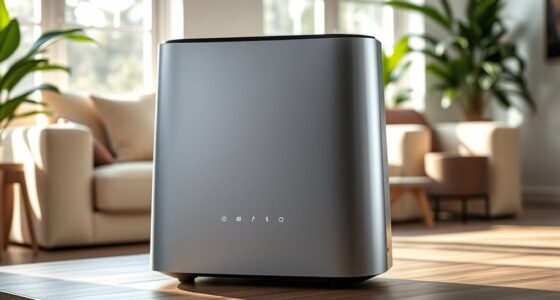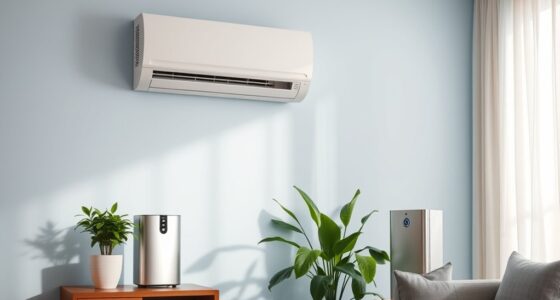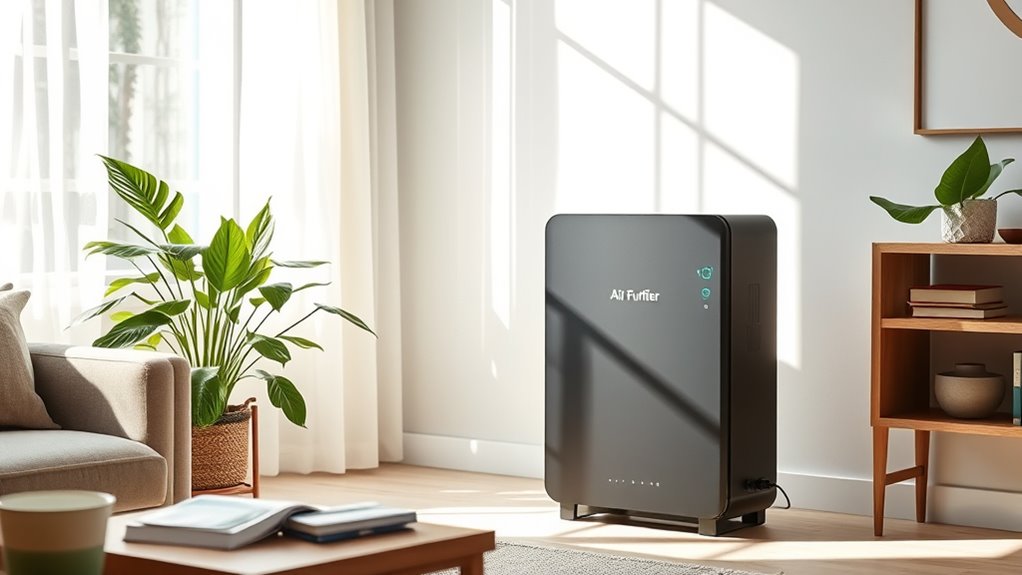
Air purifiers cannot remove CO2 from indoor air because they are designed to filter out airborne particles and certain gases like VOCs, not gases like carbon dioxide. To control CO2 levels, you need proper ventilation or air exchange systems that bring in fresh outdoor air. Relying solely on air purifiers won’t lower CO2 concentrations or improve overall air quality in that way. If you’re interested, there’s more to learn about effective indoor air strategies.
Key Takeaways
- Air purifiers primarily remove airborne particles and VOCs, not gases like CO2.
- They are not designed to significantly lower indoor CO2 levels.
- CO2 is a gas that requires ventilation or air exchange to reduce.
- Proper ventilation is essential for controlling CO2 concentrations indoors.
- Combining air purifiers with ventilation strategies provides the most effective air quality management.
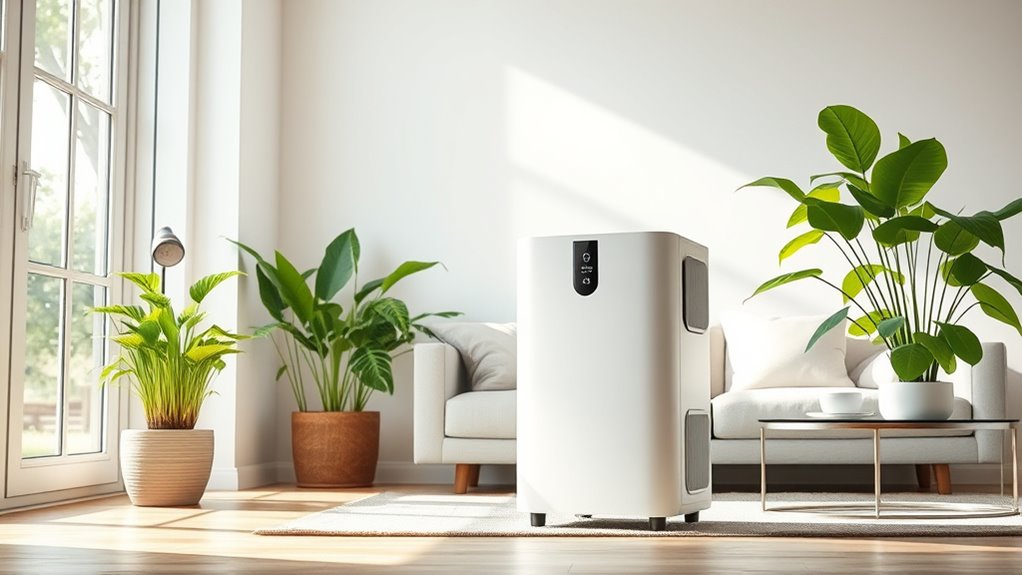
Air purifiers are often associated with removing airborne pollutants like dust, allergens, and smoke, but many people overlook their role in managing carbon dioxide (CO2) levels. While they excel at filtering out particles and volatile organic compounds, purifiers typically don’t directly reduce CO2 because CO2 is a gas, not a particulate. This means that, on their own, air purifiers aren’t the solution for lowering indoor CO2 concentrations. Instead, managing CO2 requires implementing effective ventilation strategies that promote fresh air exchange. Proper ventilation ensures that stale indoor air, which accumulates CO2 from breathing, is replaced with cleaner, oxygen-rich outdoor air. This process is vital, especially in tightly sealed spaces where natural airflow is limited. You should consider integrating exhaust fans, air exchange systems, or simply opening windows regularly to improve air quality. These strategies help maintain a balanced indoor environment, reducing the risk of drowsiness, headaches, and decreased concentration caused by elevated CO2 levels.
Additionally, you might be surprised to learn about the indoor plant benefits in relation to air quality. While plants alone won’t considerably lower CO2 levels, they contribute to overall air purification and humidity regulation. Certain houseplants, such as pothos or snake plants, absorb some CO2 during photosynthesis and release oxygen, subtly supporting air quality. When combined with proper ventilation, indoor plants can create a healthier environment by adding moisture to dry indoor air and filtering out some airborne toxins. They also provide psychological benefits, promoting relaxation and reducing stress, which enhances your overall well-being. However, don’t rely solely on plants to manage CO2. They’re best used as complementary elements alongside effective ventilation strategies. Understanding the role of air exchange is crucial for maintaining healthy indoor air quality, as it directly influences CO2 levels and overall air freshness.
It’s important to understand that air purifiers, ventilation, and indoor plants each serve a different purpose. Purifiers excel at capturing particles and gaseous pollutants like VOCs, but they don’t markedly impact CO2 levels. Ventilation strategies are your primary method for controlling CO2, ensuring a continuous flow of fresh air. Indoor plants, meanwhile, contribute to a more pleasant indoor atmosphere and can support air quality in a small way. By combining these approaches, you create a multi-layered system that maintains healthier indoor air. Remember, the key to managing CO2 isn’t just about filtering; it’s about actively exchanging stale indoor air with outdoor air through well-planned ventilation. This holistic approach will keep your indoor environment fresh, safe, and comfortable.
Frequently Asked Questions
Do Air Purifiers Improve Indoor Air Quality Overall?
Yes, air purifiers improve indoor air quality overall. They effectively remove pollutants like dust, pollen, and pet dander, enhancing your breathing environment. While air purifier effectiveness varies by model, many are designed to filter out common airborne contaminants. However, they don’t substantially reduce CO2 levels. For maximum indoor air quality, combine air purifiers with proper ventilation to guarantee fresh air circulation and lower indoor CO2 concentrations.
Can Air Purifiers Prevent Carbon Dioxide Buildup in Sealed Rooms?
While air purifiers might seem like saviors, they can’t curb carbon dioxide buildup in sealed rooms. Their effectiveness lies in trapping particles and pollutants, but CO2 molecules are too small and stay airborne. To truly mitigate CO2, you need ventilation ventures like fans or fresh air intake. Relying solely on air purifiers won’t solve sealed space suffocation, so incorporate air exchange methods for genuine carbon dioxide mitigation.
Are There Specific Filters That Target CO2 Removal?
No, most air purifiers don’t use specific filters for CO2 filtration. Specialized filters aren’t typically designed to target carbon dioxide, as they focus on particles, allergens, or pollutants. If you want to reduce CO2 levels, look for devices that incorporate activated carbon or other chemical filtration methods. These can help trap some gases, but increasing ventilation remains the most effective way to manage CO2 buildup in sealed rooms.
How Do Air Purifiers Compare to Ventilation Systems for CO2 Reduction?
Imagine your room as a busy café; fresh air exchange keeps everyone comfortable. Air purifiers mainly filter particles and VOCs, but they don’t effectively reduce CO2. Ventilation systems, by increasing air exchange, actively remove CO2 and improve air quality. They’re generally more efficient for CO2 reduction because filter efficiency isn’t enough alone. So, if lowering CO2 is your goal, rely on proper ventilation over air purifiers.
What Are the Signs of High Indoor CO2 Levels?
If you notice frequent drowsiness, headaches, or difficulty concentrating indoors, you might have high CO2 levels. Indoor plants can help, but they aren’t enough on their own. You’ll want to improve air exchange through ventilation, bringing in fresh air and reducing CO2 buildup. Elevated CO2 often causes stuffiness and a stale smell, so paying attention to these signs can help you maintain a healthier indoor environment.
Conclusion
Remember, air purifiers are like the guardians of your indoor space, fiercely battling pollutants and allergens. But when it comes to CO2, they’re more like silent sentinels—standing watch without truly changing the air’s core. To truly refresh your environment, you need to open windows or add plants, the true storytellers of clean air. Embrace these symbols of renewal, and breathe easy knowing you’re nurturing a space where fresh air can freely dance.

In the dynamic world of air purifiers and clean air advocacy, Aire stands out as a beacon of knowledge and passion. As the Editor in Chief of Aero Guardians, Aire has been instrumental in shaping the platform’s voice and direction, ensuring that every piece of content resonates with clarity, authority, and authenticity.