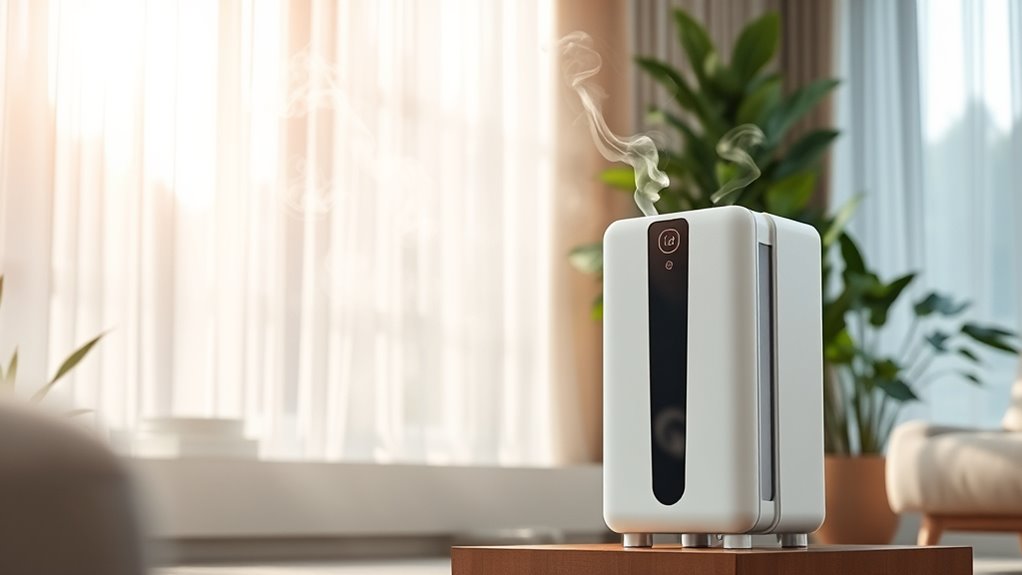
Not all air purifiers are effective against smoke because many only filter out particles and don’t target gases or odors. HEPA filters remove tiny smoke particles, but they can’t handle fumes or smells on their own. For all-encompassing smoke removal, you need a purifier that combines HEPA with activated charcoal filters. If you want to learn which models work best or how to choose, keep exploring the options available.
Key Takeaways
- Not all air purifiers effectively remove smoke; many only trap particles without addressing odors or gases.
- HEPA filters are essential for capturing smoke particles, but they do not eliminate chemical fumes or smells.
- Activated charcoal filters are necessary to adsorb smoke gases and odors, complementing particle-trapping filters.
- The most effective smoke removal requires purifiers combining HEPA and activated charcoal filters.
- Proper sizing, high CADR ratings, and regular filter maintenance are vital for smoke filtration effectiveness.
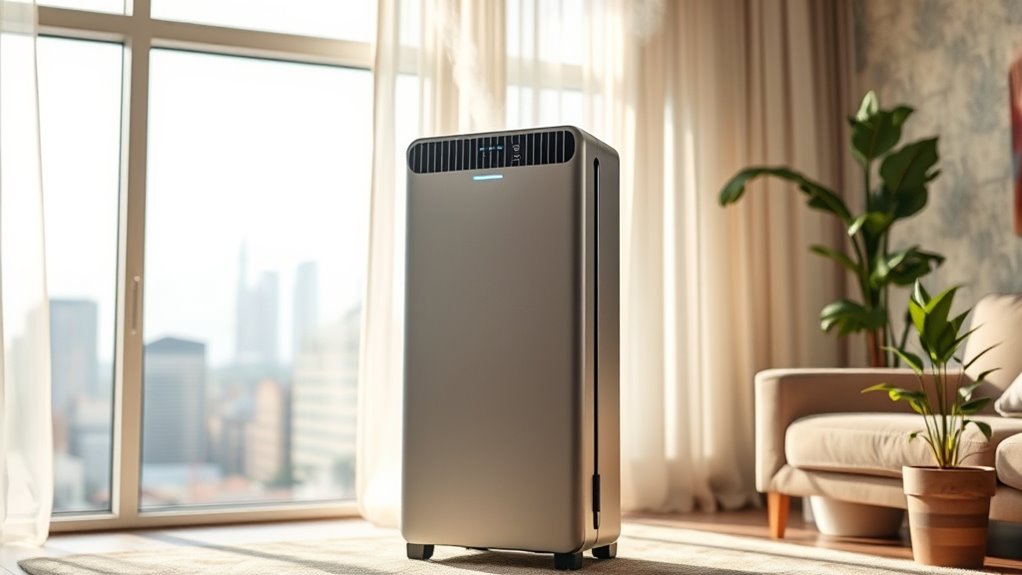
If you’re dealing with smoke in your home, air purifiers can be an effective way to improve indoor air quality. But not all air purifiers are equally capable of handling smoke particles. To effectively reduce smoke, you need to understand how different filters work. HEPA filters are a critical component in many air purifiers designed for smoke removal. These filters are built to trap tiny particles, including smoke, dust, and pollen, with a high efficiency rate. When smoke particles pass through a HEPA filter, they’re captured within the dense fiber matrix, preventing them from recirculating into the air you breathe. This makes HEPA filters essential for reducing airborne pollutants caused by smoke, especially if you’re dealing with cigarette smoke, wildfire smoke, or cooking fumes.
HEPA filters trap tiny smoke particles, improving indoor air quality effectively.
However, smoke isn’t just about tiny particles; it also involves odors and harmful gases. That’s where activated charcoal comes into play. Activated charcoal, also known as activated carbon, is highly porous and capable of adsorbing volatile organic compounds (VOCs), gases, and odors produced by smoke. When combined with a HEPA filter, activated charcoal significantly boosts the purifier’s ability to handle not only the particles but also the chemical fumes and smells that smoke leaves behind. You’ll find many air purifiers marketed for smoke removal that include both HEPA filters and activated charcoal layers because this combination offers a comprehensive approach to improving indoor air quality in smoky environments.
Keep in mind, not every air purifier on the market is equipped with both these features. Some units may only have HEPA filters, which are excellent at trapping particles but less effective at removing odors and gases. Conversely, others might rely solely on activated charcoal, which won’t do much to clear out fine particles. For ideal results, look for an air purifier specifically designed for smoke that combines HEPA filtration with activated charcoal. This setup ensures that you’re tackling both particulate matter and gaseous pollutants effectively. Additionally, selecting a model with a higher Clean Air Delivery Rate (CADR) ensures quicker and more efficient purification in larger spaces.
In addition to choosing the right filters, consider the size of the room and the purifier’s Clean Air Delivery Rate (CADR). A higher CADR indicates a more efficient device capable of filtering larger spaces more quickly. Regular maintenance, like replacing filters according to the manufacturer’s recommendations, is also vital to keep your purifier working at peak performance. Ultimately, if you want to combat smoke effectively, investing in an air purifier that features both HEPA filters and activated charcoal provides the best chance of improving your indoor air quality and creating a healthier living environment.
Frequently Asked Questions
Do HEPA Filters Effectively Remove All Types of Smoke Particles?
HEPA filters effectively remove most smoke particles, including fine particulate matter that can harm your lungs. They trap particles as small as 0.3 microns, which covers many smoke components. However, HEPA filtration alone might not eliminate all gases or odors produced by smoke. For complete smoke removal, consider combining HEPA filters with activated carbon filters, ensuring you reduce both particles and harmful chemical emissions from smoke.
Can Air Purifiers Eliminate the Smell of Smoke Completely?
Air purifiers can help reduce smoke odor, but they might not eliminate it completely due to their limitations. HEPA filters capture particles, but odors often require activated carbon filters for effective smoke odor removal. To improve results, choose an air purifier with a good carbon filter and run it continuously. Keep in mind, some smoke smells may linger, especially if the source is ongoing or deeply embedded in fabrics and walls.
How Long Does It Take for an Air Purifier to Clear Smoke?
It typically takes a few hours to clear smoke from your air, depending on your air purifier’s capacity and the room size. You should notice improved air quality fairly quickly, but full purification might take longer. Keep in mind, a clean filter boosts efficiency, so replace it when needed. Regularly running your purifier ensures it works at its best, reducing smoke particles and odors effectively over time.
Are Specific Air Purifier Models Better for Wildfire Smoke?
Think of some air purifier brands as skilled firefighters, specially trained to combat wildfire smoke. You’ll find models with HEPA filters that trap tiny particles and activated carbon layers that absorb odors. For the best results, choose a purifier designed for smoke and stay on top of filter maintenance. This way, you guarantee your air stays clean, and your home remains a safe haven amidst the smoky chaos.
Do Air Purifiers Need Special Filters for Cigarette Smoke?
Yes, your air purifier needs a special filter for cigarette smoke, typically a HEPA filter combined with activated carbon. Regular filter maintenance is crucial to keep it effective, especially for smoke removal. You should also pay attention to air purifier placement—position it in areas with good airflow and away from obstructions. This guarantees peak performance, helping to reduce cigarette smoke and improve your indoor air quality efficiently.
Conclusion
While many air purifiers claim to combat smoke, not all are equally effective. HEPA filters excel at trapping particles, but for smoky odors and gases, activated carbon filters are essential. Don’t assume any purifier will eliminate all smoke issues—research the filter types first. The truth is, a combination of HEPA and activated carbon filters offers the best defense against both smoke particles and odors, ensuring you breathe cleaner air.

In the dynamic world of air purifiers and clean air advocacy, Aire stands out as a beacon of knowledge and passion. As the Editor in Chief of Aero Guardians, Aire has been instrumental in shaping the platform’s voice and direction, ensuring that every piece of content resonates with clarity, authority, and authenticity.