TL;DR
Gardening Know How’s October care guide recommends six tasks for gardeners tending dahlias: adjust watering, remove spent blooms, support heavy stems, check for pests and disease, stop routine fertilizing, and prepare for winter tuber storage. Timing depends on local climate; the guide does not provide a single frost date or storage schedule for every region.
Gardening Know How has published an October checklist for dahlia care, advising gardeners to balance continued flowering with preparation for winter tuber storage. Its six recommendations cover watering, deadheading, stem support, pest and disease checks, reducing fertilizer and managing the plants as the growing season winds down; exact timing depends on local climate.

Get garden gear delivered free with Prime
- Fast, free delivery on millions of items
- Prime Video, Amazon Music and more included
- Member-only deals all year
The guide describes early October as a peak flowering period for many dahlias, while noting that fall care varies with region and weather. It recommends watering when rain has not supplied enough moisture and the soil has dried, then watering deeply at the soil level rather than wetting leaves and stems. As the month progresses, it advises gradually reducing irrigation so tubers can begin to toughen before storage. Container-grown dahlias may need closer attention because rainfall does not necessarily reach their soil evenly.
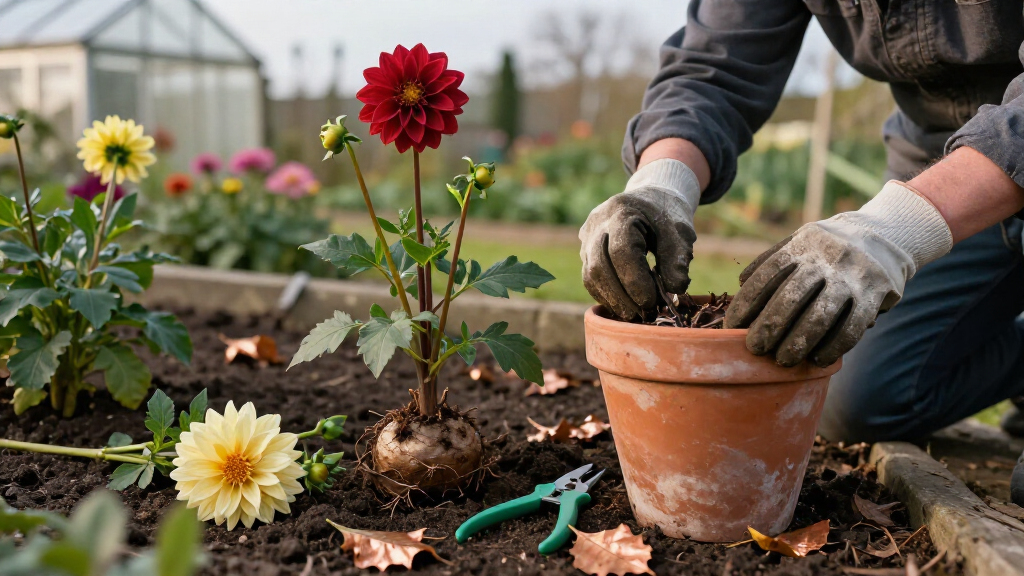
For continued flowering, the report says to remove faded blooms by cutting their stems back to a branching point, a task also covered in August dahlia care. Gardeners can also cut fresh flowers for display. If a bloom is difficult to distinguish from a new bud, the guide says a fresh bud feels firm while a spent flower may feel soft or mushy. It recommends leaving some flowers in place if the gardener plans to collect seeds. Tall or top-heavy plants may need stakes and soft ties, with existing supports checked after wind or heavy rain.
The remaining recommendations focus on plant health and the shift toward dormancy. The guide advises checking for aphids and spider mites, and removing leaves affected by powdery mildew or leaf spot rather than adding them to compost, similar to the seasonal care recommended for hellebores in fall. It also recommends stopping routine fertilizer applications as fall advances, particularly high-nitrogen products that encourage leafy growth. In warmer regions where flowering is continuing, the report says gardeners can use a low- or zero-nitrogen fertilizer intended for flowering plants. Its sixth task is to plan for lifting and storing tubers, though the source excerpt does not specify one schedule that applies everywhere; gardeners can also review September peony care for another seasonal perennial checklist.
Balancing Fall Flowers and Tubers
October care affects two goals that can pull in different directions: keeping flowers coming while allowing plants to slow new growth and preparing tubers for winter. Watering and feeding without adjusting for cooler, wetter conditions may work against that seasonal shift, while neglecting plants still in bloom can shorten the display. The report’s checklist gives gardeners a practical way to manage both aims rather than treating October only as cleanup time.
Healthy, well-supported plants are also less likely to suffer broken stems or carry diseased foliage into the garden bed. For readers hoping to grow dahlias again next year, the tubers are the longer-term concern: the source says they need to be prepared for storage, but does not promise a particular bloom quantity or guarantee that tubers will survive. Results depend on growing conditions and appropriate winter handling.
Products Worth Considering

Philips Hue Smart Light Starter Kit with Bridge and 4 White and Color A19 Bulbs

Dyson Airwrap i.d. Multi-Styler

Philips Hue Play HDMI Sync Box
As an affiliate, we earn on qualifying purchases.
Why October Care Varies
Dahlias can continue flowering through fall, and the source describes the combination of warm days and cool nights as favorable to their seasonal display. At the same time, rainfall and falling temperatures can change watering needs and raise the risk of some leaf problems. The advice is therefore framed as a seasonal checklist, not a fixed calendar rule for every garden.
The report links October maintenance to the later process of lifting and storing tubers. It discusses reducing water and fertilizer as growth winds down, but regional conditions determine when gardeners should stop flowering-focused care and prepare plants for winter. The supplied source material does not set out detailed digging, curing or storage instructions, so those steps should not be inferred from this checklist alone.
Local Timing Still Matters
The report does not give a single date for stopping water, lifting tubers or beginning winter storage. Those decisions depend on local climate and garden conditions, including rainfall and whether plants are still flowering. It also does not provide a detailed tuber-storage method or quantify how much extra flowering the tasks may produce.
The guidance on pests and disease is general rather than a diagnosis for any particular plant. Gardeners should identify the problem before choosing a treatment; the source mentions water sprays and neem oil but does not establish that every pest or leaf symptom should be treated the same way. No specific product use rate or protective-equipment instructions are included in the supplied excerpt.
Adjust Care as Growth Slows
Gardeners can use the checklist through October, adapting it as weather and flowering change: water according to soil dryness and rainfall, keep supports secure, remove spent blooms and diseased leaves, and taper feeding. As plants move toward the end of the season, they will need to follow local conditions to determine when to stop routine care and prepare tubers for winter.
The next practical milestone is the transition from active flowering to tuber lifting and storage. The source does not specify a region-by-region date or full storage procedure, so gardeners will need local guidance for that step rather than assuming October means the same thing everywhere.
Key Questions
Should I keep watering dahlias in October?
Yes, while plants are still growing and flowering, the report advises watering when rain has not fallen and the soil has dried. Water deeply at soil level, then reduce watering gradually as the season advances. Account for rainfall and container conditions.
Should I deadhead every dahlia flower?
Remove spent flowers to encourage the plant to put energy toward more blooms, cutting back to a branching point. Leave some flowers in place if you want to collect seeds. Freshly opened flowers can also be cut for display.
Should I fertilize dahlias in fall?
The guide recommends gradually stopping routine feeding, especially high-nitrogen fertilizer that encourages new leafy growth. In warmer areas where flowering continues, it says to choose a low- or zero-nitrogen feed intended for flowers.
When should I lift dahlia tubers for winter?
The source does not give a universal date. It says fall care depends on region and climate, and its supplied material does not detail when to dig or how to store tubers. Use local growing guidance for those decisions.
What should I do with leaves showing mildew or leaf spot?
The report recommends removing affected leaves to limit infected plant material in the garden and says not to put them in compost. Check plants regularly and identify symptoms before deciding whether further treatment is needed.
Source: rss