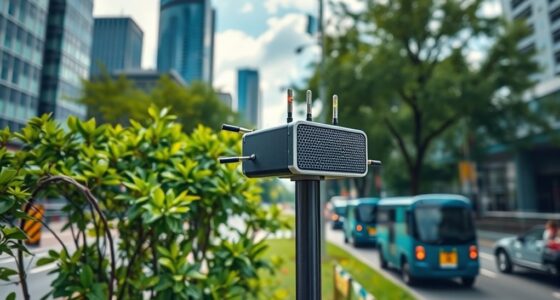
Implementing distributed IAQ monitoring in large buildings lets you track air quality across different zones efficiently. By deploying multiple calibrated sensors with visual indicators, you can gather real-time data on parameters like CO₂, VOCs, humidity, and temperature. Centralized management organizes this information for quick analysis and immediate action, improving indoor air safety and comfort. To optimize your system and make certain of reliable results, there’s more to consider—keep exploring to discover how to get started.
Key Takeaways
- Deploying multiple sensors across zones ensures comprehensive indoor air quality coverage in large buildings.
- Regular calibration of sensors maintains measurement accuracy, preventing data drift and false readings.
- Selecting sensors with high color accuracy and visual indicators allows quick assessment of air quality status.
- Centralized data integration enables real-time monitoring, analysis, and automated responses for air quality management.
- Proper calibration and data integration support proactive interventions, energy efficiency, and compliance with health standards.

Have you ever wondered how to effectively monitor indoor air quality (IAQ) across large or complex spaces? It’s a challenge, but with distributed IAQ monitoring, it’s entirely manageable. The key is deploying multiple sensors throughout the building, creating a network that provides real-time data on air quality parameters like CO2, VOCs, humidity, and temperature. To make this network work effectively, sensor calibration is vital. Sensors can drift over time, giving inaccurate readings if not properly calibrated. Regular calibration guarantees that each sensor reports precise data, which is essential when you’re managing IAQ across different zones. Proper calibration involves comparing sensor outputs to known standards or reference instruments and adjusting them accordingly. This step guarantees that the data collected truly reflects the air quality in each area, eliminating false alarms or overlooked issues. Additionally, selecting sensors with high color accuracy can improve the reliability of the readings, especially when visual indicators are used for quick assessments.
Once your sensors are calibrated, the next step is seamless data integration. You want all the information from various sensors to come together in a centralized system that provides a complete overview. Data integration involves collecting, organizing, and analyzing data from multiple sources in real time. It allows you to spot patterns, identify problem areas, and make informed decisions quickly. Effective data integration also facilitates automation—for instance, triggering ventilation adjustments or alarms when IAQ drops below acceptable levels. This means no manual checks are needed constantly, saving you time and reducing errors. The ability to synthesize data from different sensors into a unified dashboard makes managing large buildings more efficient, giving you a clear picture of indoor air conditions across all zones.
Furthermore, integrating sensor data helps optimize building management systems. It allows for targeted interventions—like increasing airflow only where needed—improving energy efficiency and occupant comfort. When you guarantee sensors are well-calibrated and data is properly integrated, you create a reliable monitoring system that adapts in real time. This proactive approach not only maintains healthy indoor environments but also prevents costly issues from escalating. Whether you oversee an office complex, hospital, or shopping mall, deploying a well-calibrated, integrated IAQ monitoring network transforms how you manage indoor air quality. It empowers you to respond swiftly, maintain compliance with health standards, and create safer, more comfortable spaces for everyone inside.
distributed IAQ sensors for large buildings
As an affiliate, we earn on qualifying purchases.
As an affiliate, we earn on qualifying purchases.
Frequently Asked Questions
What Are the Cost Implications of Implementing Distributed IAQ Systems?
Implementing distributed IAQ systems requires careful cost analysis and budget planning. You’ll find initial setup costs include sensors, networking, and installation, but these can be offset by long-term savings through improved air quality management. While upfront expenses may be higher, you benefit from real-time data and reduced maintenance costs, ultimately making the investment worthwhile. Planning your budget carefully guarantees you balance the costs with the advantages of better indoor air quality.
How Do Distributed IAQ Sensors Communicate in Real-Time?
Did you know that over 80% of modern IoT devices use wireless protocols for real-time communication? You’ll find that distributed IAQ sensors communicate through wireless protocols like Wi-Fi, Zigbee, or LoRaWAN, enabling seamless, real-time data transfer. They often use data aggregation to compile information from multiple sensors, ensuring you get accurate air quality insights quickly and efficiently. This setup minimizes wiring and maximizes responsiveness in large buildings.
What Maintenance Is Required for Long-Term Sensor Accuracy?
To guarantee long-term sensor accuracy, you need to regularly calibrate your IAQ sensors and check for drift. Replace or clean filters and sensors as needed to maintain device longevity. Keep firmware updated to avoid performance issues. Regular maintenance helps prevent false readings, ensuring reliable data. Establish a maintenance schedule based on manufacturer recommendations, and monitor sensor performance continuously to catch problems early and extend your system’s lifespan.
Can Distributed IAQ Systems Integrate With Existing Building Management Systems?
Yes, you can integrate distributed IAQ systems with your existing building management systems. Imagine sensor calibration data seamlessly flowing into your control platform, providing real-time insights that optimize air quality and energy use. Data integration becomes effortless, enabling you to monitor and respond swiftly to IAQ fluctuations. This synergy enhances overall building efficiency, ensuring a healthier environment while leveraging your current infrastructure.
How Is Data Privacy Maintained in Large-Scale IAQ Monitoring?
You maintain data privacy in large-scale IAQ monitoring by implementing data encryption, which secures all sensor data transmitted and stored. Access control is vital, so only authorized personnel can view sensitive information. Regular audits and secure login procedures further protect your data. By combining these methods, you guarantee that your IAQ data remains confidential, compliant with privacy standards, and protected from unauthorized access or breaches.

Professional Indoor Air Quality Monitor with AQI Alerts, Portable Real-Time Detector for Home, Car, Plants & Pet (Concrete Gray)
【Professional 16-in-1 Real-time Air Quality Monitor】: With real-time detection of PM1.0 | PM2.5 | PM10 | CO2 |…
As an affiliate, we earn on qualifying purchases.
As an affiliate, we earn on qualifying purchases.
Conclusion
By implementing distributed IAQ monitoring, you can substantially improve air quality management in large buildings. Did you know that buildings with advanced IAQ systems see up to a 30% reduction in indoor pollutants? This technology allows you to detect issues early, optimize ventilation, and create healthier environments for everyone. Embrace distributed IAQ solutions to guarantee safer, more comfortable spaces—your tenants and staff will thank you for it.
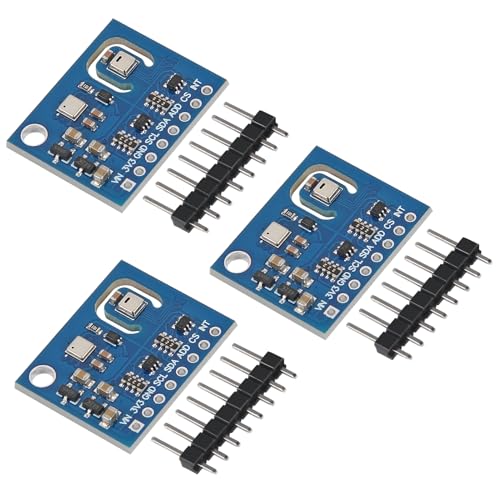
3pcs ENS160+AHT21 Carbon Dioxide Sensor CO2 eCO2 VoCs TVOC Gas Sensor Temperature Humidity Sensor Air Quality Monitoring Sensor Replace CCS811 for Arduino
ENS160+AHT21 Carbon Dioxide CO2 eCO2 TVOC Air Quality and Temperature and Humidity Sensor is a digital multi gas…
As an affiliate, we earn on qualifying purchases.
As an affiliate, we earn on qualifying purchases.

HEARTSINE DATA MANAGEMENT SOFTWARE
Part Number: PAD-ACC-02
As an affiliate, we earn on qualifying purchases.
As an affiliate, we earn on qualifying purchases.