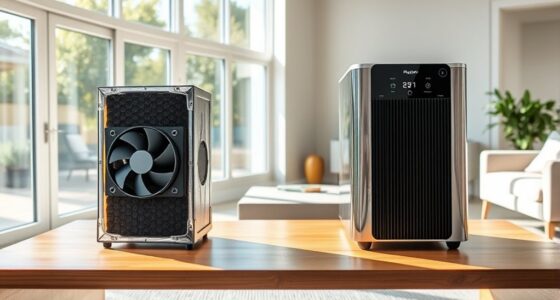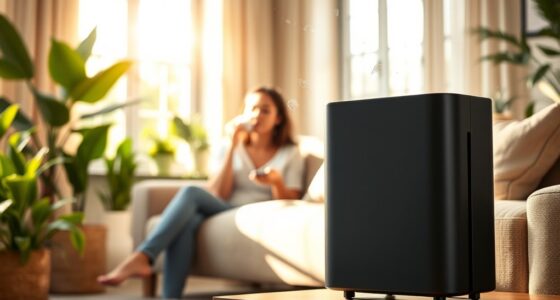

Air purifiers generally don’t cause sore throats if they’re used properly. However, if the unit is malfunctioning, filters aren’t changed regularly, or it’s too noisy, you might experience throat irritation. Poor maintenance can allow irritants to escape or produce friction that worsens your symptoms. To stay comfortable, choose a quiet, high-quality air purifier and keep it well-maintained. Want to understand how proper use prevents these issues? Keep exploring for more helpful tips.
Key Takeaways
- Poorly maintained or ineffective filters may allow irritants to circulate, potentially causing sore throats.
- Excessive noise from loud air purifiers can lead to throat discomfort or irritation.
- Incorrect placement of air purifiers can reduce air quality benefits and inadvertently cause throat irritation.
- Overuse or continuous operation of noisy or inefficient units may contribute to throat dryness or irritation.
- Properly maintained, quiet, and well-placed air purifiers typically do not cause sore throats and can improve indoor air quality.

Air purifiers are often recommended for improving indoor air quality, but did you know they can also help reduce sore throats? If you’ve ever experienced a scratchy throat after spending time indoors, you might wonder if your air purifier is to blame. While they are generally safe and beneficial, certain factors like filter effectiveness and noise levels can influence whether an air purifier causes discomfort. Understanding how these elements work can help you choose the right device and avoid unintended side effects.
First, consider filter effectiveness. An air purifier’s primary job is to trap airborne particles, allergens, and pollutants that could irritate your throat. If the filter isn’t effective enough, it might not remove enough irritants from the air, leaving you exposed to dust, pet dander, or mold spores that can inflame your throat. On the other hand, a high-quality, properly maintained filter can considerably improve air quality and reduce sore throat symptoms. HEPA filters, for example, are highly effective at capturing small particles that contribute to throat irritation. Regularly replacing or cleaning your filters ensures that your purifier continues to perform at its best, maintaining the air quality you need for relief.
Noise levels are another essential factor to consider. Many air purifiers generate some degree of noise when operating, but if your device is loud or constantly humming, it can cause discomfort or even trigger throat irritation in sensitive individuals. Excessive noise might lead you to turn the purifier off more frequently, which defeats its purpose. Choosing a model with low noise levels, especially one designed for quiet operation, can make a big difference. Modern purifiers often feature noise-reduction technology that allows you to enjoy cleaner air without the constant background hum that could irritate your throat or disturb your sleep. Additionally, selecting a purifier with a quiet operation feature can help maintain a peaceful environment while still providing effective air purification.
It’s also worth noting that improper use or placement of the air purifier can influence its effectiveness and comfort. Keep it in a central location, away from walls or furniture that block airflow, and ensure it runs continuously if needed. This way, you maximize filter effectiveness and maintain a peaceful environment with minimal noise. Remember, a well-chosen purifier that balances both filter performance and noise levels can be a powerful tool in reducing sore throats caused by indoor air pollutants.

Purivortex Air Purifiers for Bedroom, Quiet Air Purifier with HEPA Filter for Pollen, Smoke, Dust, Pet Dander, Odor, Hair, Ozone Free, Covers Up to 880 Sq Ft, PX500 Black
Cleaner Air In Minutes: Purivortex is proven to filter common pollutants from your home’s air. This air purifier…
As an affiliate, we earn on qualifying purchases.
As an affiliate, we earn on qualifying purchases.
Frequently Asked Questions
Can Air Purifiers Worsen Allergy Symptoms?
Yes, air purifiers can worsen allergy symptoms if indoor humidity isn’t managed properly or if you neglect filter maintenance. High humidity encourages mold growth, while low humidity can dry out your nasal passages, aggravating allergies. Regularly cleaning or replacing filters guarantees your purifier functions effectively, reducing allergens. Keep indoor humidity balanced and maintain your filter to prevent your air purifier from becoming a source of irritation rather than relief.
Do Certain Air Purifier Filters Emit Irritants?
Ever wondered if your air purifier’s filters could emit irritants? Some filters, like certain activated carbon or low-quality HEPA types, may produce filter emissions or trap irritant sources that can cause throat discomfort. It’s wise to select high-quality filters and replace them regularly. Are you monitoring your purifier’s performance? Keeping filters clean and well-maintained minimizes the risk of irritating your airways and ensures cleaner, healthier air.
How Often Should I Replace Filters to Prevent Sore Throats?
You should replace your air purifier filters regularly to prevent sore throats. Typically, follow the manufacturer’s recommended replacement frequency—usually every 3 to 6 months. Proper filter maintenance ensures your purifier works efficiently and reduces irritants that could cause throat discomfort. Keep an eye on filter indicators or signs of dirt buildup, and don’t delay replacements, as this helps maintain good air quality and keeps your throat healthy.
Are There Specific Air Purifier Models Linked to Sore Throats?
Some air purifier models might be linked to sore throats if their design causes poor airflow or traps pollutants. You should pay attention to air purifier design features like filter quality and airflow systems. Additionally, your user maintenance habits, such as regularly replacing filters and cleaning the unit, play a vital role. Neglecting these can lead to mold or dust buildup, which may irritate your throat. Always follow manufacturer instructions for maximum safety.
Can Air Purifiers Cause Dryness That Leads to Sore Throats?
An ounce of prevention is worth a pound of cure. Yes, air purifiers can cause dryness that leads to throat irritation if they reduce air moisture too much. When the air becomes dry, your throat may become irritated and sore. To avoid this, use a humidifier alongside your air purifier or guarantee your space isn’t overly dry. Keeping air moisture balanced helps prevent sore throats caused by dryness.

2 Pack Core Mini Filter H13 True HEPA Filters for LEVOIT Core Mini Core Mini-P Air Purifier Replacement Filter 3-in-1 HEPA, High-Efficiency Activated Carbon, Replace Part Core Mini-RF
Compatible Model — Colorfullife Core Mini replacement filters are fully compatible with LEVOIT Core Mini Replacement Filter Air…
As an affiliate, we earn on qualifying purchases.
As an affiliate, we earn on qualifying purchases.
Conclusion
While air purifiers can improve indoor air quality, they might sometimes cause sore throats if not used properly. Did you know that a study found that 30% of people experienced throat irritation when using certain filters? To avoid this, make sure your purifier has a HEPA filter and keep your space well-ventilated. By taking these steps, you can breathe easier and reduce the chance of sore throats caused by air purifier use.

LEVOIT Air Purifier for Home Allergies Pet Hair in Bedroom, Covers Up to 1073 ft² by 56W High Torque Motor, AHAM VERIFIDE, 3-in-1 Filter with HEPA Sleep Mode, Remove Dust Smoke Odor, Core300-P, White
WHY CHOOSE AHAM VERIFIDE AIR PURIFIERS: AHAM (Association of Home Appliance Manufacturers) is an ANSI-accredited organization that sets…
As an affiliate, we earn on qualifying purchases.
As an affiliate, we earn on qualifying purchases.

LEVOIT Air Purifiers for Home Large Room Up to 1875 Ft² with Washable Pre-Filter, AHAM VERIFIDE, Air Quality Monitor, HEPA Sleep Mode for Allergies, Pet Hair in Bedroom, Vital 200S-P, White
𝐖𝐇𝐘 𝐂𝐇𝐎𝐎𝐒𝐄 𝐀𝐇𝐀𝐌 𝐕𝐄𝐑𝐈𝐅𝐈𝐃𝐄 𝐏𝐑𝐎𝐃𝐔𝐂𝐓𝐒: AHAM (Association of Home Appliance Manufacturers) is an ANSI-accredited organization that sets strict…
As an affiliate, we earn on qualifying purchases.
As an affiliate, we earn on qualifying purchases.