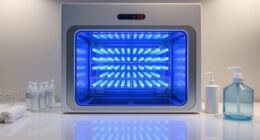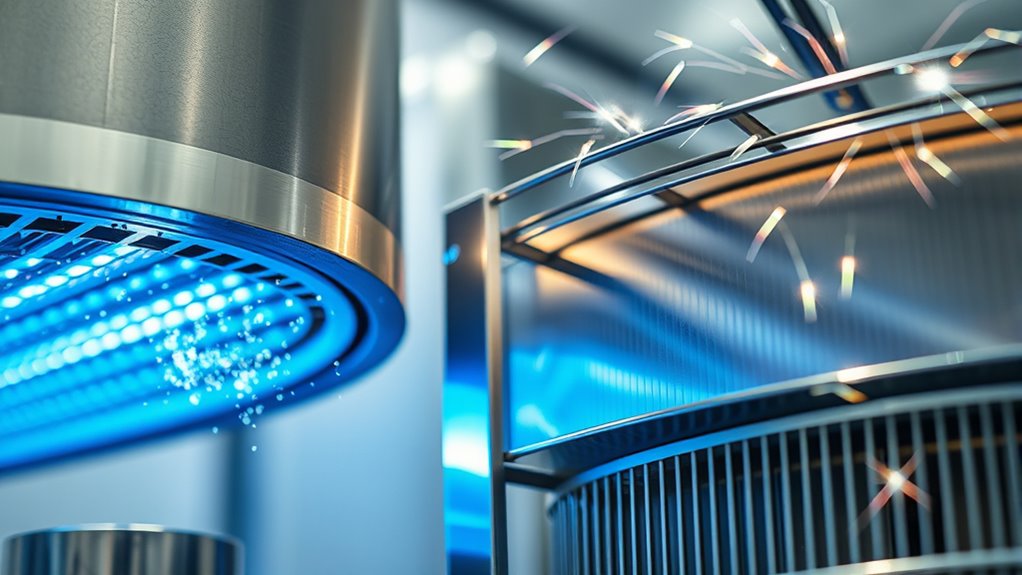

Ionizers and electrostatic precipitators effectively remove airborne particles like dust, pollen, and smoke by using static electricity to charge them and attract them to collection plates. They operate silently and are great for quick, continuous cleaning, especially in homes, offices, or large spaces. However, they don’t physically filter air and can produce ozone, which might irritate your lungs. Staying informed about their safety and maintenance helps you get the best out of these systems—learn more to make smarter choices.
Key Takeaways
- They effectively remove airborne pollutants using static charges but do not physically filter air like HEPA filters.
- Potential ozone emission and static buildup can pose health risks if devices are not properly maintained.
- Ionizers and precipitators are quiet, compact, and suitable for quick air purification in homes and offices.
- Regular cleaning and maintenance are essential to prevent dust accumulation and static-related issues.
- Choosing models with low ozone output and proper safety features enhances overall indoor air quality and safety.
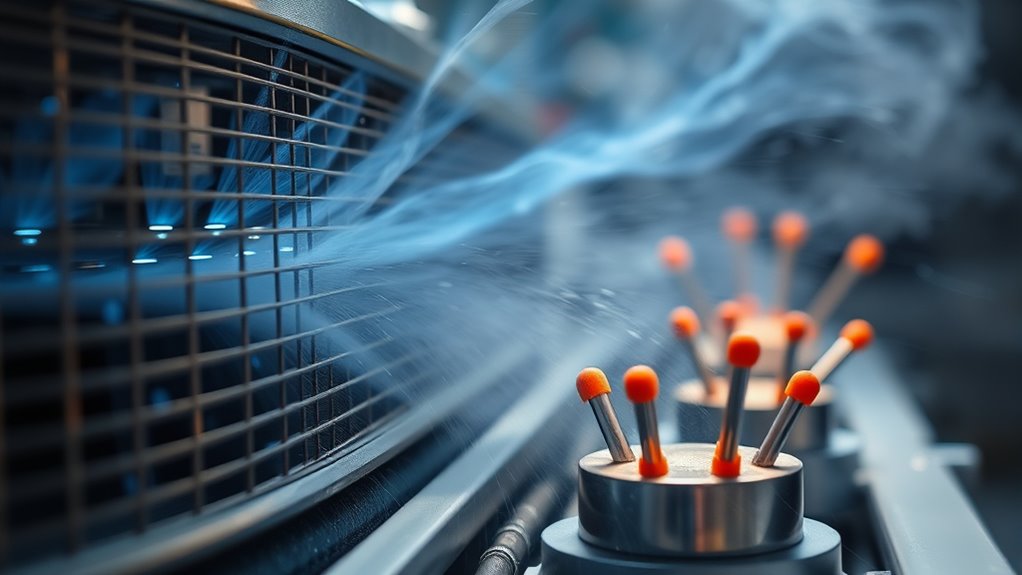
Have you ever wondered how air purification devices remove tiny particles from the air? When it comes to ionizers and electrostatic precipitators, they use a fascinating approach centered around static elimination to achieve cleaner indoor air. These systems generate a charge on airborne particles, causing them to be attracted to oppositely charged collection plates. As a result, they can effectively reduce dust, pollen, smoke, and other pollutants that traditional filters might miss. This process makes air purification more efficient, especially in environments where quick removal of airborne contaminants is essential.
Ionizers work by releasing negatively or positively charged ions into the air. These ions attach to airborne particles, giving them an electric charge. The charged particles then drift toward collection plates or charged surfaces, where they stick and are removed from the airflow. In this way, static elimination plays a critical role in capturing particles that would otherwise remain suspended. You might notice that ionizers are often compact and silent, making them appealing for use in homes and offices. However, while they are effective at reducing certain pollutants, they don’t physically filter the air in the same way as HEPA filters do. Instead, they rely heavily on static charge to attract and bind particles, which can sometimes lead to secondary issues like ozone production.
Ionizers use static charges to attract and remove airborne particles silently and efficiently.
Electrostatic precipitators operate on a similar principle but are typically larger and more powerful, often used in industrial settings. They generate a high-voltage electric field that charges particles as they pass through. These charged particles then migrate toward collection plates with an opposite charge, where they are trapped. This method allows for continuous cleaning of large air volumes, which is advantageous in factories or large commercial spaces. Nonetheless, both technologies share potential drawbacks. For example, the static charges used for air purification can sometimes release ozone gas, which may irritate your lungs and cause discomfort if not properly managed. Additionally, the buildup of static charge can attract dust to surfaces nearby, requiring regular maintenance to prevent dust from settling back into the environment.
In terms of safety, it’s essential to understand that while ionizers and electrostatic precipitators can be highly effective, they aren’t perfect. Ozone emissions and static buildup are concerns that need to be addressed when choosing or operating these devices. Proper ventilation and maintenance can mitigate some risks, but it’s wise to stay informed and select models with low ozone output. Recent advancements in AI-powered air purification are helping to monitor and reduce ozone emissions more effectively. Overall, these systems excel at static elimination and air purification, but weighing their pros and cons—and understanding their safety considerations—helps you make an informed decision for your indoor air quality needs.

POMORON 4-in-1 Air Purifiers for Home, Air Ionizer Negative Ion Generator, True H13 Filter, UV, Covers 1250 Ft² 99.97% Removal Rate for Pollen Smoke Pet Dander Air Cleaner for Bedroom, MJ002H, Black
- 4-in-1 Air Purifier: Includes Ionizer, Filter, UV, Diffuser
- Negative Ion & UV Light: Reduces allergens and odors effectively
- True H13 Filter: Filters 99.97% of airborne particles
As an affiliate, we earn on qualifying purchases.
As an affiliate, we earn on qualifying purchases.
Frequently Asked Questions
How Do Ionizers Affect Indoor Humidity Levels?
Ionizers can increase indoor humidity levels slightly, leading to humidity fluctuations that may improve your indoor comfort. As they work by releasing charged ions, moisture in the air can be attracted and settle on surfaces, raising humidity. This can be beneficial in dry environments, but you should monitor humidity levels to avoid excess moisture, which might cause mold or other issues, ensuring a comfortable and healthy indoor environment.
Are Electrostatic Precipitators Effective Against All Types of Airborne Particles?
Electrostatic precipitators are highly effective against large airborne particles, but their efficiency drops with smaller particles like smoke or viruses. Particle size greatly influences electrostatic efficiency; smaller particles are harder to capture. While they excel at filtering larger debris, you might need additional air purification methods for fine particles. So, they aren’t universally effective against all airborne particles, especially the tiniest ones, without supplementary systems.
What Maintenance Is Required for Ionizers and Precipitators?
You need to regularly replace filters in ionizers and precipitators to guarantee ideal performance. Additionally, schedule electrical inspections to check for worn components and prevent malfunctions. Clean the collection plates and inspect wiring connections periodically. These maintenance steps help maintain efficiency, avoid safety hazards, and extend the lifespan of your air cleaning system. Staying on top of these tasks ensures your device functions safely and effectively over time.
Can These Devices Emit Harmful Ozone During Operation?
Imagine a gentle fog settling over a room—ionizers and precipitators can emit harmful ozone during operation, raising safety concerns. While some models produce low ozone levels, others may generate enough to irritate your lungs or worsen asthma. It’s vital to take into account ozone emission risks, especially in enclosed spaces. Always choose devices with ozone reduction features and ensure proper ventilation to keep your environment safe and breathable.
Are Ionizers Suitable for Use Around Children or Pets?
Ionizers can be used around children and pets, but you should choose models that prioritize child safety and pet safety. Look for units with low ozone emissions and safety features like automatic shut-off. Always supervise their use, keep devices out of reach, and follow manufacturer instructions. Ensuring proper maintenance and selecting certified models help reduce risks, giving you peace of mind while keeping your family environment clean and healthy.
Conclusion
Ultimately, ionizers and electrostatic precipitators both clean your air, both reduce pollutants, and both improve your environment. They work quietly, efficiently, and safely—if used correctly. They remove allergens, eliminate odors, and lower health risks. But they also require maintenance, can produce ozone, and need proper placement. So, weigh their benefits against their drawbacks, consider your needs carefully, and choose the option that best suits your space, your health, and your peace of mind.