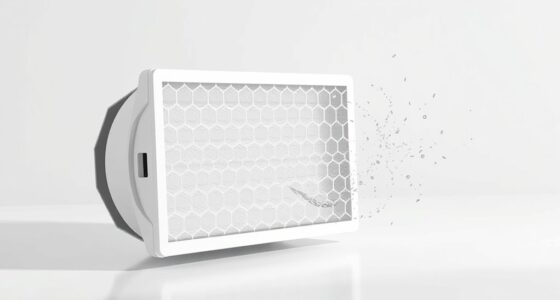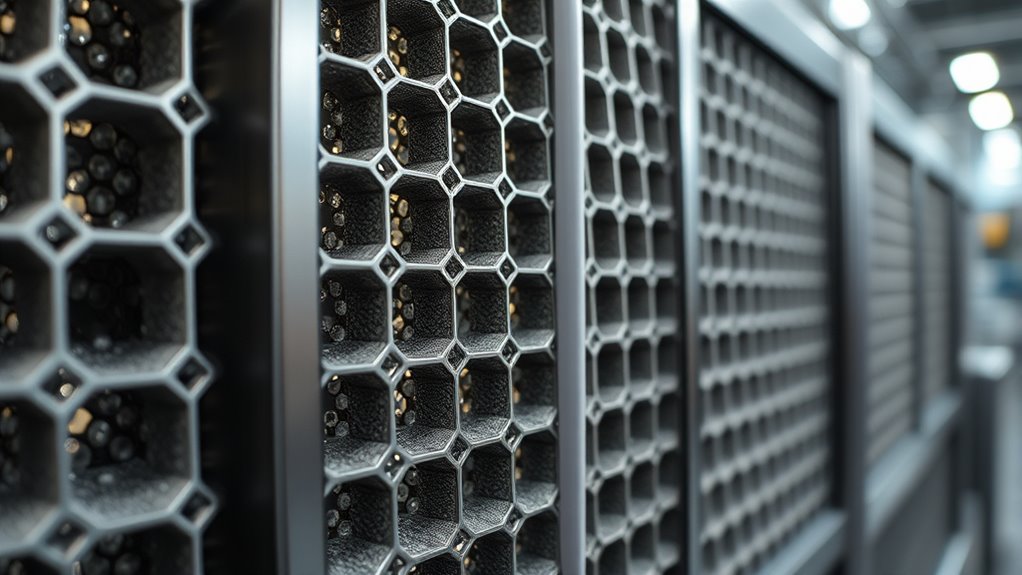

Carbon zeolite filters combine porous zeolite with activated carbon to enhance adsorption of VOCs and other chemicals. Zeolite acts as a molecular sieve, targeting specific molecules, while activated carbon captures a broad range of odors and pollutants. This synergy boosts filter efficiency, ensuring cleaner air and water. Plus, the filters are reusable through simple regeneration, making them cost-effective and eco-friendly. Keep exploring further to discover how these advanced filters can improve your environment.
Key Takeaways
- Carbon zeolite filters combine porous zeolite and activated carbon to effectively adsorb VOCs, chemicals, odors, and pollutants.
- Zeolite’s molecular sieve selectively traps molecules based on size and polarity, enhancing targeted filtration.
- The filters are regenerable through simple heating or vacuum, extending lifespan and maintaining high adsorption efficiency.
- Their synergistic structure ensures broad-spectrum removal of contaminants in industrial, residential, and sensitive environments.
- Reusable and durable, these filters promote cost-effective, environmentally friendly air and water purification solutions.

Carbon zeolite filters are highly effective tools for purifying air and water by removing odors, chemicals, and pollutants. Their success largely depends on their exceptional adsorption efficiency, which allows them to trap a wide range of volatile organic compounds (VOCs) and other contaminants. When you choose a carbon zeolite filter, you’re leveraging a material that combines the porous structure of zeolite with the high surface area of activated carbon, creating an ideal environment for capturing harmful molecules. This synergy considerably boosts the filter’s ability to adsorb VOCs, ensuring cleaner air and water in your environment.
One of the key advantages of using carbon zeolite filters is their capacity for regeneration. Over time, as the porous surfaces become saturated with pollutants, their adsorption efficiency can decline. However, these filters are designed with regeneration in mind, meaning they can often be cleaned or treated to restore their adsorption capacity. Regular regeneration extends the lifespan of your filter, making it a cost-effective solution. You can often regenerate these filters through simple processes like heating or applying vacuum techniques, which desorb the trapped molecules and renew the filter’s effectiveness. This ability to regenerate not only reduces waste but also ensures that your filtration system maintains maximum performance over a longer period.
Carbon zeolite filters can be regenerated with simple heating or vacuum techniques, extending their lifespan and enhancing long-term efficiency.
Moreover, the combination of zeolite and activated carbon in these filters enhances their selectivity for VOCs. Zeolite’s crystalline structure acts like a molecular sieve, selectively adsorbing certain molecules based on size and polarity. Meanwhile, activated carbon provides a broad spectrum of adsorption sites, capturing a wide variety of chemical odors and pollutants. As a result, you benefit from a highly efficient filtration process that targets the specific contaminants you face. This makes carbon zeolite filters particularly suitable for environments with complex chemical mixtures, such as industrial settings, homes with chemical sensitivities, or spaces impacted by outdoor pollution.
In addition to their high adsorption efficiency, these filters are relatively easy to maintain and regenerate, making them a practical choice for long-term use. You don’t have to replace them constantly; instead, with proper regeneration, they can serve you well for years. This sustainability feature makes them not only effective but also environmentally friendly. Understanding the self-regenerating nature of these filters can help you maximize their lifespan and performance. When you understand the importance of adsorption efficiency and filter regeneration, you’ll see how carbon zeolite filters offer a smart, durable solution for improving air and water quality, especially when dealing with VOCs.

ID Air Systems Carbon Pre-Filter for Honeywell 50250 Air Purifier, 2 Pack
- Made in the USA: Engineered to exact Honeywell dimensions
- Absorbs Odors and Gases: Activated carbon and zeolite for fresh air
- Traps Large Particles: Captures dust, lint, pet hair
As an affiliate, we earn on qualifying purchases.
As an affiliate, we earn on qualifying purchases.
Frequently Asked Questions
How Long Do Carbon Zeolite Filters Typically Last Before Replacement?
You can expect the filter lifespan of carbon zeolite filters to be around 6 to 12 months, depending on usage and VOC levels. To maintain effectiveness, you should monitor the replacement frequency and replace the filter when you notice a decrease in air quality or a distinct odor. Regularly checking and replacing the filter guarantees maximum adsorption of VOCs and keeps your air clean.
Can Carbon Zeolite Filters Remove All Types of VOCS Effectively?
You might think carbon zeolite filters remove all VOCs effectively, but their performance depends on VOC diversity and filter limitations. While they excel at adsorbing many common VOCs, some compounds may pass through if they’re less reactive or too small. So, you should understand that despite their versatility, these filters don’t eliminate every VOC completely, especially in environments with high VOC variety or specific chemical compositions.
Are There Specific Maintenance Steps to Optimize Filter Performance?
You should regularly perform filter regeneration by properly cleaning or replacing your carbon zeolite filters to maintain their adsorption effectiveness. Additionally, optimize airflow by ensuring unobstructed passages and correct fan settings, which helps maximize contact time with VOCs. These steps prevent clogging, prolong filter life, and make sure consistent performance. Regular maintenance and airflow optimization are key to keeping your filtration system working efficiently and effectively removing VOCs from your environment.
What Are the Environmental Impacts of Disposing Used Filters?
When you dispose of used filters, you should consider their environmental impacts, as they can contribute to environmental pollution if not properly managed. Recycling challenges make it difficult to reuse or safely process them, potentially leading to landfill accumulation. To minimize these effects, you should follow local disposal regulations, seek recycling options, or explore ways to regenerate filters, helping reduce environmental pollution and address recycling challenges effectively.
How Do Carbon Zeolite Filters Compare Cost-Wise to Other Air Purification Methods?
You’ll find that carbon zeolite filters usually have a higher initial cost compared to basic air purifiers, but their enhanced adsorption capabilities can save you money over time by reducing filter replacements. When considering budget, it’s important to weigh long-term benefits against upfront expenses. Overall, they may be more cost-effective than some advanced purification methods, especially if you prioritize effective VOC removal and lower maintenance costs.
Conclusion
As you harness carbon zeolite filters, you open a fortress of adsorption prowess, transforming your space into a sanctuary free from VOCs. These filters act like vigilant guardians, trapping unwanted pollutants with precision and grace. With their enhanced capabilities, you’re not just filtering air—you’re orchestrating a symphony of purity. Embrace this technology, and let your environment breathe freely, as if wrapped in a silken veil of immaculate freshness that elevates your everyday experience.