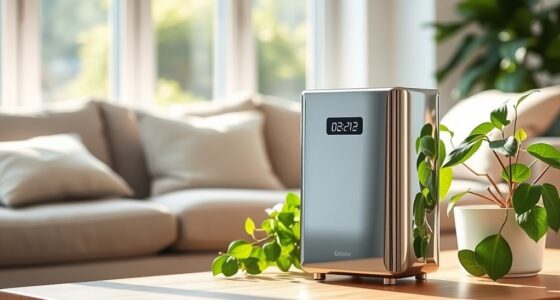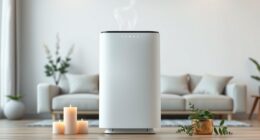
Most air purifiers emit very low levels of EMF radiation, which are well within safety guidelines. They work using fans, filters, or ionizers, and any electromagnetic fields they produce diminish quickly with distance. Safety features and design considerations ensure these devices are safe for everyday use. If you want to understand how these emissions compare to other household sources or how to minimize your exposure, there’s more to explore.
Key Takeaways
- Most modern air purifiers emit very low EMF radiation within safety standards.
- EMF levels from purifiers are localized and decrease rapidly with distance.
- Design features and shielding minimize EMF emissions in many models.
- Typical household EMF exposure from purifiers is significantly below health concern thresholds.
- Proper placement and following manufacturer guidelines further reduce EMF exposure risks.

Air purifiers effectively improve indoor air quality by removing pollutants, but many people wonder whether they also emit electromagnetic field (EMF) radiation that could impact their health. Understanding EMF safety is essential because concerns about long-term exposure to electromagnetic fields have increased as these devices become more common in homes. Most modern purifier technology is designed with safety in mind, but it’s natural to question whether these devices generate EMF radiation at levels that could be harmful.
Most modern air purifiers emit minimal EMF radiation, well within safety standards, making them safe for everyday use.
The good news is that typical air purifiers produce very low levels of EMF radiation, usually far below international safety standards. These devices operate using fans, filters, and sometimes ionizers or UV lights. Fans, which are common in many purifiers, do generate a small amount of electromagnetic fields, but these are generally weak and localized. Ionizer-based purifiers, which emit negative ions to improve air quality, do produce a slight electromagnetic field during operation. However, the strength of these fields diminishes rapidly with distance, making exposure minimal if you keep a reasonable distance from the device.
When it comes to purifier technology, manufacturers prioritize safety and often incorporate shielding or design features that minimize EMF emissions. For instance, many devices are engineered to operate efficiently without producing notable electromagnetic fields. If you’re especially concerned about EMF safety, look for models that specify low EMF emissions or are certified by relevant safety standards. Some brands even advertise their purifiers as “EMF-friendly” or designed to emit minimal electromagnetic fields, giving you peace of mind about potential health impacts.
It’s also worth noting that the primary health concerns linked to EMF exposure are associated with high-voltage power lines, wireless devices, and certain medical equipment, not household appliances like air purifiers. The levels emitted by most purifiers are negligible compared to these sources. To further reduce exposure, you can position your purifier away from where you spend the most time, such as your bed or work desk. Additionally, research shows that EMF exposure levels from household appliances are typically well within safe limits, especially when used correctly. Using the device according to manufacturer instructions and maintaining a safe distance can considerably reduce any potential risks.
Frequently Asked Questions
Are There Specific Air Purifier Brands That Emit More EMF Radiation?
Some air purifier brands have higher emf emission due to their design or electronic components. Brand differences can influence emf levels, so it’s wise to research specific models before purchasing. Look for units with low emf ratings or those labeled as EMF-safe. You can also check reviews or manufacturer specs to compare emf emissions across brands, ensuring you choose an air purifier that minimizes emf exposure while maintaining air quality.
Can EMF Radiation From Purifiers Affect My Health Long-Term?
Electromagnetic exposure from air purifiers is generally low and unlikely to cause long-term health implications. Modern devices are designed to emit minimal EMF radiation, so your health remains safe with typical use. However, if you’re concerned about prolonged exposure, consider choosing purifiers with low EMF emissions. Reducing electromagnetic exposure can help you feel more secure and maintain better overall health.
Do Portable Air Purifiers Produce Higher EMF Levels Than Larger Units?
Portable air purifiers generally produce higher EMF levels than stationary units because they’re closer to you and often have smaller, more powerful motors. However, both types typically stay within emf safety standards set by health agencies. You should check specific models for EMF emissions, especially if you’re sensitive. Overall, portable units might emit more EMF, but they’re usually safe when used properly.
How Can I Measure EMF Radiation From My Air Purifier at Home?
You can measure emf radiation from your air purifier at home using simple electromagnetic measurement devices like a gaussmeter or an EMF detector. To do this, turn on your purifier and hold the device near it, especially around the power cord and control panel. Use emf detection methods by checking readings at different distances to assess the levels. This helps you identify if your purifier emits significant electromagnetic fields.
Are There Air Purifiers Designed to Minimize EMF Emissions?
Yes, some air purifiers are designed to minimize EMF emissions. Look for models that use advanced filtration technology without electronic components that generate high EMF levels. These purifiers often feature low EMF ratings and are labeled as EMF-friendly. By choosing an air purifier focused on maintaining air quality while reducing electromagnetic fields, you can enjoy cleaner air without worrying about EMF exposure. Always check product specifications for EMF emission details.
Conclusion
In summary, while air purifiers do emit some EMF radiation, it’s generally minimal and unlikely to harm you—just like the faint hum of a Victorian clock. You can enjoy cleaner air without worrying about turning into a walking Tesla coil. As with any tech, it’s wise to stay informed and use your devices responsibly. So go ahead, breathe easy, and remember—sometimes, even the simplest gadgets come with a tiny bit of wizardry.

In the dynamic world of air purifiers and clean air advocacy, Aire stands out as a beacon of knowledge and passion. As the Editor in Chief of Aero Guardians, Aire has been instrumental in shaping the platform’s voice and direction, ensuring that every piece of content resonates with clarity, authority, and authenticity.