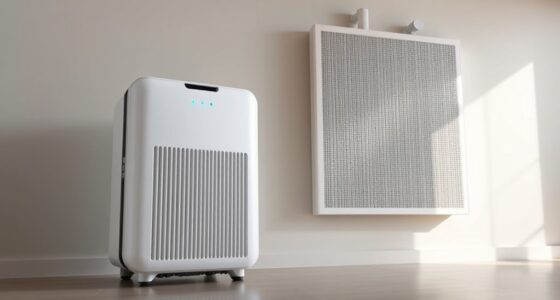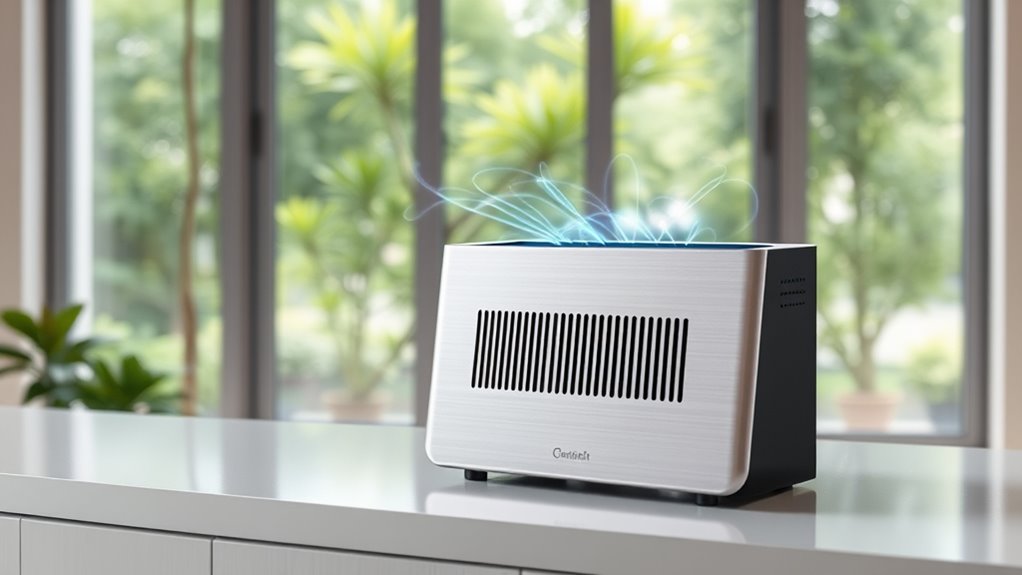
Cold plasma air purifiers use ionization technology to clean your indoor air effectively without producing harmful ozone. They generate charged particles that neutralize airborne pollutants, bacteria, viruses, and odors while breaking down VOCs. Many models also combine UV sterilization and HEPA filters for thorough purification. This makes them safe and efficient options for homes with allergy or asthma concerns. If you want to discover how these innovative devices work and guarantee they’re safe, keep exploring to learn more.
Key Takeaways
- Cold plasma air purifiers use ionization to neutralize pollutants while minimizing or eliminating ozone emissions.
- They generate charged particles that attract and remove airborne contaminants without relying solely on filters.
- Many models incorporate UV sterilization and HEPA filters for comprehensive removal of biological and particulate pollutants.
- These devices are designed for safe, ozone-free operation, suitable for homes and allergy-sensitive environments.
- Proper selection involves checking ozone emission levels and ensuring the purifier combines ionization with additional filtration methods.
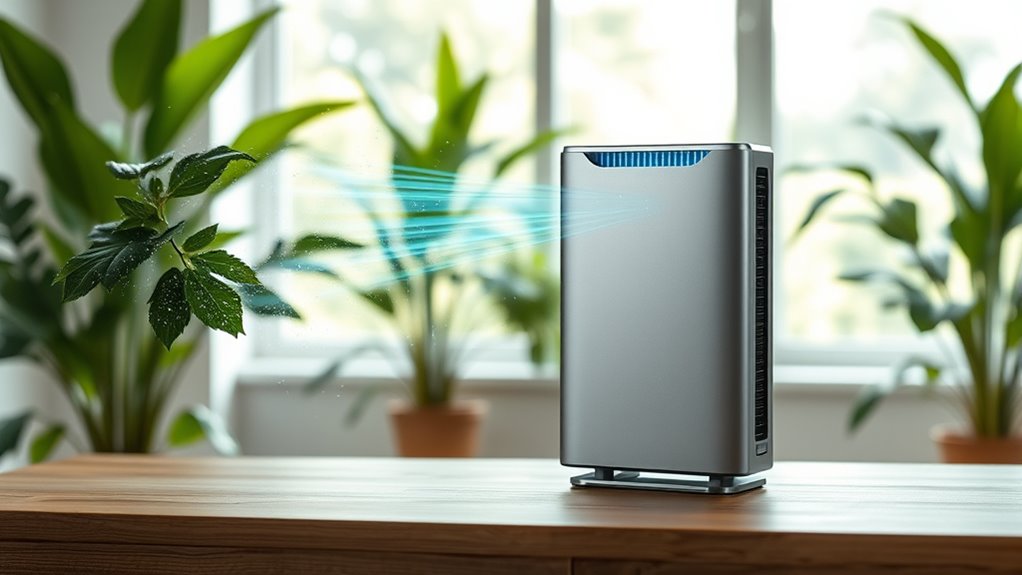
Air purifiers have become essential tools for improving indoor air quality, especially as concerns about pollutants and allergens grow. If you’re considering the latest in air purification technology, cold plasma air purifiers offer an innovative approach that combines ionization with safety, avoiding the ozone issues associated with traditional methods. These devices use ionizing processes that generate charged particles to neutralize airborne contaminants effectively. Unlike older ionizers that could produce ozone, which is harmful in high concentrations, cold plasma purifiers are designed to minimize or eliminate ozone emissions, making them safer for home use.
Cold plasma air purifiers neutralize contaminants safely without ozone emissions, offering an innovative, ozone-free air purification solution.
Incorporating UV sterilization and HEPA filters into these systems enhances their effectiveness. UV sterilization plays a vital role by attacking biological pollutants such as bacteria, viruses, and mold spores. When UV light interacts with these microorganisms, it damages their DNA, rendering them inactive or destroying them altogether. This process greatly reduces the risk of airborne infections and improves overall air hygiene. Meanwhile, HEPA filters are the backbone of many air purifiers, capturing 99.97% of particles as small as 0.3 microns, including pollen, pet dander, dust mites, and smoke particles. These filters work in tandem with ionization to make sure that both microscopic particles and biological contaminants are addressed.
Cold plasma technology works by generating ions that attract and neutralize airborne pollutants, causing them to clump together or fall out of the air, making them easier for HEPA filters to trap. The ionization process also helps break down volatile organic compounds (VOCs) and odors, further improving indoor air quality. Because cold plasma purifiers are designed to operate without producing substantial ozone, you can enjoy cleaner air without the health risks linked to ozone emissions. They are especially suitable for homes, offices, and environments where air quality is a priority, including spaces with allergy sufferers or asthma patients. Additionally, understanding the contrast ratio in air purifiers helps you evaluate their effectiveness in different lighting conditions and room environments.
You’ll appreciate that these purifiers are often quiet and energy-efficient, making them practical for long-term use. They don’t rely solely on filters that need frequent replacement but instead use ionization and UV sterilization to maintain cleaner air over time. This combination of technologies ensures a thorough approach: particles are captured, biological threats are destroyed, and gaseous pollutants are mitigated, all without the ozone concerns that once limited ionizing air purifiers. As you explore options, look for models that clearly specify ozone emission levels and include both UV sterilization and HEPA filtration, so you can trust you’re choosing a safe, effective solution for your indoor air quality needs.
Frequently Asked Questions
How Effective Are Cold Plasma Purifiers Against Airborne Viruses?
Cold plasma purifiers are quite effective against airborne viruses, as they promote viral inactivation by damaging the virus’s outer structure. They also aid in particle filtration, capturing tiny viral particles before they can spread. You’ll notice cleaner air with fewer viral pathogens, making your environment safer. Keep in mind, though, that their effectiveness depends on proper maintenance and the specific purifier model you choose.
Do Cold Plasma Air Purifiers Produce Any Harmful Byproducts?
Cold plasma air purifiers generally don’t produce harmful byproducts, making them safe for indoor use. They’re designed to minimize environmental impact and prioritize ozone safety, avoiding the ozone generation issues seen in traditional ionizers. You can trust that these devices clean your air effectively without introducing dangerous chemicals or pollutants, ensuring a healthier environment for you and your family. Always check product specifications to confirm ozone safety standards.
Can Cold Plasma Technology Eliminate All Types of Indoor Odors?
Cold plasma technology can tackle a wide range of indoor odors through effective odor removal and air purification. While it excels at neutralizing many smells, some stubborn or complex odors may require additional methods. You’ll find cold plasma purifiers efficiently eliminate pet, smoke, and cooking odors, but for complete cleanliness, combining techniques or devices might be your best bet. Overall, they’re powerful, promising, and practically odor-obliterating.
Are Cold Plasma Purifiers Suitable for Use in Hospitals?
Yes, cold plasma purifiers are suitable for hospitals because they enhance hospital safety and patient comfort. They effectively reduce airborne pathogens and odors without producing harmful ozone, making them a safe choice for sensitive environments. By actively filtering and ionizing air, these purifiers help maintain a clean, comfortable atmosphere for patients and staff, aligning with hospital standards for safety and infection control.
What Maintenance Is Required for Cold Plasma Air Purifiers?
You need to follow a regular cleaning schedule for your cold plasma air purifier, typically wiping down the exterior and checking for dust buildup. Replace filters as recommended by the manufacturer, often every 6 to 12 months, to maintain peak performance. Keep an eye on indicator lights if available, and guarantee the device is unplugged before cleaning or replacing filters. Proper maintenance keeps your purifier effective and prolongs its lifespan.
Conclusion
Imagine stepping into a breath of fresh atmosphere, free from the haze of pollutants and ozone. Cold plasma air purifiers quietly work like invisible guardians, ionizing particles without the harsh smell or harmful residues. As you inhale, you feel the crisp, pure air filling your lungs, cleansing every corner of your space. With this technology, you create a sanctuary where clean air flows effortlessly, leaving you refreshed and protected in a world filled with invisible threats.

In the dynamic world of air purifiers and clean air advocacy, Aire stands out as a beacon of knowledge and passion. As the Editor in Chief of Aero Guardians, Aire has been instrumental in shaping the platform’s voice and direction, ensuring that every piece of content resonates with clarity, authority, and authenticity.