When choosing between electrostatic and mechanical filtration, consider their efficiency and maintenance needs. Electrostatic filters trap pollutants using static electricity and are reusable with proper cleaning, offering long-term savings. Mechanical filters rely on dense fiber media to trap particles and often need regular replacement to stay effective. While electrostatic filters handle small particles well, mechanical filters excel at removing larger debris. To find out which option best fits your environment and maintenance preferences, explore the details below.
Key Takeaways
- Electrostatic filters attract particles using static electricity and are reusable, offering long-term cost savings.
- Mechanical filters physically trap particles via dense fiber media and often require frequent replacement.
- Electrostatic filters are effective for small particles and are easier to clean, enhancing maintenance convenience.
- Mechanical filters excel at removing larger debris but need regular replacement to maintain efficiency.
- Overall, electrostatic filters provide durability and lower ongoing costs, while mechanical filters prioritize maximum pollutant removal.

Have you ever wondered how air filters trap tiny particles? It’s pretty fascinating how different filtration methods can impact the air quality inside your home or workspace. When choosing between electrostatic and mechanical filters, understanding their efficiency and maintenance needs can help you make an informed decision. Both types aim to remove dust, pollen, pet dander, and other airborne pollutants, but they do so in unique ways that affect not only the air quality but also how long your filter lasts.
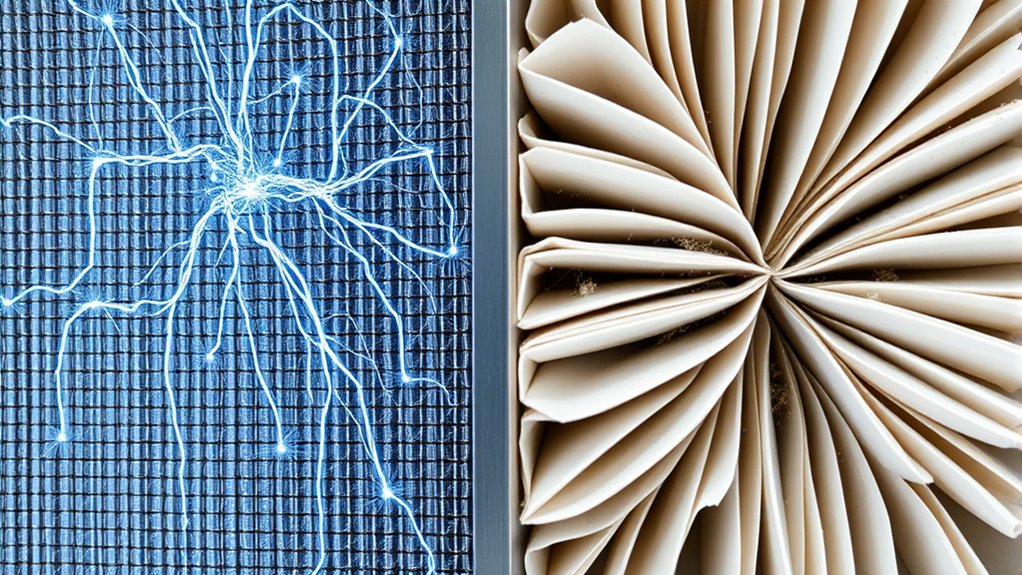
Electrostatic filters use static electricity to attract and capture particles. As air flows through the filter, the tiny fibers generate a static charge, pulling charged particles out of the air. This process allows electrostatic filters to trap a high percentage of pollutants, often comparable to traditional mechanical filters. Because they rely on an electrostatic charge, these filters tend to be very effective at improving air quality, especially for smaller particles that can evade less sophisticated filters. Additionally, electrostatic filters usually boast a longer lifespan since they can be washed and reused multiple times, which is a significant advantage if you’re looking to save on replacement costs. Their durability means you won’t need to replace them frequently, making them a convenient choice for maintaining good air quality over time.
Electrostatic filters generate static charge to efficiently trap airborne pollutants and can be washed and reused multiple times.
On the other hand, mechanical filters work by trapping particles physically as air passes through a dense fiber material. They rely on the size of the pores within the filter media to block larger particles from entering your living space. HEPA filters are a prime example of mechanical filtration—designed to trap at least 99.97% of particles as small as 0.3 microns. Mechanical filters tend to be very effective at removing a broad range of pollutants, especially larger particles like dust and pet hair. However, their filter lifespan can vary depending on the amount of airborne debris in your environment. Over time, these filters can become clogged, reducing airflow and decreasing efficiency. Regular replacement or cleaning is essential to maintain ideal performance and maximize your air quality remains high.
Both electrostatic and mechanical filters have their pros and cons when it comes to efficiency and maintenance. Electrostatic filters generally last longer and are reusable, but their effectiveness can diminish if they’re not cleaned properly. Mechanical filters, while often more straightforward in their design, require more frequent replacements to sustain their filtration efficiency. Ultimately, your choice depends on your specific needs—whether you prioritize filter longevity, ease of maintenance, or maximum filtration efficiency. Whichever you choose, understanding how each filter works helps you keep your air clean and healthy for the long haul.
Frequently Asked Questions
How Do Filter Costs Compare Over Their Lifespan?
You’ll find that electrostatic filters often have a higher initial cost but tend to save money over their lifespan because they are reusable and require less frequent replacement. Mechanical filters generally have a lower upfront price but need regular replacements, increasing ongoing expenses. For a clear cost comparison, do a lifespan analysis to see which option offers better long-term value based on durability, maintenance needs, and replacement frequency.
Can Filters Be Combined for Better Efficiency?
Think of filter synergy as a well-orchestrated band—combining electrostatic and mechanical filters can boost efficiency. You can enhance your system by layering filters, capturing a broader range of particles. This approach reduces maintenance frequency and prolongs filter lifespan. Implementing smart maintenance strategies guarantees both filters work harmoniously, maximizing air quality and saving you money over time. So, yes, combining filters offers a smarter, more effective filtration solution.
What Environmental Impacts Do Each Filter Type Have?
Electrostatic filters typically have a lower environmental impact because they use reusable, washable materials, improving material sustainability and reducing waste. Mechanical filters often rely on disposable paper or synthetic fibers, generating more waste and impacting air quality if not properly disposed of. Your choice affects overall environmental health, as using sustainable materials and proper maintenance minimizes pollution, supports better air quality, and reduces landfill contributions.
Are There Health Risks Associated With Electrostatic Filters?
You might wonder if electrostatic filters pose health risks, and the answer is cautiously yes. Electrostatic hazards can occur if filters are improperly maintained or damaged, potentially releasing particles back into the air. While generally safe when used correctly, filter safety depends on regular inspection and replacement. If you overlook maintenance, you could unknowingly compromise air quality, making it essential to follow manufacturer instructions carefully to minimize any health concerns.
How Do Filters Perform With Different Particle Sizes?
You’ll find that filter performance varies with particle size, affecting filtration efficiency. Smaller particles, like bacteria or smoke, are harder to capture and may pass through less effectively, especially with mechanical filters. Electrostatic filters tend to perform better with smaller particles due to their charge attraction, improving filtration efficiency. Larger particles, like dust or pollen, are generally easier to filter out regardless of the type.
Conclusion
So, whether you trust electrostatic filters with their high-tech charm or stick to mechanical filters for simplicity, remember they both need care. It’s amusing how the “low-maintenance” electrostatic can demand constant cleaning, while the humble mechanical filter quietly does its job. In the end, no filter is perfect—just like us. So go ahead, pick your favorite, and enjoy the irony of cleaning something to keep your air clean.

In the dynamic world of air purifiers and clean air advocacy, Aire stands out as a beacon of knowledge and passion. As the Editor in Chief of Aero Guardians, Aire has been instrumental in shaping the platform’s voice and direction, ensuring that every piece of content resonates with clarity, authority, and authenticity.