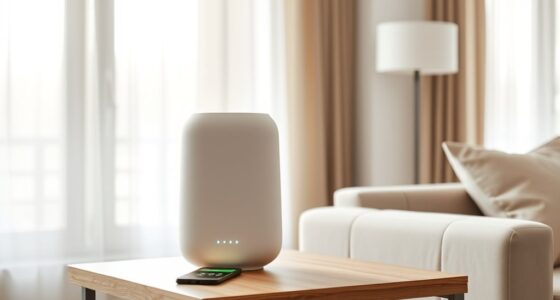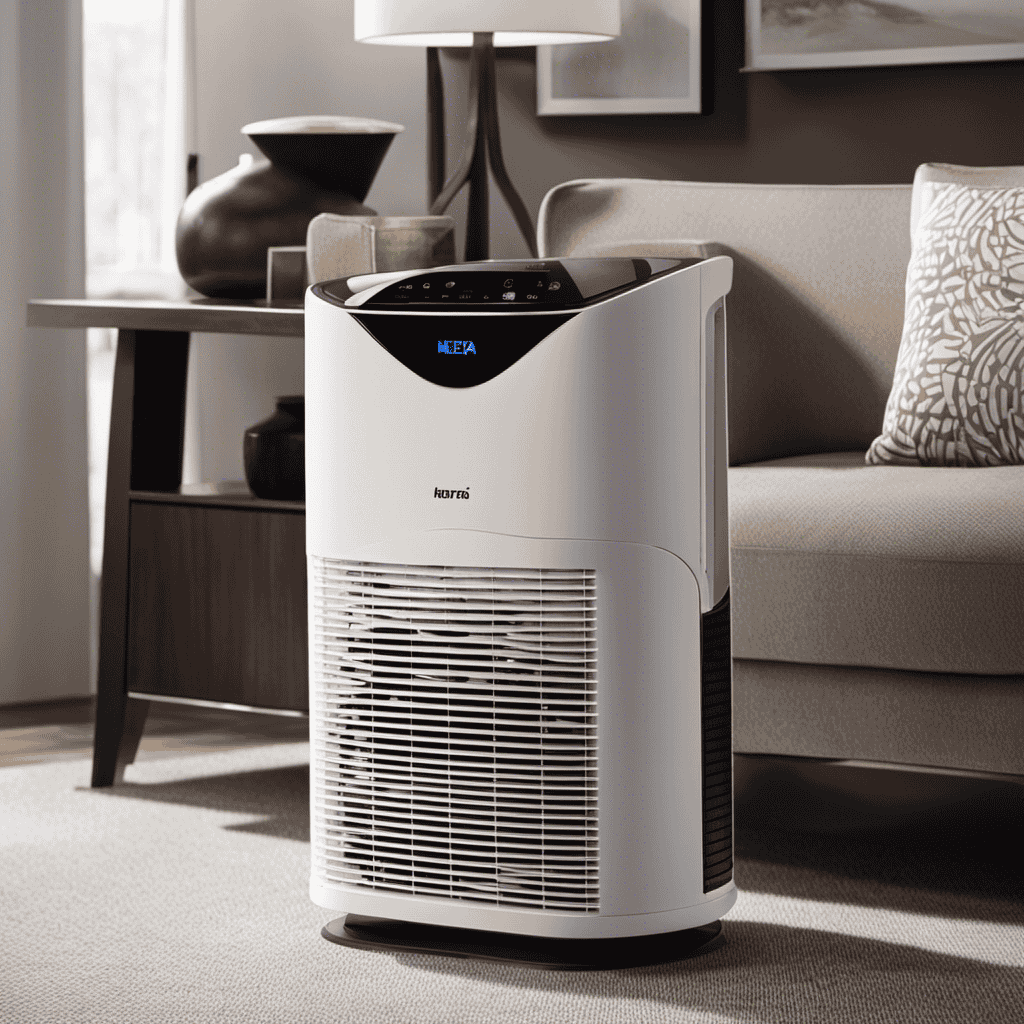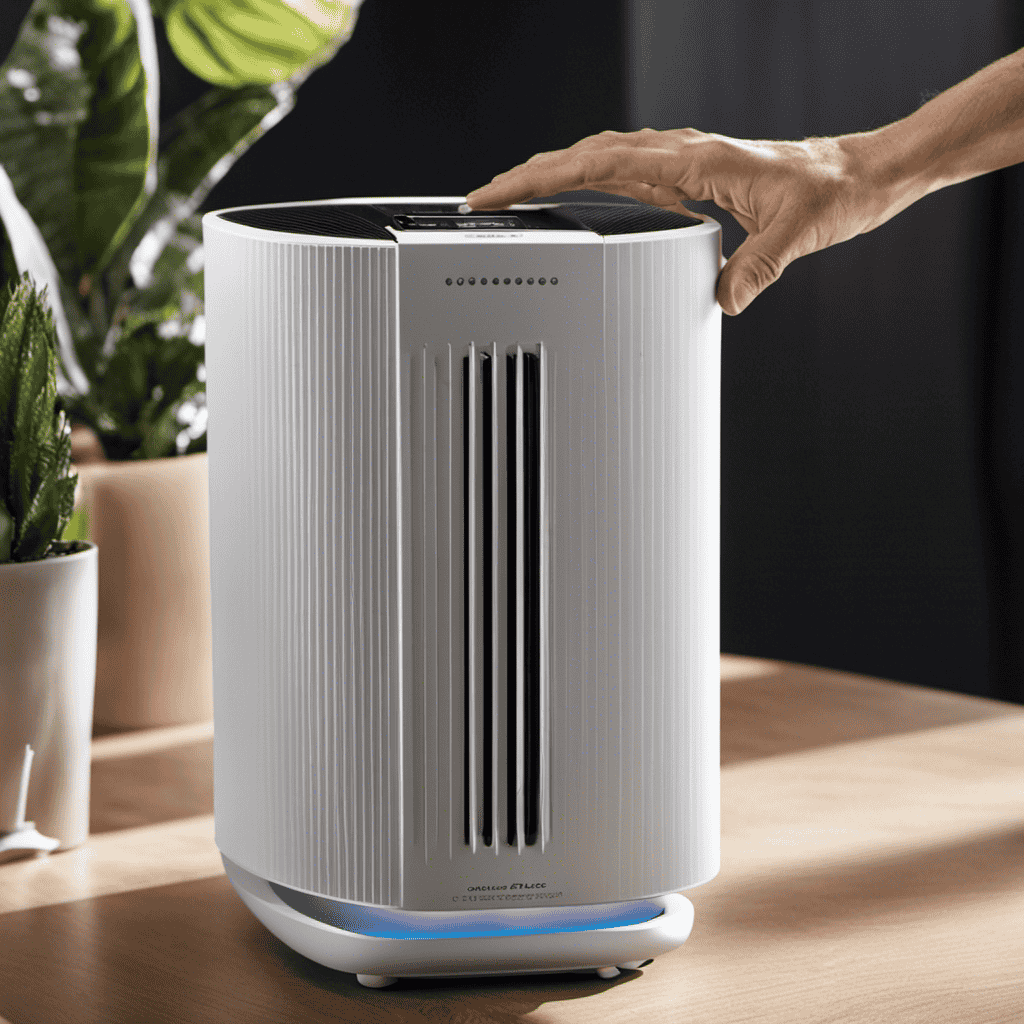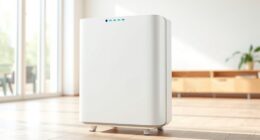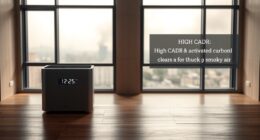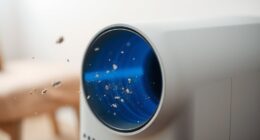
HEPA purifiers in vehicles improve your cabin air quality by trapping tiny particles, allergens, and pollutants that standard filters often miss. They remove dust, pollen, pet dander, bacteria, and odors like smoke or exhaust, making your drive healthier and more comfortable. These compact devices operate quietly and efficiently, ensuring you breathe cleaner air during long trips. If you want to discover how these purifiers can enhance your driving experience, keep exploring to learn more.
Key Takeaways
- HEPA purifiers in vehicles significantly improve cabin air quality by capturing tiny particles like allergens, dust, and pollutants.
- They effectively remove odors from cigarette smoke, exhaust fumes, and cleaning chemicals, enhancing overall air freshness.
- Designed to operate quietly and efficiently, ensuring consistent filtration without driver distraction.
- Regular filter replacement maintains high filtration performance and keeps the air clean during long drives.
- Compact and easy to install, HEPA purifiers create a healthier, more comfortable environment for all passengers.
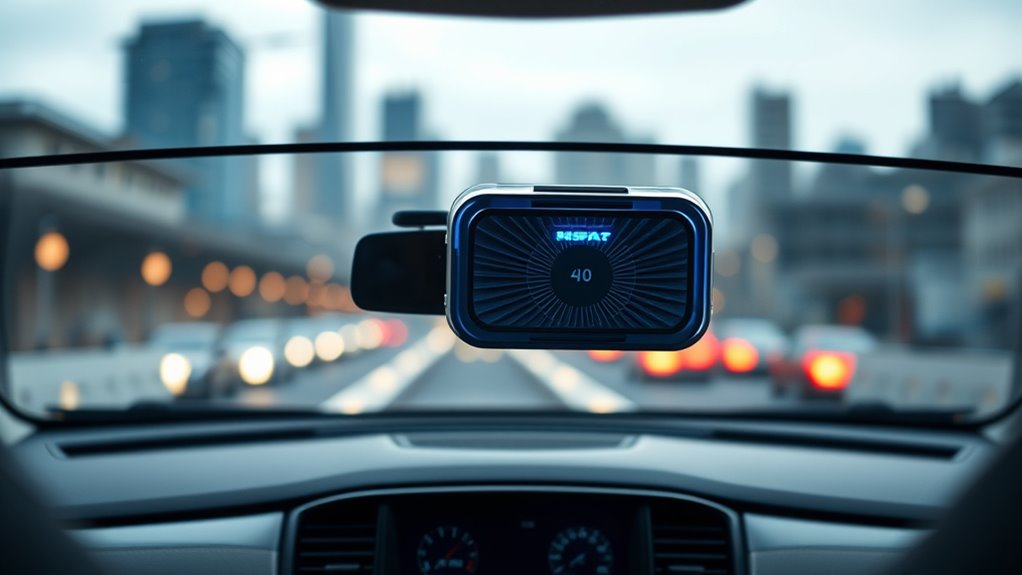
If you spend a lot of time on the road, investing in a HEPA purifier for your vehicle can markedly improve air quality. When you’re behind the wheel for hours, the cabin air can quickly become filled with pollutants, allergens, and airborne particles that compromise your health and comfort. A HEPA purifier is designed to tackle these issues by capturing tiny particles that standard filters often miss. Its high filtration efficiency means it can trap particles as small as 0.3 microns, including dust, pollen, pet dander, bacteria, and even some viruses. This level of filtration ensures you’re breathing cleaner, healthier air during your commute or road trips.
Spending hours on the road? A HEPA purifier ensures cleaner, healthier air in your vehicle.
The key to a HEPA purifier’s effectiveness lies in its filtration efficiency. Unlike basic cabin filters, which mainly remove large debris or odors, HEPA filters are engineered to target microscopic contaminants. When you turn on a HEPA purifier in your vehicle, it pulls air through a dense filter media that traps these tiny particles, preventing them from circulating inside your cabin. This process notably improves air quality, especially if you or your passengers have allergies or respiratory sensitivities. The improved filtration efficiency translates into a noticeable difference: less sneezing, fewer allergy symptoms, and a greater sense of freshness inside your vehicle.
Choosing a HEPA purifier for your car means you’ll also benefit from its ability to reduce unpleasant odors and airborne pollutants that can accumulate over time. Cigarette smoke, exhaust fumes, and even cleaning chemicals can linger in vehicle cabins, affecting air quality and comfort. A HEPA purifier helps eliminate these contaminants, ensuring that the air you breathe is cleaner and healthier. Because these purifiers are compact and designed for vehicular use, they can be easily installed or positioned to maximize airflow and filtration.
Moreover, a HEPA purifier’s high filtration efficiency doesn’t come at the expense of noise or power consumption. Many models operate quietly, so you won’t be distracted or disturbed while driving. They’re also energy-efficient, making them suitable for long journeys without draining your vehicle’s power. Regularly replacing filters ensures the device maintains its filtration efficiency, so your air quality remains consistently high. Maintaining the integrity of the filtration system is essential for optimal performance and air quality. Taking proactive steps by installing a HEPA purifier demonstrates a commitment to your health and wellbeing while on the road, creating a safer, more comfortable cabin environment.
Frequently Asked Questions
How Often Should I Replace the HEPA Filter in My Vehicle Purifier?
You should replace the HEPA filter in your vehicle purifier based on its filter lifespan and replacement schedule, usually every 6 to 12 months. Check the manufacturer’s guidelines, as factors like air quality and usage can affect how often you need to change it. Regularly inspect the filter for dirt and debris, and replace it promptly to guarantee peak air cleaning and maintain healthy cabin air quality.
Can HEPA Purifiers Remove Odors From My Car?
Yes, HEPA purifiers can assist with odor elimination in your car. While their primary function is capturing airborne particles, many models also include activated carbon filters that target odors and gases. This combination enhances air quality by reducing stubborn smells from smoke, pets, or food. To maintain ideal odor control and air quality, make certain you replace filters as recommended and keep your vehicle clean.
Are HEPA Purifiers Safe for Children and Pets?
You’re probably wondering if HEPA purifiers are safe for your loved ones. Rest assured, they are generally safe for children and pets, as they filter out harmful particles without releasing harmful ozone or chemicals. Child safety and pet health are top priorities, so choose a purifier with certified filters and no added fragrances or toxins. Keep your car’s air clean and safe, giving you peace of mind on every drive.
Do HEPA Purifiers Work Effectively While Driving?
Yes, HEPA purifiers work effectively while you’re driving because they maintain good airflow efficiency, removing airborne particles like allergens and pollutants. To keep them functioning at their best, ensure the filter lifespan is not exceeded by replacing filters as recommended. This way, your cabin air stays cleaner, providing a healthier environment for you and your passengers during your drive. Proper maintenance maximizes their effectiveness on the road.
What Maintenance Is Required to Keep the Purifier Functioning Properly?
Maintaining your purifier is like tending a garden—you need regular care. To keep it working well, follow the recommended cleaning schedule and replace the filter when it reaches the end of its lifespan, usually every 6 to 12 months. Check for dust buildup and clean the exterior regularly. Doing so guarantees your purifier continues to effectively clean cabin air, providing you fresh, healthy air during every drive.
Conclusion
Now that you know how HEPA purifiers can transform your driving experience, don’t wait like a knight in a dragon’s lair—equip your vehicle today. With cleaner air, you’ll breathe easier, whether you’re cruising through city streets or setting out on a voyage like a modern-day adventurer. Just remember, even in an age of flying cars and smartphones, pure cabin air remains a timeless treasure. Stay safe, breathe deep, and enjoy your journeys with confidence.

In the dynamic world of air purifiers and clean air advocacy, Aire stands out as a beacon of knowledge and passion. As the Editor in Chief of Aero Guardians, Aire has been instrumental in shaping the platform’s voice and direction, ensuring that every piece of content resonates with clarity, authority, and authenticity.