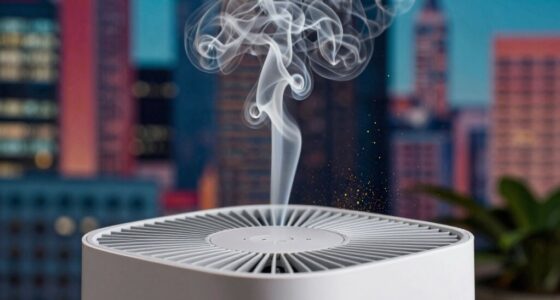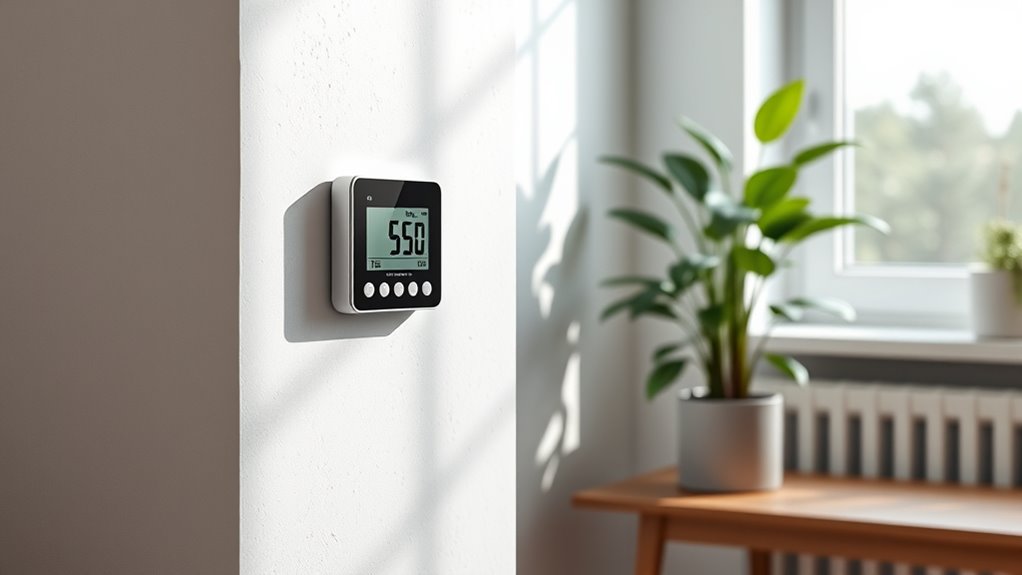

Maintaining the right humidity and temperature is key to good indoor air quality. When humidity is too high, mold and dust mites thrive, affecting your health and comfort. Too low, and your air becomes dry, causing irritation. Temperature influences pollutant levels and mold growth too. Keeping these factors balanced helps reduce allergens, control mold, and improve overall air freshness. Want to discover how to optimize these conditions for a healthier home? Keep going to find out more.
Key Takeaways
- Proper humidity levels (30-50%) prevent mold, dust mites, and improve overall air quality.
- Temperature influences indoor comfort and affects the effectiveness of ventilation and humidity control.
- High temperatures can increase volatile organic compounds (VOCs) and indoor pollutant emissions.
- Low humidity causes dry skin, respiratory irritation, and can lead to increased airborne dust.
- Maintaining optimal temperature and humidity enhances ventilation efficiency and reduces indoor air pollutants.

Indoor air quality directly impacts your health and comfort every day. When the air inside your home isn’t properly ventilated or if humidity levels are off, you can experience a range of issues, from allergies to respiratory discomfort. Understanding how ventilation strategies and humidity control influence indoor air quality helps you create a healthier living environment.
Ventilation strategies are essential for maintaining fresh air and removing indoor pollutants. Without proper airflow, airborne contaminants like dust, pet dander, mold spores, and volatile organic compounds can accumulate, leading to poor air quality. Active ventilation systems, such as exhaust fans, air exchangers, or HVAC systems with fresh air intake, work to introduce clean outdoor air and expel stale indoor air. This exchange reduces indoor pollutant levels and prevents stuffiness, which can cause headaches or fatigue. It’s also important to guarantee that ventilation isn’t just about bringing in fresh air but doing so efficiently. For instance, in colder months, you might need to balance ventilation with energy efficiency, making sure you don’t lose too much heat while still keeping the air fresh.
Effective ventilation removes indoor pollutants while balancing energy efficiency in colder months.
Humidity control is just as critical. Too much moisture in the air creates an environment where mold, mildew, and dust mites thrive—all of which can trigger allergies or asthma attacks. Conversely, overly dry air can cause respiratory irritation and dry skin. Ideally, you want to keep indoor humidity levels between 30% and 50%. You can achieve this by using dehumidifiers or humidifiers, depending on your climate and the current humidity. Proper humidity levels also help maintain the effectiveness of ventilation strategies. For example, high humidity can make ventilation less effective because moisture-laden air feels heavier and can promote mold growth even with good airflow. On the other hand, low humidity can make air feel stale and dry, prompting you to increase ventilation unnecessarily, which might lead to energy waste.
Balancing ventilation strategies with humidity control offers the best approach to optimizing indoor air quality. Properly ventilated spaces with controlled humidity reduce the risk of airborne contaminants and mold growth, creating a healthier environment. You should regularly check humidity levels with a hygrometer and adjust your ventilation and humidification systems accordingly. Additionally, incorporating humidity monitoring devices can help you maintain optimal conditions more precisely. Also, ensure your home has good airflow, especially in areas prone to moisture buildup like bathrooms and kitchens. By paying attention to these factors, you actively improve your indoor air quality, making your living space safer, more comfortable, and healthier to be in every day.
Frequently Asked Questions
How Does Humidity Affect Mold Growth Indoors?
High humidity levels promote mold growth indoors because mold needs moisture to thrive. To prevent mold, you should focus on humidity control by keeping indoor humidity below 60%, ideally around 30-50%. Use dehumidifiers and vents to reduce excess moisture and guarantee proper ventilation. Regularly monitor humidity levels to maintain an environment that discourages mold development and supports a healthier indoor air quality.
What Is the Ideal Indoor Temperature for Health?
You should aim for an indoor temperature around 68-72°F for ideal health. Studies show this range helps reduce the risk of respiratory issues and enhances comfort. To achieve this, focus on humidity control and temperature regulation, which work together to maintain a balanced environment. Keeping your home within this temperature range supports better sleep, lowers mold growth risk, and keeps indoor air quality at its best.
Can Adjusting Humidity Levels Reduce Allergy Symptoms?
Adjusting humidity levels with a humidifier benefits allergy relief by keeping indoor air moist, which can soothe nasal passages and reduce airborne allergens. Proper humidity helps prevent mold and dust mites from thriving, easing allergy symptoms. By maintaining humidity between 40-50%, you create a healthier environment. So, yes, adjusting humidity levels directly helps reduce allergy symptoms, making your living space more comfortable and allergen-free.
How Do Humidity and Temperature Influence Indoor Ventilation?
Imagine you’re in a vintage film scene—humidity and temperature are like the silent directors of indoor air quality. They directly impact air circulation and ventilation efficiency; high humidity can cause stale air to linger, while low humidity helps fresh air circulate better. Temperature differences create drafts that enhance ventilation. To optimize indoor air quality, you should maintain balanced humidity and temperature, ensuring effective air circulation and a healthier environment.
What Are the Long-Term Effects of Poor Indoor Air Quality?
If indoor air quality stays poor long-term, you risk health issues like respiratory problems, allergies, and fatigue. Pollutant buildup from dust, mold, and VOCs can worsen these effects. Without proper air purification, harmful particles linger, making your environment unsafe. Over time, this can decrease your overall well-being and productivity, so it’s vital to maintain good ventilation, control humidity, and guarantee effective air purification to protect your health.
Conclusion
By managing humidity and temperature, you improve comfort, reduce health risks, and enhance air quality. Controlling moisture prevents mold and allergens, while regulating temperature minimizes pollutants and airborne irritants. When you keep humidity balanced and temperature steady, you create a healthier environment, foster better breathing, and promote overall well-being. Remember, maintaining ideal humidity and temperature isn’t just about comfort—it’s about safeguarding your health and ensuring a cleaner, safer indoor space.