
To interpret IAQ sensor data, start by converting raw counts into standard units like micrograms per cubic meter (µg/m³) using sensor calibration factors. Compare these values to air quality standards from agencies like EPA or WHO to understand health implications. Keep in mind, regular calibration guarantees accuracy. By understanding these steps, you can more confidently assess air quality; if you keep exploring, you’ll uncover how to make your data even clearer.
Key Takeaways
- Convert raw sensor counts to standard units like µg/m³ to facilitate comparison with air quality standards.
- Use calibration to ensure sensor accuracy before interpreting data for health assessments.
- Compare pollutant concentrations to EPA or WHO standards to determine air quality levels.
- Calculate the AQI from pollutant concentrations to provide an easy-to-understand health risk indicator.
- Monitor trends and spikes over time to identify pollution sources and assess air quality changes.

Understanding how to interpret indoor air quality (IAQ) sensor data is essential for maintaining a healthy environment. When you’re monitoring air quality, it’s important to know what the sensor readings actually mean in relation to health and safety. Raw sensor data typically comes in counts or concentrations, which can be difficult to interpret directly. That’s where understanding air quality standards and proper sensor calibration makes all the difference. Air quality standards set by organizations like the EPA or WHO provide guidelines on acceptable pollutant levels. These standards serve as benchmarks, helping you determine whether the measured levels pose health risks or require action.
Sensor calibration is a critical step in guaranteeing the data you collect is accurate and reliable. Over time, sensors can drift from their original calibration, leading to skewed readings that misrepresent the actual air quality. Regular calibration against known reference standards ensures that your sensor outputs remain consistent and trustworthy. Think of calibration as fine-tuning your sensor to match real-world pollutant levels, much like adjusting a musical instrument to stay in tune. Without proper calibration, you risk basing decisions on faulty data, which can either cause unnecessary alarm or give a false sense of safety.
Regular sensor calibration ensures accurate, trustworthy air quality data over time.
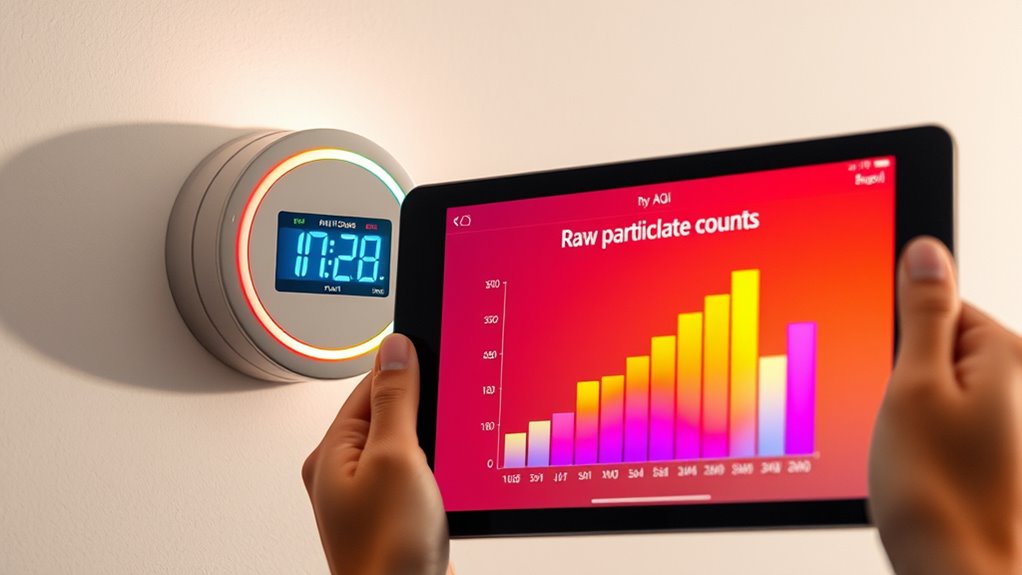
Once your sensors are calibrated correctly, you can interpret the raw data more effectively. For example, a high raw count of particulate matter (PM) indicates increased particle concentration, but to understand its significance, you need to compare it against air quality standards. If the sensor detects PM levels above the threshold defined by air quality standards, you know that ventilation may need to be increased or sources of pollution minimized. Converting raw counts into standardized units like micrograms per cubic meter (µg/m³) helps in making these comparisons clear and actionable.
Furthermore, understanding how to interpret sensor data involves recognizing patterns and trends over time. Sudden spikes might point to specific activities or sources of pollution, while consistent elevated readings could signal a persistent problem. Comparing these patterns against air quality standards helps you determine if immediate mitigation is necessary or if routine maintenance and adjustments will suffice. Keep in mind, sensor calibration isn’t a one-time task; regular checks and recalibrations ensure your data remains accurate as environmental conditions or sensor performance change.
Frequently Asked Questions
How Often Should IAQ Sensors Be Calibrated for Accuracy?
You should calibrate your IAQ sensors at least once every 6 to 12 months to guarantee sensor maintenance and accuracy. Regular calibration helps catch drift and maintains reliable readings. If you operate in environments with high pollution or temperature fluctuations, consider more frequent calibration. Keep track of calibration schedules and follow manufacturer recommendations to maintain sensor performance and ensure accurate indoor air quality monitoring.
What Are Common Causes of False Readings in IAQ Sensors?
Sensor drift can cause false readings, making your IAQ data unreliable, while electrical interference from nearby devices disrupts sensor signals. These issues are common culprits that turn accurate measurements into misleading figures. You might think your sensors are infallible, but even small environmental changes or electromagnetic noise can profoundly skew results. Regular calibration and shielding can help prevent these errors, ensuring your sensor data remains trustworthy and precise.
How Do Environmental Factors Affect Sensor Data Reliability?
Environmental factors like humidity interference and temperature fluctuations can markedly impact your sensor data reliability. High humidity levels can cause false readings by affecting sensor sensitivity, while temperature swings may skew results or cause calibration drift. To guarantee accurate data, you should regularly monitor environmental conditions, perform calibration checks, and consider using sensors designed to minimize these influences, maintaining consistent and trustworthy indoor air quality measurements.
Can IAQ Sensors Detect All Indoor Air Pollutants?
Sure, your IAQ sensor can seem like a superhero, but it’s actually more like a detective with a limited toolkit. It can’t detect all indoor air pollutants because of sensor limitations and pollutant diversity. Some chemicals or particles slip through, leaving you with an incomplete picture. So, don’t rely solely on your sensor’s “superpowers”—combine it with other methods for a full understanding of your indoor air quality.
What Are the Limitations of Low-Cost IAQ Sensors?
Low-cost IAQ sensors have limitations like sensor drift, which affects accuracy over time, and they often need frequent calibration to maintain reliability. You might notice inconsistent readings if calibration isn’t regular, leading to less precise air quality assessments. These sensors may also struggle to detect certain pollutants accurately, especially at low concentrations. To get better results, you should monitor calibration frequency and be aware of their potential drift.
Conclusion
Now that you know how to interpret IAQ sensor data, you’re better equipped to understand your indoor air quality. Remember, it’s not just about raw counts but translating them into meaningful AQI readings. By doing so, you’ll stay ahead of potential issues and breathe easier. Keep in mind, knowledge is power — and in this case, it’s the key to creating a healthier environment for yourself and your loved ones.

In the dynamic world of air purifiers and clean air advocacy, Aire stands out as a beacon of knowledge and passion. As the Editor in Chief of Aero Guardians, Aire has been instrumental in shaping the platform’s voice and direction, ensuring that every piece of content resonates with clarity, authority, and authenticity.