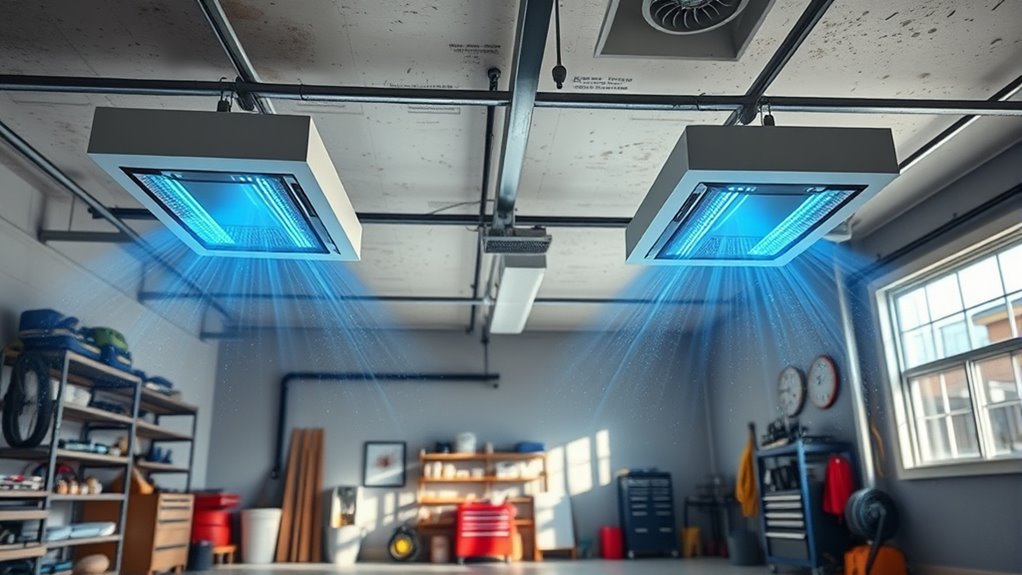
To effectively purify the air in your garage or shed, use a combination of HEPA filters to trap dust, pollen, and allergens, along with activated carbon filters to remove odors and fumes from paints or vehicle exhaust. Guarantee proper ventilation by opening windows or installing exhaust fans, and regularly clean and replace filters to keep air fresh. Managing dust sources and controlling fumes create a safer space—keep going for more tips to improve your air quality even further.
Key Takeaways
- Install HEPA filters and activated carbon purifiers to effectively trap dust, allergens, and neutralize fumes.
- Ensure proper ventilation through exhaust fans or open windows to dilute airborne pollutants.
- Regularly maintain and replace filters to sustain optimal air purification and odor control.
- Minimize dust and fumes at the source by sealing containers and maintaining equipment.
- Combine source control with filtration and ventilation for comprehensive indoor air quality management.
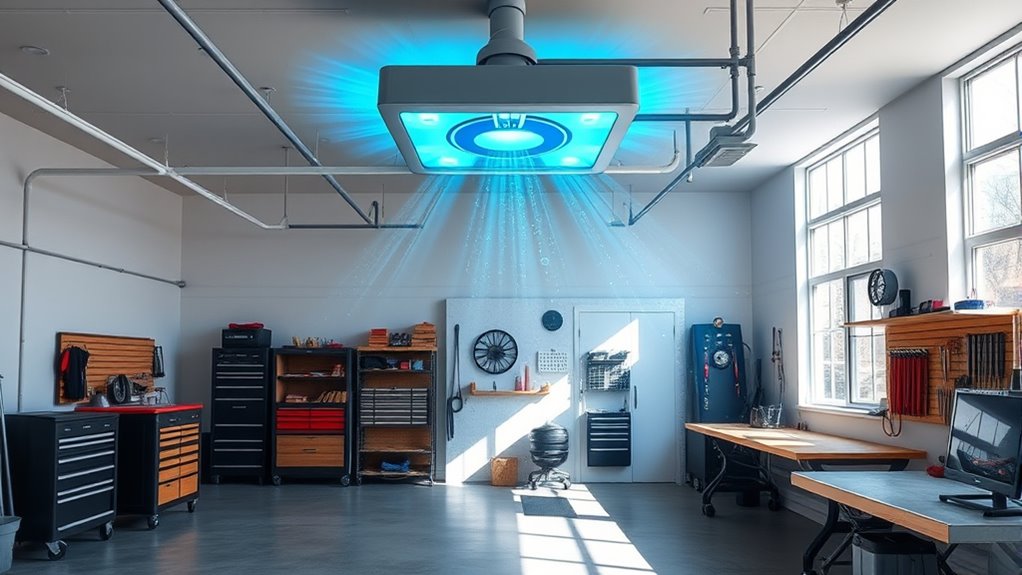
Indoor air quality in garages and sheds can quickly decline due to fumes from vehicles, paints, and other chemicals. These emissions can create a hazardous environment and make your space uncomfortable to work in. The good news is that implementing effective air filtration systems can greatly improve air quality by removing airborne particles, fumes, and odors. When you focus on air filtration, you’re not just reducing dust—you’re actively capturing fumes from paints, solvents, and vehicle exhaust, which helps create a safer, healthier environment. A good air filtration unit with a high-efficiency particulate air (HEPA) filter can trap tiny dust particles, pollen, and other allergens, preventing them from recirculating. This is especially important if you’re working on projects that stir up dust or if you have sensitivities to airborne irritants.
Odor control is another essential aspect of maintaining good air quality in these spaces. Chemicals like gasoline fumes, paint odors, and musty smells can linger and become overwhelming. To combat this, you should look for air purifiers equipped with activated carbon filters. These filters excel at adsorbing gases and odors, transforming unpleasant smells into harmless air. Regularly replacing or maintaining these filters ensures that odors don’t build up over time, keeping your shed or garage smelling fresh and inviting. Proper ventilation also plays a crucial role in odor control; opening windows or installing exhaust fans helps dilute airborne fumes and allows them to escape outside, reducing their concentration indoors. Additionally, selecting appropriate filtration technologies tailored to your specific needs can optimize airflow and purification efficiency. Remember, the effectiveness of your system depends on proper placement and regular maintenance—filters need to be cleaned or replaced as recommended to keep air quality high. Additionally, controlling the source of fumes and dust, such as keeping paints sealed and vehicles well-maintained, complements your filtration efforts.
Frequently Asked Questions
What Are the Best Low-Cost Air Purification Options for Small Garages?
You can improve your garage air quality with budget options like DIY air purifiers using box fans and affordable HEPA filters. Simply attach the filter to the fan’s intake side, creating an effective, low-cost solution for dust and fumes. Additionally, using activated charcoal bags or DIY ventilation setups can help remove odors. These simple, inexpensive methods give you better air without breaking the bank.
How Often Should Air Filters Be Replaced in Garage Purification Systems?
You should replace your garage air filters every 1 to 3 months, depending on filter type and usage. Regular filter maintenance is essential to keep the system running efficiently. Follow the replacement schedule recommended by the manufacturer, especially if you notice decreased airflow or increased dust and fumes. Check filters monthly, and replace them promptly to maintain good air quality and avoid strain on your purification system.
Can Natural Ventilation Effectively Reduce Airborne Dust and Fumes?
Natural ventilation can effectively reduce airborne dust and fumes by increasing natural airflow and promoting passive ventilation. Studies show that proper cross-ventilation can cut indoor pollutants by up to 60%. By opening windows and vents, you allow fresh air to circulate, diluting harmful particles. This method is cost-effective, eco-friendly, and easy to implement, making it a practical solution for improving air quality in garages and sheds.
Are There Any Eco-Friendly Air Purifiers Suitable for Garages?
Yes, eco-friendly air purifiers are available for garages. Look for models with biodegradable filters or plant-based purifiers, which effectively reduce dust and fumes while being gentle on the environment. These purifiers often use natural materials and energy-efficient technology, making them a great choice for sustainable air quality. By choosing these options, you support eco-conscious living and improve your garage’s air without relying on harsh chemicals.
How Do Humidity Levels Impact Dust and Fume Control?
Think of humidity levels as the tide that can either settle dust or stir up fumes. When humidity is too high, moisture management becomes essential; it helps control dust by preventing particles from becoming airborne and reduces fumes’ concentration. Conversely, low humidity can dry out the air, making dust easier to kick up. Proper moisture control keeps your garage air cleaner, helping you maintain a healthier, more controlled environment.
Conclusion
Keeping your garage or shed air clean is essential for a healthier space. Did you know that poor air quality can increase allergy symptoms by up to 50%? By controlling dust and fumes with proper ventilation and air purifiers, you create a safer environment for yourself and your family. Don’t wait until poor air quality affects your health—start implementing these simple tips today and breathe easier every day. Your space and lungs will thank you.

In the dynamic world of air purifiers and clean air advocacy, Aire stands out as a beacon of knowledge and passion. As the Editor in Chief of Aero Guardians, Aire has been instrumental in shaping the platform’s voice and direction, ensuring that every piece of content resonates with clarity, authority, and authenticity.