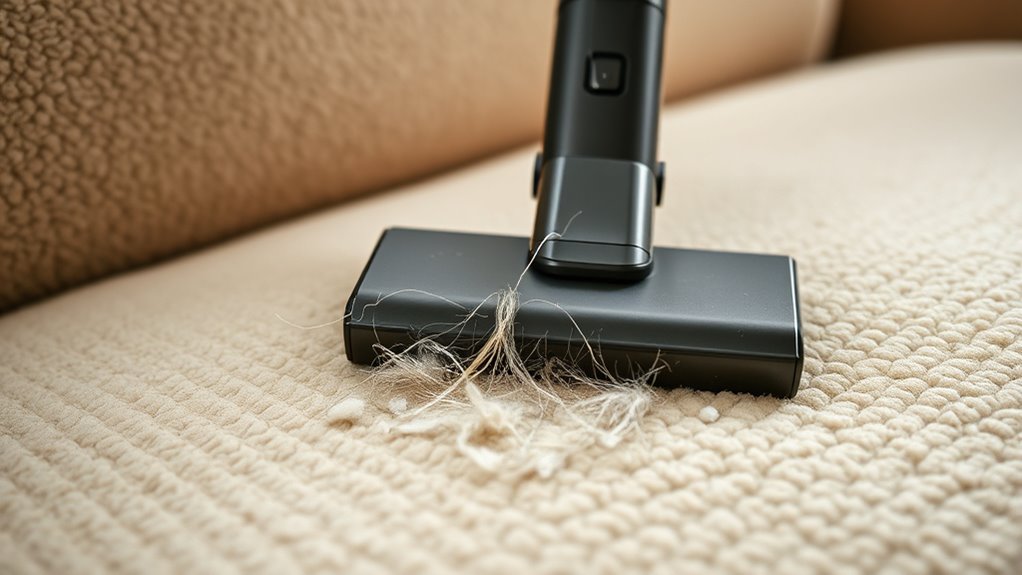
To remove pet hair and dander from carpets and upholstery, regularly vacuum using slow, overlapping passes and the right height setting, employing attachments like upholstery tools and crevice nozzles for targeted cleaning. Combine this with consistent grooming routines—brushing, bathing, and trimming—to reduce loose fur. Maintaining this combination keeps your home cleaner and healthier. If you want more tips on tackling pet hair effectively, you’ll find useful insights ahead.
Key Takeaways
- Use a vacuum with a beater bar and appropriate attachments like upholstery tools for targeted pet hair removal.
- Regularly groom pets to reduce loose fur and dander before it settles into carpets and furniture.
- Employ lint rollers or rubber gloves to pick up pet hair from upholstery and fabric surfaces effectively.
- Apply pet-safe cleaning solutions or steam cleaning to loosen and lift pet dander from carpets and upholstery.
- Maintain a consistent cleaning schedule, combining vacuuming and grooming, to prevent buildup and keep surfaces hair-free.
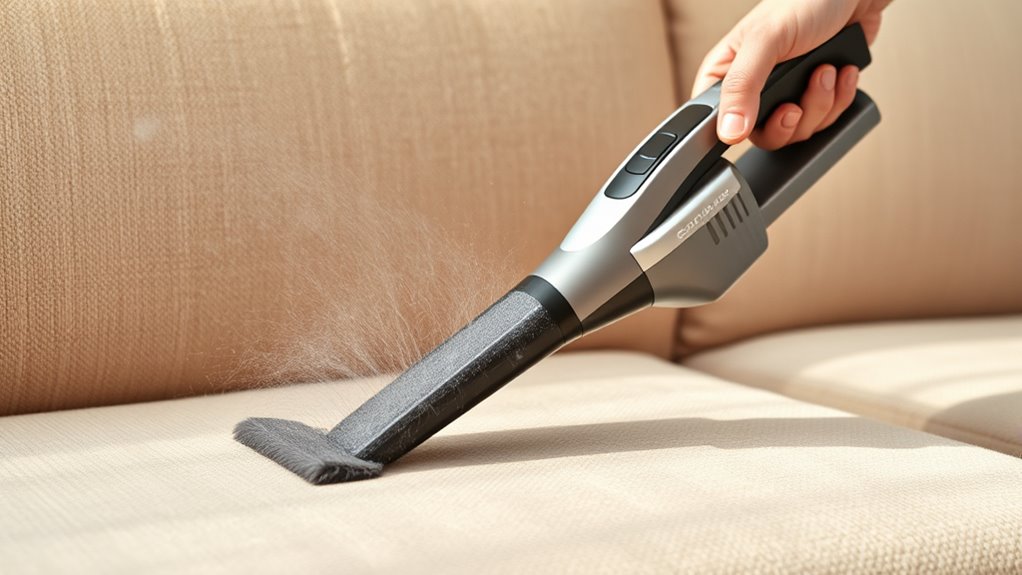
Pets bring joy into our homes, but their hair and dander can quickly become a persistent problem on carpets and upholstery. Tackling this issue requires more than just a quick sweep; it’s about using effective vacuum techniques and staying on top of pet grooming tips. When you vacuum, you want to focus on the right techniques to maximize removal. Instead of just passing the vacuum over a surface once, make slow, overlapping passes. This allows the brush roll or beater bar to lift hair and dander embedded deep in fibers. Use attachments like upholstery tools and crevice nozzles to target tricky spots, seams, and corners where pet hair tends to accumulate. Be sure to adjust your vacuum’s height setting to guarantee good contact with the surface—if it’s too high, it won’t pick up hair effectively, and if it’s too low, it could damage delicate fabrics. Regular vacuuming is key; ideally, you should do it at least two to three times a week, especially if you have multiple pets or shedding breeds.
In addition to vacuum techniques, pet grooming tips play a vital role in reducing the amount of hair and dander in your home. Regular brushing not only keeps your pet’s coat healthy but also markedly decreases loose fur that ends up on furniture and carpets. Use the appropriate brushes or grooming tools for your pet’s fur type—slicker brushes for long-haired breeds or rubber grooming gloves for short-haired ones. Bathing your pet periodically helps loosen and remove shedding hair and dander before it spreads around your home. Make sure to use pet-safe shampoos that won’t irritate their skin. Trimming long hair around the face, paws, and underbelly can also minimize shedding and make cleaning easier.
Consistency is essential. Establish a grooming routine that fits your pet’s breed and coat condition, and stick to it. Combining this routine with effective vacuum techniques ensures you’re tackling pet hair at its source and preventing it from settling deep into your carpets and furniture. Remember, the cleaner your pet’s coat remains, the less hair and dander you’ll have to deal with later. By integrating these pet grooming tips into your regular care schedule and employing proper vacuum techniques, you create a cleaner, healthier environment. This not only reduces allergens but also keeps your living space looking and smelling fresh. Taking these steps makes a noticeable difference in managing pet hair and dander, making your home more comfortable for everyone.
Frequently Asked Questions
Can I Use Homemade Solutions to Remove Pet Hair Effectively?
Yes, you can use DIY remedies and natural solutions to remove pet hair effectively. Try dampening a rubber glove and running it over your carpets or furniture; the hair sticks to the glove. Alternatively, use a mixture of vinegar and water or sprinkle baking soda, then vacuum. These natural solutions are safe, affordable, and eco-friendly, making cleaning up pet hair easier without harsh chemicals.
How Often Should I Deep Clean My Carpets for Pet Dander?
You should deep clean your carpets at least once every three to six months to effectively remove pet dander. Regular vacuum maintenance helps prevent buildup, but deep cleaning targets hidden allergens and stains. Use a carpet cleaner with hot water and enzyme solutions for stain removal and pet dander. Consistent cleaning keeps your home healthier, reduces allergy symptoms, and maintains your carpets’ appearance. Adjust frequency based on pet activity and allergies.
Are There Specific Vacuums Best Suited for Pet Hair Removal?
Did you know that 80% of pet hair can be removed with the right vacuum? You should look for vacuums with a high-efficiency particulate air (HEPA) filter, as they trap pet hair and dander more effectively. A vacuum designed for pet hair has strong suction and a motorized brush to loosen hair from carpets and upholstery. This way, you’ll keep your home cleaner and reduce allergens for everyone.
What Are Allergy-Friendly Alternatives for Pet Owners?
If you’re seeking allergy-friendly options, start with hypoallergenic bedding to reduce pet dander exposure. Using air purifier options with HEPA filters can also markedly improve indoor air quality. Regularly washing your pet’s bedding and cleaning surfaces helps, too. Combining these practices creates a healthier environment for allergy sufferers, making it easier to breathe and reducing allergy symptoms. These simple steps make a big difference in managing pet allergies effectively.
Does Washing Upholstery With Pet Hair Damage Fabric?
Washing upholstery with pet hair won’t damage fabric if you use gentle cycles and avoid harsh chemicals. Notably, 60% of pet owners report reduced allergies after regular cleaning. To protect your fabric, skip fabric softeners and stain removers, which can weaken fibers. Instead, opt for mild detergents and thorough rinsing. This helps preserve your furniture’s integrity while effectively removing pet hair and dander.
Conclusion
By regularly cleaning your carpets and upholstery, you’ll keep pet hair and dander at bay, creating a healthier home. Imagine Sarah, a pet owner who struggled with allergies until she started using these tips—now her living room is hair-free and allergy symptoms have eased. With consistent effort, you can enjoy a fresher, cleaner space where both you and your pets breathe easier. Keep at it, and you’ll see the difference in no time.

In the dynamic world of air purifiers and clean air advocacy, Aire stands out as a beacon of knowledge and passion. As the Editor in Chief of Aero Guardians, Aire has been instrumental in shaping the platform’s voice and direction, ensuring that every piece of content resonates with clarity, authority, and authenticity.