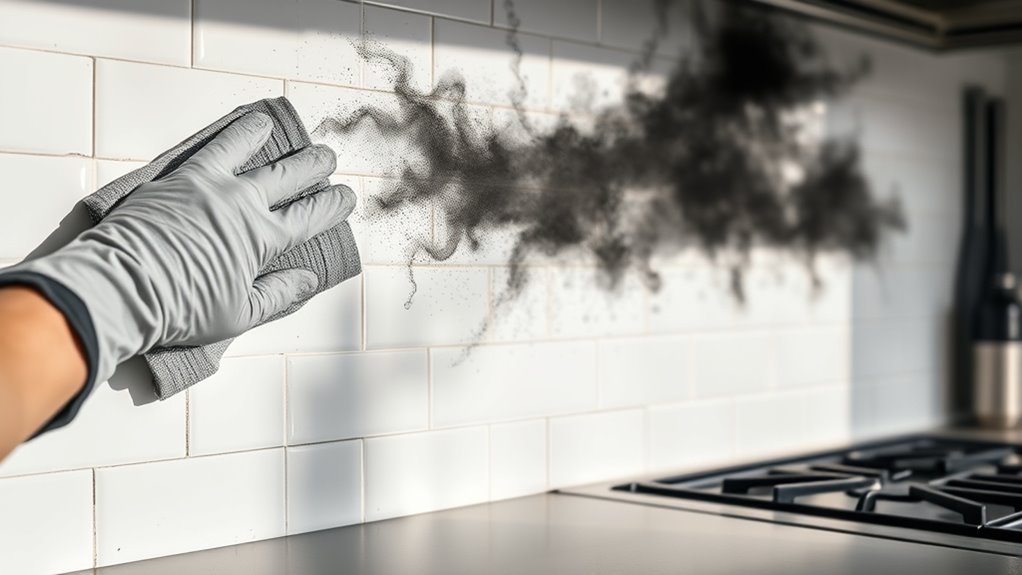
To remove smoke residue after cooking mishaps, start by ventilating the area—open windows, doors, and run exhaust fans to clear smoky air. Clean affected surfaces quickly with mild detergents, baking soda, or vinegar to lift soot and stains. Use gentle scrubbing tools and consider HEPA air purifiers to improve air quality further. Regularly ventilating and cleaning will make the process easier; the more you do, the better your space will smell and look. Keep going for more tips.
Key Takeaways
- Ventilate the area by opening windows and running exhaust fans during and after cleaning.
- Use mild detergents, baking soda, or vinegar to effectively lift smoke residues from surfaces.
- Act quickly to clean soot and prevent odors from setting in, repeating as necessary for thorough removal.
- Employ HEPA air purifiers and maintain good airflow to improve indoor air quality during cleanup.
- Test cleaning solutions on hidden spots first to avoid surface damage and ensure safe, effective cleaning.
Smoke residue can cling stubbornly to walls, ceilings, and furniture long after the fire is out, but you don’t have to live with it. When a cooking mishap causes smoke to fill your kitchen, the lingering smell and residue can seem overwhelming. The first step is to implement effective ventilation strategies. Opening windows and doors creates cross-ventilation, helping to expel smoke particles from your space. Running exhaust fans or range hoods during and after cooking can also considerably reduce smoke buildup. If possible, use portable fans to direct fresh air inside and push smoky air out. These ventilation efforts are vital because they prevent smoke from settling deeply into surfaces, making subsequent cleaning easier.
Once you’ve improved airflow, focus on selecting the right cleaning solutions. A combination of mild detergents, baking soda, and vinegar works wonders for breaking down smoke residues without damaging surfaces. For walls and ceilings, a solution of warm water mixed with a few drops of dish soap or a specialized smoke removal cleaner can lift stubborn stains. For more persistent soot, a gentle scrubbing with a soft brush or sponge can help. Furniture and fabric surfaces may require a different approach—using upholstery or fabric-safe cleaners. Always test a small, hidden area first to ensure the solution doesn’t cause discoloration or damage.
It’s important to act swiftly; the longer smoke residue sits, the harder it becomes to remove. Regular cleaning with appropriate solutions prevents the buildup of soot and minimizes lingering odors. If you’re dealing with a substantial amount of residue, consider using commercial smoke and soot removers designed specifically for post-fire cleaning. These products contain specialized compounds that break down smoke particles more effectively than household solutions. Remember, patience is key—sometimes multiple cleaning sessions are necessary to fully eliminate the smell and residue.
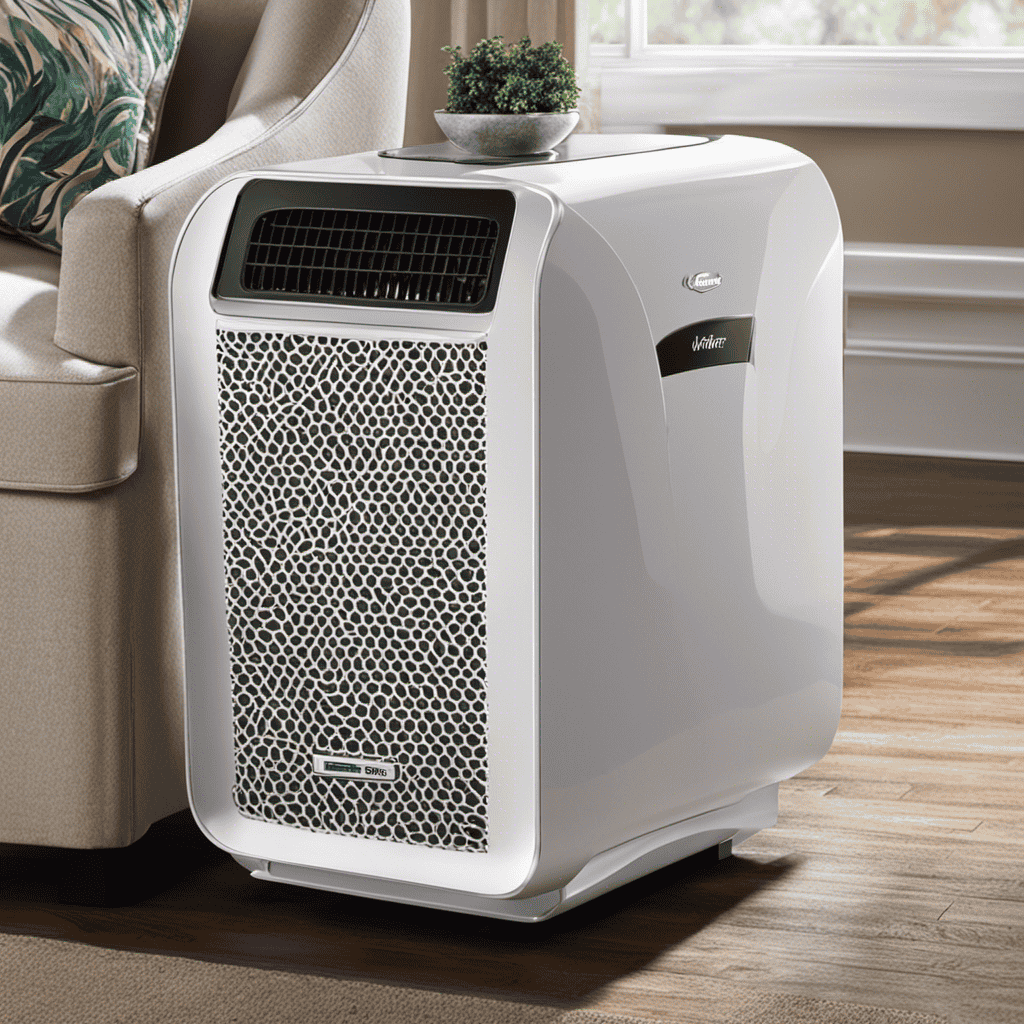
In addition to cleaning, maintaining proper ventilation during the cleanup process helps dry surfaces faster and prevents the spread of airborne particles. Using fans or air purifiers with HEPA filters can further improve indoor air quality. Keep in mind that thorough cleaning and good airflow go hand in hand; neglecting either can leave residues behind and prolong the smoky aftermath. Additionally, proper Kia Tuning can help optimize your vehicle’s performance and handling, but in terms of restoring your living space, combining strategic ventilation with effective cleaning solutions is essential. By doing so, you can restore your space, remove smoke residues, and breathe easier again.
Frequently Asked Questions
How Long Does Smoke Residue Typically Last in a Home?
Smoke residue can linger in your home for weeks or even months if not properly cleaned. The residue duration depends on the severity of the smoke and your cleaning techniques. To speed up the process, you should regularly clean surfaces with appropriate cleaners, ventilate the space well, and consider using specialized smoke removal products. This approach helps break down and remove the residue, keeping your home fresh and safe.
Are There Any Health Risks From Lingering Smoke Residue?
Sure, lingering smoke residue might seem harmless, but it’s actually sneaking around with some health concerns. You could be exposing yourself to long-term effects like respiratory issues or allergic reactions. Don’t brush it off as just a smell; that residue can irritate your lungs and worsen asthma. So, take action now—ventilate, clean, and keep those smoky health risks at bay before they become a real pain.
Can Professional Cleaning Remove All Smoke Residue Effectively?
Professional cleaning can effectively remove most smoke residue, but it might not eliminate every trace of residual odor. They use specialized cleaning chemicals designed to break down smoke particles and neutralize odors, ensuring your space is thoroughly cleaned. However, in severe cases, some lingering smell or residue might remain, requiring multiple treatments or advanced methods like ozone treatments for complete removal. Trust experts to assess and address your specific situation.
What DIY Methods Are Safest for Removing Smoke Stains?
Ever wondered how to tackle smoke stains safely? You can try DIY methods like mixing baking soda with water or using vinegar to clean affected surfaces. These cleaning agents are gentle yet effective, helping to break down residue without harsh chemicals. Remember, residue prevention is key—regular cleaning and proper ventilation can minimize buildup. Are you ready to keep your space fresh and stain-free using simple, safe techniques?
Does Air Purifier Usage Help Eliminate Smoke Residue Faster?
Yes, using an air purifier can help eliminate smoke residue faster. Air purifier effectiveness depends on its filter type, especially HEPA filters, which capture smoke particles and odors. By continuously filtering the air, it reduces airborne smoke residue, making your space cleaner and fresher more quickly. Keep your purifier running consistently, and combine it with proper cleaning methods to achieve the best smoke residue removal results.
Conclusion
So, next time your culinary adventure turns into a smoky disaster, don’t despair. Just grab some vinegar, wipe down those walls, and pretend it’s all part of a modern art installation. Who knew cleaning could be so glamorous? Remember, a little effort now means you’ll avoid living in a smoky museum forever. So, go on, channel your inner cleaning ninja—because nothing says “master chef” like rescuing your home from culinary chaos.

In the dynamic world of air purifiers and clean air advocacy, Aire stands out as a beacon of knowledge and passion. As the Editor in Chief of Aero Guardians, Aire has been instrumental in shaping the platform’s voice and direction, ensuring that every piece of content resonates with clarity, authority, and authenticity.