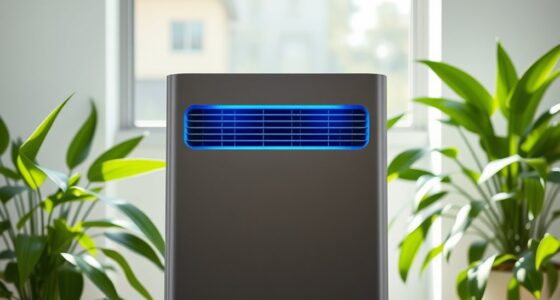
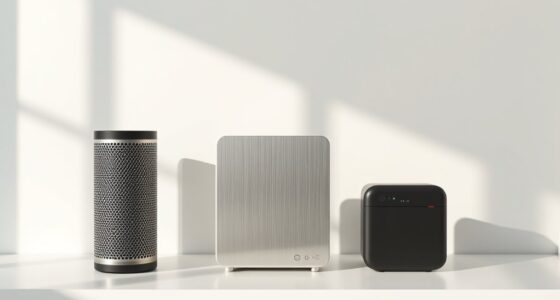
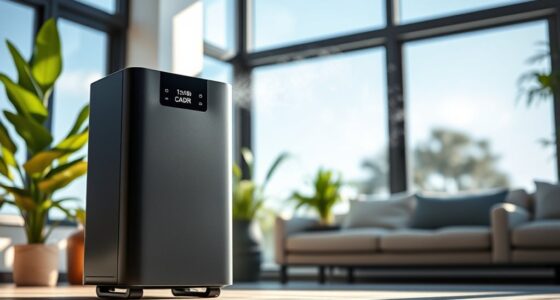
Running your air purifier 24/7 doesn’t automatically shorten filter life, but it can lead to faster filter clogging and wear depending on your environment and filter type. Continuous operation means the filter works constantly, which may cause it to need replacement sooner if the air is heavily polluted. Using energy-saving features and choosing the right filter can help extend its lifespan. Keep exploring to discover tips on optimizing your purifier’s performance and filter longevity.
Key Takeaways
- Continuous operation increases filter wear but doesn’t necessarily shorten replacement intervals if filters are properly maintained.
- Heavily polluted environments cause filters to clog faster, requiring more frequent replacements regardless of run time.
- Using energy-efficient settings and auto modes can optimize operation without impacting filter lifespan.
- Regular filter replacements as per manufacturer guidelines are essential, whether running the purifier 24/7 or intermittently.
- Proper maintenance and choosing suitable filters help extend filter life even with continuous use.

An air purifier’s filter life directly impacts your indoor air quality and the device’s efficiency. When you run your air purifier constantly, it’s natural to wonder if this will shorten the lifespan of its filter. The truth is, operating your air purifier 24/7 doesn’t necessarily mean you’ll need to replace the filter more frequently, but it does influence the overall wear and tear, which can affect both filter replacement intervals and energy consumption. Continuous operation ensures cleaner air consistently, but it also means the filter works harder and more often, leading to quicker accumulation of pollutants and particles. This can cause the filter to clog faster, potentially requiring more frequent replacements. However, the rate of filter degradation depends on the air quality in your environment and the type of filter used. HEPA filters, for example, are designed to handle high pollutant loads but will still need replacement sooner if exposed to heavily polluted air constantly. Additionally, using features like auto mode or smart sensors can help optimize operation and extend filter life. Running your air purifier 24/7 can actually be energy-efficient if your device is designed for continuous use. Many modern purifiers are built with energy-saving features, such as adjustable fan speeds and timers, which help reduce unnecessary energy consumption. If you keep the device on at a low or medium setting, you maintain good air quality without drastically increasing your electricity bill. Conversely, running it on high continuously might boost energy consumption, but it can also prolong the time between filter replacements because the filter captures and holds more particles faster. Still, it’s essential to find a balance; constantly running the device at high speed isn’t always necessary and can lead to higher energy costs without proportional benefits. To maximize the lifespan of your filter and keep energy costs down, consider using features like auto mode or timers, which allow the purifier to operate only when needed. Regularly replacing filters as recommended by the manufacturer ensures best performance and prevents strain on the device. Neglecting filter replacement can cause the purifier to work harder, increasing energy use and reducing its lifespan. Also, keep an eye on the air quality sensor readings if your purifier has them, as these can help you determine when to increase or decrease operation. Properly maintained filters and efficient operation can provide clean air around the clock without substantially impacting your energy bills or device longevity. Understanding air filter capacity is key to maintaining optimal performance over time.
Frequently Asked Questions
Can Running an Air Purifier Constantly Improve Indoor Air Quality Long-Term?
Running an air purifier constantly can improve your indoor air quality over time by continuously reducing pollution levels and airborne allergens. It helps maintain a healthier environment, especially if you live in an area with high pollution or have allergies. While it may slightly shorten filter life, the benefits of cleaner air outweigh this. Regularly replacing or cleaning filters guarantees your purifier works efficiently and keeps your indoor air fresh long-term.
Do Different Filter Types Have Varying Lifespans With Continuous Use?
You’ll notice that different filter materials, like HEPA or activated carbon, naturally have varying lifespans with continuous use. While some filters last longer, they may require less frequent maintenance, saving you effort and ensuring cleaner air. Others might need more frequent replacements, but their superior purification benefits can make it worthwhile. Paying attention to your filter type and maintenance schedule helps keep your air purifier working efficiently and your home feeling fresh.
How Does Room Size Affect Filter Replacement Frequency?
Your room size directly impacts how often you need to replace the filter. Larger room volume means the air purifier works harder, reducing filtration efficiency over time and requiring more frequent filter changes. If your space is small, the filter lasts longer since it doesn’t have to process as much air. Always match your purifier’s capacity to your room size for ideal performance and filter longevity.
Does the Air Purifier’s Brand Influence Filter Longevity?
Think of your air purifier as a trusted friend; some brands have a reputation for durability, like a reliable companion. The brand influences filter longevity because reputable brands often use better filter materials that last longer, even with continuous use. While running it 24/7 doesn’t necessarily shorten filter life if you choose a quality brand, opting for lesser-known brands might mean more frequent replacements. Trust the brand’s reputation to guarantee your purifier’s filters stay effective longer.
Are There Signs Indicating It’s Time to Replace the Filter Early?
You’ll know it’s time to replace your filter early if the filter indicator lights up or if you notice a persistent odor buildup despite running your purifier regularly. A dirty filter can lead to decreased airflow and reduced air quality. Keep an eye on the indicator and replace the filter as recommended to maintain peak performance and guarantee your air stays clean and fresh.
Conclusion
Running your air purifier 24/7 won’t necessarily cut its filter life in half, but it can accelerate wear and tear. If you want to get the most out of your filters, consider running it only when needed and following the manufacturer’s guidelines. Remember, don’t put all your eggs in one basket—balance your usage to avoid unnecessary replacements. Staying proactive ensures your air stays fresh without prematurely draining your wallet.

In the dynamic world of air purifiers and clean air advocacy, Aire stands out as a beacon of knowledge and passion. As the Editor in Chief of Aero Guardians, Aire has been instrumental in shaping the platform’s voice and direction, ensuring that every piece of content resonates with clarity, authority, and authenticity.