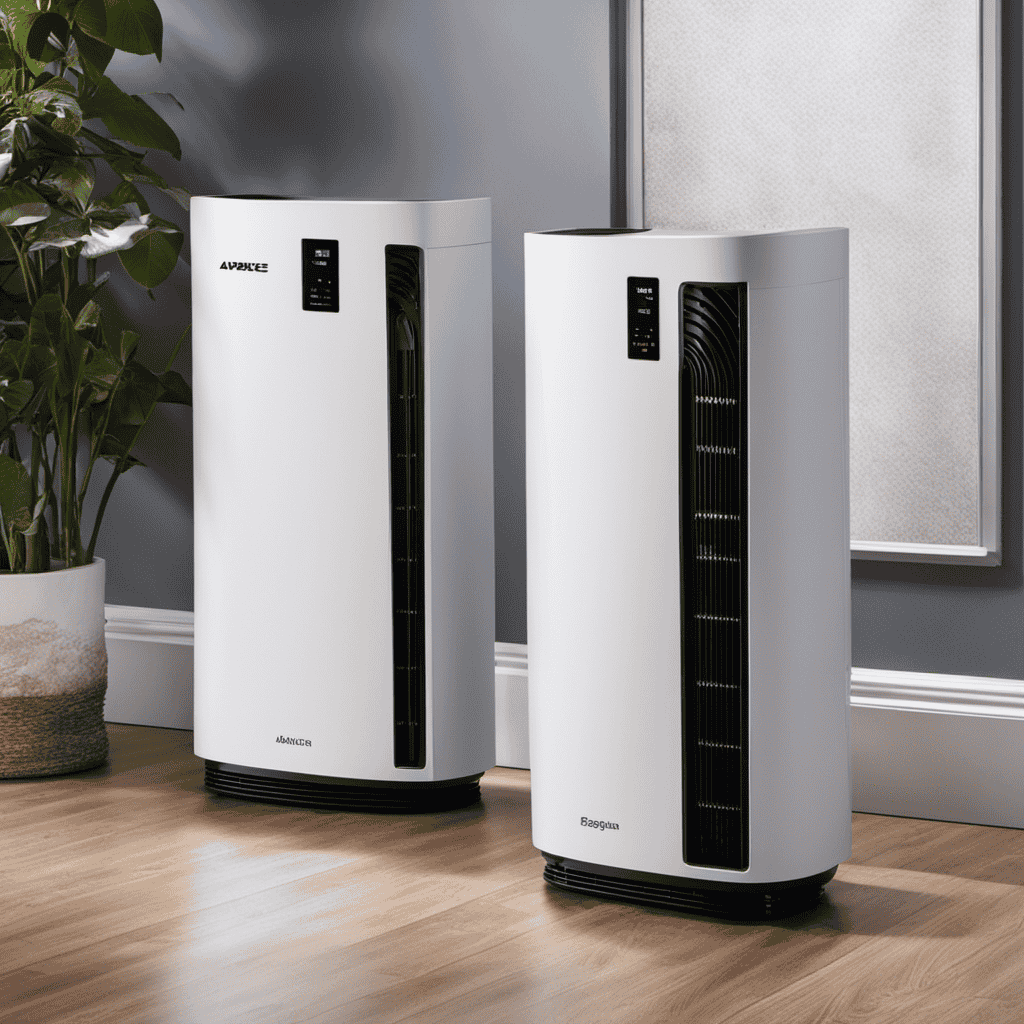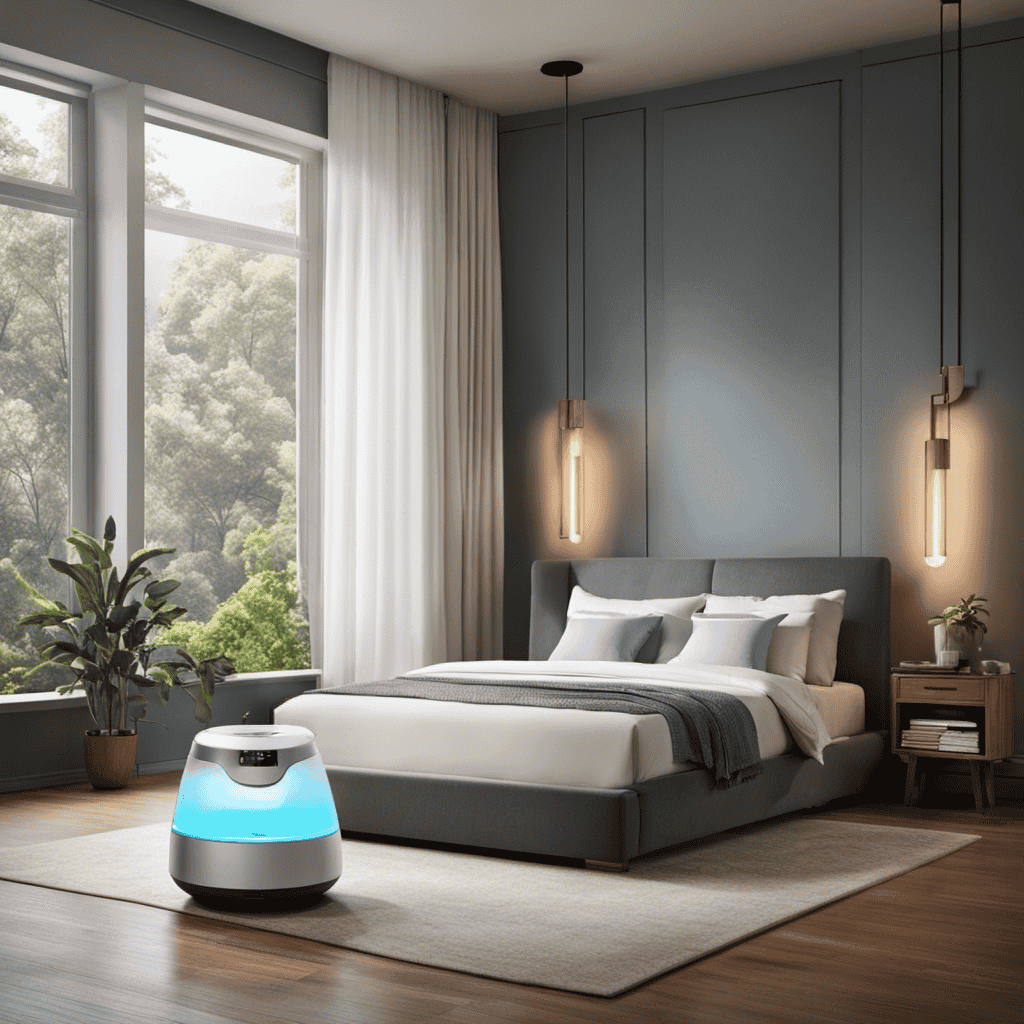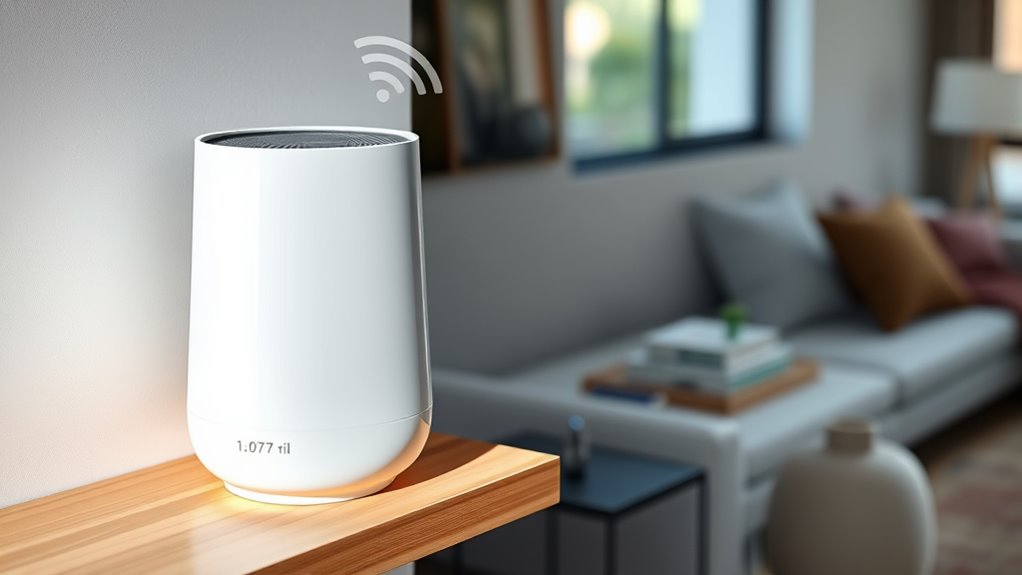
Smart air purifiers offer advanced sensors that monitor indoor air quality in real time, adjusting filtration automatically based on pollutant levels. Through mobile app connectivity, you can remotely track air conditions, set preferences, and receive alerts for maintenance or pollutant spikes. They also integrate with smart home systems and store data to analyze patterns. These features guarantee your air stays clean effortlessly. Keep exploring to discover how these smart devices can transform your indoor environment.
Key Takeaways
- Equipped with sensors for real-time monitoring of indoor pollutants like dust, pollen, and VOCs.
- Mobile apps enable remote control, data visualization, and alerts for air quality changes.
- Automated operation based on air quality thresholds and smart home integration for seamless management.
- Stores historical data for trend analysis and provides maintenance alerts to ensure optimal performance.
- Enhances convenience and health by transforming purifiers into responsive, connected devices.
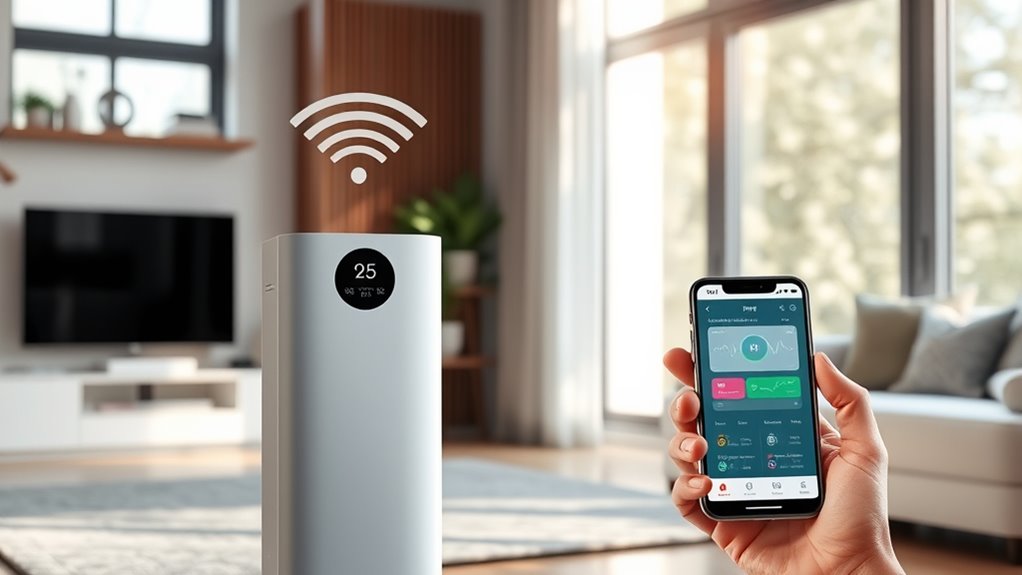
Have you ever wondered how smart air purifiers can enhance the quality of your indoor environment? The answer lies in their advanced connectivity and data features, which put you in greater control of your air quality. These devices are equipped with air quality sensors that continuously monitor pollutants like dust, pollen, smoke, and VOCs. By gathering real-time data, they adapt their filtration processes accordingly, ensuring your air stays clean and healthy. Instead of manual adjustments, you benefit from an intelligent system that responds instantly to changing air conditions, providing peace of mind and a healthier home.
Smart air purifiers use sensors and real-time data to automatically optimize air quality and filtration.
One of the key advantages of smart air purifiers is their seamless mobile app integration. With a dedicated app on your smartphone, you can remotely monitor air quality levels, adjust settings, and even receive alerts when pollutants spike. This means you’re always informed, whether you’re at work, traveling, or relaxing at home. The app often visualizes data through easy-to-understand graphs, showing trends over time so you can identify patterns or potential issues. This real-time insight helps you make more informed decisions about your environment and ensures you’re taking the right steps to improve air quality.
Mobile app integration also enables automation features that maximize purifier performance without your constant input. For example, you can set schedules or establish preferred air quality thresholds, and the device will automatically turn on, adjust fan speeds, or switch modes to maintain ideal conditions. Some models even sync with other smart home devices, creating a cohesive ecosystem that enhances overall air management. This connectivity means you don’t have to remember to turn on or off your purifier or adjust settings manually — the system takes care of it, saving you time and effort.
Furthermore, these features foster a more personalized experience. The app can store historical data, allowing you to track how indoor air quality responds to various activities or environmental changes. You can receive notifications about filter replacements or maintenance needs, preventing sudden breakdowns or performance drops. This proactive approach keeps your device operating efficiently for longer periods and ensures consistent air purification.
In essence, the integration of air quality sensors and mobile apps transforms a basic purifier into a smart, responsive device that actively manages your indoor air. It offers convenience, real-time insights, and automation, making it easier than ever to maintain a healthy living space. With these technological advancements, you’re empowered to take control of your air quality, ensuring that your environment remains fresh, safe, and comfortable at all times. This integration also emphasizes the importance of regular maintenance, which is crucial for optimal performance and longevity of your device.
Frequently Asked Questions
How Secure Is the Data Collected by Smart Air Purifiers?
You can trust that the data collected by smart air purifiers is generally secure. Manufacturers use data encryption to protect your information from unauthorized access, and they prioritize maintaining user anonymity to safeguard your identity. While no device is completely invulnerable, these security measures help ensure your data stays private. Always stay updated on firmware and privacy policies to maximize your device’s security and protect your personal information.
Can Smart Purifiers Integrate With Existing Smart Home Systems?
Ever wondered if your smart air purifier can seamlessly fit into your home automation system? The answer is yes; most smart purifiers are designed for device interoperability, allowing you to control them alongside other smart devices. By integrating with existing smart home systems, you enhance convenience and automation, making your home smarter. Just verify compatibility, and you’ll enjoy synchronized control over your air quality and other connected devices effortlessly.
Do Smart Air Purifiers Require a Subscription for Data Services?
No, smart air purifiers typically don’t require a subscription for data services. You might encounter subscription fees for advanced features or cloud storage, but basic data access usually comes free. Keep in mind, data ownership varies; manufacturers might collect and use your data, so review privacy policies. You control your data, and subscriptions aren’t necessary unless you want extra features or enhanced monitoring.
How Accurate Are the Sensors in Detecting Air Quality Changes?
The sensors in smart air purifiers are quite accurate, especially when properly calibrated. They excel at real-time monitoring, providing timely updates on your air quality. Regular sensor calibration guarantees precision, and most models are designed to detect changes quickly and reliably. While no sensor is perfect, high-quality units offer dependable readings, helping you make informed decisions about improving your indoor air quality.
What Is the Data Privacy Policy of Manufacturers Regarding User Information?
Manufacturers prioritize your privacy by requiring your user consent before collecting any data. They often implement data encryption to protect your information from unauthorized access. You should review each company’s privacy policy to understand how your data is used, stored, and shared. By staying informed, you can guarantee your personal details remain secure, and you have control over what information you share with your smart air purifier.
Conclusion
As you explore the world of smart air purifiers, you might find that their connectivity and data features seamlessly fit into your daily routine, making cleaner air almost effortless. Sometimes, it’s funny how these devices not only respond to your needs but also reveal insights you didn’t expect, like patterns in your air quality. In the end, they’re more than just gadgets—they become quiet companions, quietly shaping a healthier, smarter home without you even realizing it.

In the dynamic world of air purifiers and clean air advocacy, Aire stands out as a beacon of knowledge and passion. As the Editor in Chief of Aero Guardians, Aire has been instrumental in shaping the platform’s voice and direction, ensuring that every piece of content resonates with clarity, authority, and authenticity.