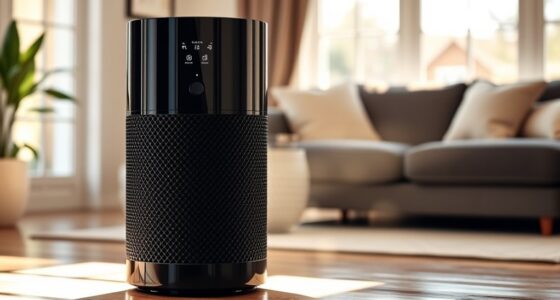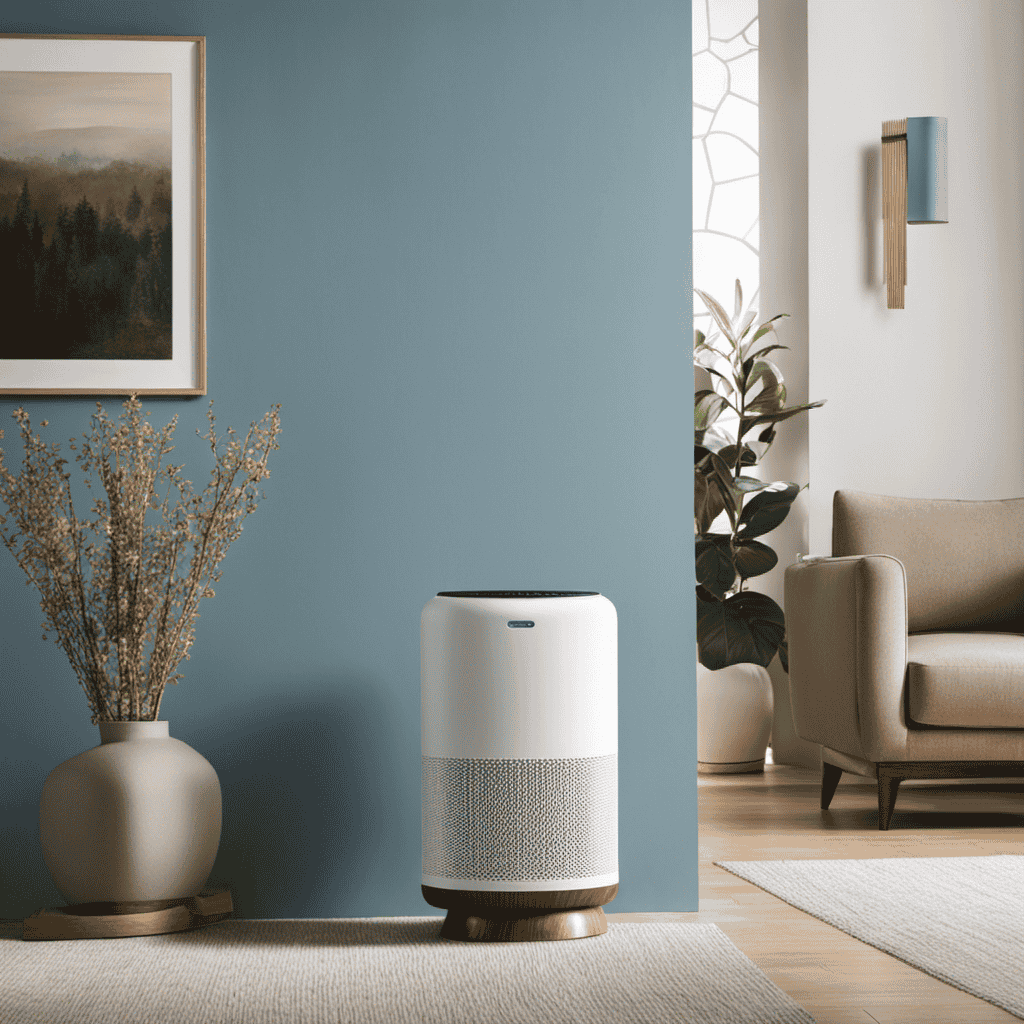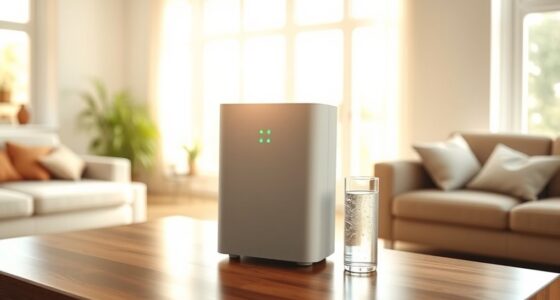
Water-based air purifiers clean your air by using water to trap dust, allergens, bacteria, and gases, making your environment healthier. They draw air into a water chamber where pollutants dissolve or get caught, reducing airborne contaminants effectively. These purifiers are eco-friendly, easy to maintain, and can neutralize odors and VOCs alongside particles. To discover how these systems provide a natural, all-encompassing clean, keep exploring the details behind their innovative technology.
Key Takeaways
- Water-based air purifiers trap airborne pollutants by passing air through or over a water chamber, removing dust, allergens, bacteria, and viruses.
- They neutralize soluble gases and odors by dissolving and neutralizing airborne contaminants in water.
- These purifiers require less maintenance, needing regular water changes and easy cleaning to prevent mold and bacteria buildup.
- Water acts as a natural barrier, enhancing filtration efficiency and reducing reliance on mechanical filters like HEPA or activated carbon.
- Overall, they provide a natural, eco-friendly method to wash and improve indoor air quality effectively.
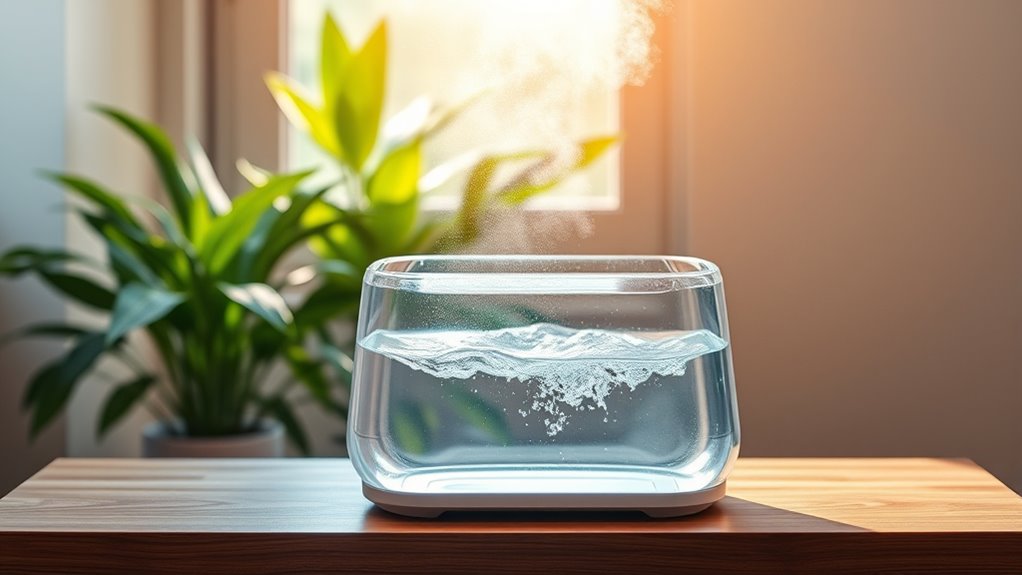
Water-based air purifiers offer an effective way to improve indoor air quality by using water to trap airborne pollutants. These devices rely on innovative air purification technology that combines water’s natural filtering ability with advanced engineering. As you explore these purifiers, you’ll discover that their core strength lies in how they manage airborne contaminants, including dust, allergens, bacteria, and even some viruses. Unlike traditional filters that trap particles on paper or mesh, water-based systems utilize water purification methods to absorb and neutralize pollutants, making the air cleaner and healthier to breathe.
Water-based air purifiers effectively remove dust, allergens, bacteria, and viruses, making indoor air cleaner and healthier.
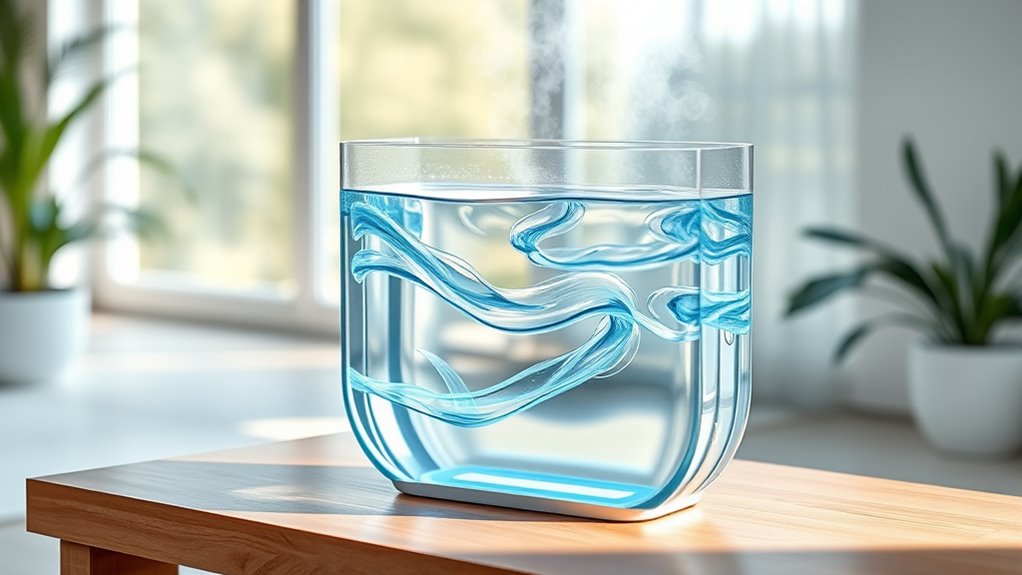
In operation, these purifiers draw air into the unit, where it encounters a water chamber or basin. The air passes through or over the water, capturing particles and soluble gases. This process is akin to how water purification methods work in removing impurities from drinking water, but in this case, it’s applied to the air. Because water can trap a wide range of airborne pollutants effectively, it provides a natural filtration process that’s both efficient and environmentally friendly. The water acts as a barrier, preventing many pollutants from recirculating into your living space, which reduces the load on other air purification technology components like HEPA filters or activated carbon.
The water purification methods used in these devices are designed to maximize the contact between air and water, often incorporating features like oscillation or multiple water chambers. This enhances filtration efficiency and ensures that the air you breathe is considerably cleaner. Furthermore, these systems typically require less maintenance than traditional filter-based purifiers, as the water can be refreshed regularly, and the device can be cleaned to prevent mold or bacteria growth. This ease of upkeep makes water-based air purifiers suitable for continuous use in homes, offices, and other indoor environments.
Additionally, understanding the importance of air quality management can help you make more informed choices when selecting a purifier, ensuring it meets your specific needs. You’ll also find that water-based units are versatile because they don’t rely solely on mechanical filters. Instead, they use a combination of physical trapping and water’s natural ability to dissolve and neutralize airborne gases. This means they can tackle a broader spectrum of pollutants, including odors and volatile organic compounds (VOCs), which are often challenging for standard filters. By integrating effective air purification technology with water purification methods, these devices offer a holistic approach to indoor air quality. They wash the air, literally and figuratively, providing a fresher, healthier environment for you and your loved ones.
Frequently Asked Questions
How Often Should I Change the Water in a Water-Based Air Purifier?
You should change the water in your water-based air purifier every 1 to 2 days to maintain ideal performance. Follow a regular maintenance schedule, including water replacement, to prevent bacteria buildup and ensure clean air. If you notice any odors or reduced effectiveness, change the water sooner. Regularly cleaning the unit and refilling with fresh water keeps it functioning properly and extends its lifespan.
Are Water-Based Purifiers Effective Against All Types of Airborne Bacteria?
Think of your water-based purifier as a vigilant gatekeeper, but it isn’t a magic shield. While it excels in bacterial filtration and air purification, it doesn’t catch all airborne bacteria, especially tiny or resistant types. You should use it alongside other air quality measures for all-encompassing protection. Regular maintenance and filter changes help it perform better, but don’t rely solely on it for complete bacterial defense in your space.
Can Water-Based Air Purifiers Be Used in Humid Environments?
Yes, you can use water-based air purifiers in humid climates, but be mindful of moisture levels. These purifiers work well, but high humidity can cause excess moisture, leading to mold or bacteria growth inside the unit. To prevent this, regularly clean and maintain your purifier, and consider using a dehumidifier if the environment is excessively humid. Proper care guarantees effective air cleaning without unwanted moisture buildup.
Do Water-Based Purifiers Produce Any Noise During Operation?
You’ll find that water-based air purifiers hum softly, like a gentle breeze whispering through leaves. Their noise levels are usually minimal, with operational sounds staying quiet enough to blend into your home’s background. You might notice a faint gurgle or bubbling, but it’s hardly disruptive. These purifiers prioritize peaceful operation, ensuring you breathe clean air without the distraction of loud or annoying noises.
What Is the Typical Energy Consumption of Water-Based Air Purifiers?
Water-based air purifiers are generally energy-efficient, with low power consumption compared to traditional models. You’ll find they use about 20 to 60 watts, depending on size and features. This means they’re cost-effective to run and help you maintain good air quality without high energy bills. Their energy efficiency makes them a practical choice for continuous operation, keeping your environment fresh while conserving power.
Conclusion
Imagine your home as a lush garden, and water-based air purifiers as gentle rain washing away dust and pollutants. By choosing these devices, you’re inviting invigorating, clean air to dance freely through your space, like butterflies in a breeze. They’re your personal oasis, turning the air into a crystal-clear stream of purity. Embrace this revitalizing change, and let your air be as pure and vibrant as a spring morning.

In the dynamic world of air purifiers and clean air advocacy, Aire stands out as a beacon of knowledge and passion. As the Editor in Chief of Aero Guardians, Aire has been instrumental in shaping the platform’s voice and direction, ensuring that every piece of content resonates with clarity, authority, and authenticity.