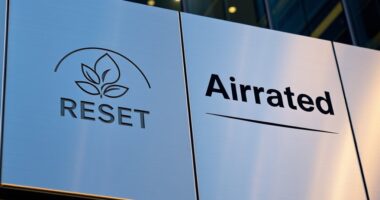
When comparing IAQ certifications like WELL, RESET, Fitwel, and LEED, you’ll find each has a unique focus. WELL emphasizes occupant health through rigorous testing, RESET offers real-time IAQ monitoring, Fitwel promotes practical health improvements, and LEED incorporates IAQ within broader sustainability standards. Their assessment methods and impact vary, influencing how you can implement them in your projects. Exploring these differences further can help you select the best fit for your building’s health goals.

Get garden gear delivered free with Prime
- Fast, free delivery on millions of items
- Prime Video, Amazon Music and more included
- Member-only deals all year
Key Takeaways
- WELL emphasizes health-centric design with rigorous testing and ongoing documentation, while RESET focuses on real-time IAQ monitoring and data collection.
- Fitwel promotes practical, incremental health improvements with simpler assessment criteria, contrasting with LEED’s integrated sustainability approaches.
- RESET provides continuous IAQ performance data, enabling proactive management, whereas WELL and LEED often rely on initial testing and standards compliance.
- WELL certification signals a priority on occupant health, potentially increasing costs and complexity, while Fitwel offers an accessible pathway for health-focused improvements.
- The standards’ strictness and monitoring requirements influence each certification’s impact, implementation complexity, and suitability for different building goals.

Are all indoor air quality (IAQ) certifications created equal? Not quite. When you’re evaluating different programs like WELL, RESET, Fitwel, and LEED, understanding their approach to indoor air quality standards is vital. Each certification has its own focus, criteria, and potential impact on your building’s environment and your occupants’ health. The certification impact can vary markedly depending on how strict the standards are, how detailed the assessment process is, and whether the certification emphasizes ongoing performance or one-time achievement.
Indoor air quality certifications vary in focus, criteria, and impact depending on their standards and assessment methods.
WELL is well-known for its health-centric approach, emphasizing indoor air quality standards that go beyond mere compliance. It requires rigorous testing, ongoing monitoring, and detailed documentation to guarantee that indoor environments support human health. Achieving WELL certification can signal to tenants and visitors that you prioritize health, which can boost your building’s reputation and tenant satisfaction. However, this focus on health can also mean higher costs and more complex implementation processes, making the certification impact more profound but also more demanding.
RESET, on the other hand, emphasizes real-time indoor air quality measurement. Its standards require continuous monitoring of parameters like VOCs, particulate matter, and CO2 levels. The certification impact here is tied to how effectively your building maintains healthy air quality on a daily basis. RESET’s focus on measurable, ongoing data can help you identify issues early and make targeted improvements, ultimately leading to a healthier indoor environment. This makes RESET particularly attractive if you want to demonstrate a commitment to sustained air quality management, but it also demands investment in monitoring technology.
Fitwel centers its approach around occupant health and productivity, with indoor air quality being one of many factors. Its standards are designed to be accessible and easy to implement, often making it a practical choice for organizations seeking a balance between health benefits and cost. The certification impact of Fitwel is less about strict compliance and more about incremental improvements that support overall occupant wellbeing. If your goal is to enhance health without overhauling your building, Fitwel’s standards can offer a manageable pathway.
LEED, widely recognized in the green building industry, incorporates indoor air quality standards as part of broader sustainability criteria. While its focus on environmental performance is all-encompassing, the certification impact depends on how deeply you integrate IAQ measures into your project. LEED’s standards tend to be more flexible, allowing for different strategies to achieve certification. This flexibility can make LEED accessible, but it also means that the impact on indoor air quality varies depending on your commitment to specific IAQ practices.
Indoor air quality monitor with VOC detection
As an affiliate, we earn on qualifying purchases.
As an affiliate, we earn on qualifying purchases.
Frequently Asked Questions
How Do Certification Costs Vary Among WELL, RESET, Fitwel, and LEED?
You’ll find that cost comparison among WELL, RESET, Fitwel, and LEED varies based on project size and scope. WELL certification can be more expensive due to extensive testing and documentation, while Reset and Fitwel often have lower fees and simpler processes. LEED costs depend on certification level and project complexity. Some certifications offer financial incentives or rebates, which can help offset expenses and make pursuing IAQ improvements more affordable.
Are There Specific Building Types That Favor One Certification Over Others?
Think of certification suitability as a tailored suit; it depends on your building type. If you own a healthcare facility, WELL’s focus on occupant health makes it ideal. For commercial offices, RESET emphasizes real-time air quality, while LEED suits a variety of building types seeking sustainability. Residential buildings often favor Fitwel’s straightforward approach. Your choice hinges on the specific building type and the certification’s strengths aligning with your project goals.
How Long Does the Certification Process Typically Take for Each Standard?
The certification process durations vary by standard. WELL typically takes 3 to 6 months due to extensive health assessments, while RESET averages around 2 to 4 months with real-time monitoring. Fitwel’s process is quicker, often 1 to 3 months, due to its streamlined criteria. LEED’s certification timelines depend on project complexity, but generally last 3 to 12 months. Your timeline depends on project scope and readiness for documentation.
What Are the Ongoing Maintenance Requirements Post-Certification?
Imagine walking into your building, knowing it’s maintained at top IAQ standards. Post-certification, you’ll need to follow renewal procedures and guarantee compliance monitoring continues regularly. This means tracking indoor air quality data, conducting periodic audits, and updating practices as needed. Staying proactive helps uphold your certification’s integrity, demonstrating your commitment to healthy indoor environments and ensuring ongoing recognition of your efforts.
How Do Regional Regulations Influence Certification Adoption and Standards?
Regional policies critically influence certification adoption and standards, as local regulations may require strict IAQ practices or certification compliance. Cultural impact also plays a role, shaping how standards are perceived and implemented. You’ll find that in areas with proactive regional policies, certification becomes more integrated into building codes, encouraging widespread adoption. Conversely, regions with less emphasis on IAQ standards may see slower uptake, making local policy and cultural context essential for success.
Conclusion
While choosing the right IAQ certification might seem overwhelming, remember that each one offers unique benefits tailored to your building’s needs. Don’t let the variety scare you—think of it as finding the perfect fit for your space’s health and well-being. Embrace the opportunity to improve indoor air quality, knowing that your efforts create a safer, healthier environment for everyone inside. After all, a little research goes a long way toward making the best choice.
Fall yard work Picks
leaf blowers
As an affiliate, we earn on qualifying purchases.