To reduce airborne pathogens in assisted living facilities, you should upgrade to high-quality filters like HEPA, maximize outdoor air intake, and regularly maintain ventilation systems. Using portable air purifiers in high-risk areas and adding UV-C disinfection can further neutralize germs. Encouraging staff to follow proper airflow practices and keeping systems well-maintained makes a big difference. Keep going to discover more effective steps to create a healthier environment for everyone.
Key Takeaways
- Implement high-efficiency HEPA filters and regularly replace them to capture airborne pathogens effectively.
- Increase outdoor air ventilation and minimize recirculation to dilute and remove contaminants.
- Utilize UV-C air disinfection systems to neutralize pathogens in indoor air.
- Maintain and service HVAC systems frequently to ensure optimal airflow and filtration performance.
- Deploy portable air purifiers in high-risk areas and educate staff on proper air quality management practices.
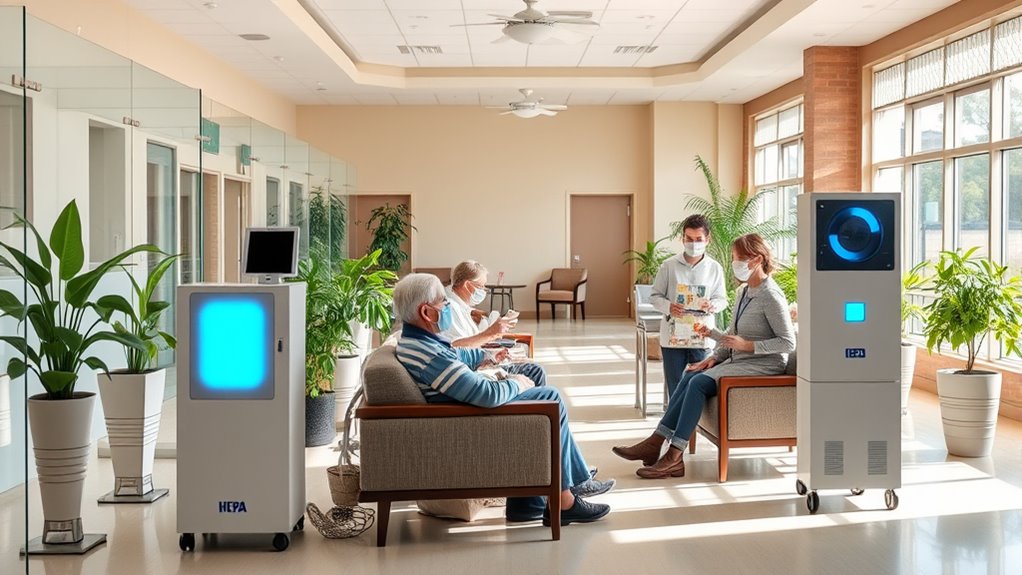
Reducing airborne pathogens is essential for maintaining healthy indoor environments and preventing the spread of infectious diseases. In assisted living facilities, where residents are often more vulnerable, implementing effective measures like air filtration and ventilation strategies can make a significant difference. You need to understand that these strategies are your frontline defenses against airborne contaminants that can cause illness. Proper air filtration involves using high-quality filters that can capture tiny particles, including bacteria, viruses, and other airborne microbes. HEPA filters, in particular, are highly effective because they can trap 99.97% of particles as small as 0.3 microns. Regularly replacing or upgrading these filters ensures they maintain their efficiency, reducing the risk of circulating harmful pathogens throughout the facility.
Ventilation strategies are equally crucial. You want to maximize fresh air intake while minimizing recirculation of contaminated air. This can be achieved by increasing the intake of outdoor air and ensuring proper airflow patterns within the building. Proper ventilation not only dilutes airborne pathogens but also helps remove humidity and other airborne pollutants that can foster microbial growth. Consider installing exhaust fans in communal areas and bathrooms to promote continuous air exchange. Additionally, adjusting air change rates based on occupancy levels can significantly cut down the presence of airborne contaminants. For example, increasing ventilation during peak hours helps prevent the accumulation of airborne pathogens, especially in crowded spaces like dining areas or activity rooms.
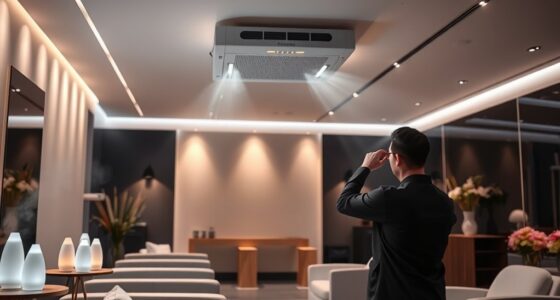
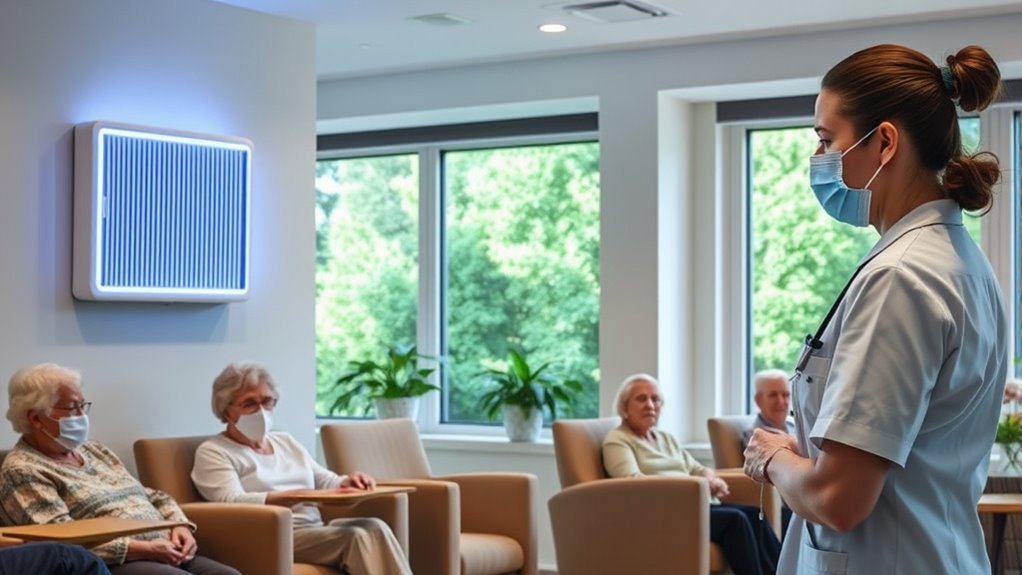
You should also think about integrating advanced ventilation systems with air filtration units that work together seamlessly. For instance, combining mechanical ventilation with UV-C air disinfection can neutralize pathogens more effectively. Regular maintenance of these systems is vital because clogged filters or malfunctioning fans diminish their efficiency. Educate staff on the importance of these measures so they understand the role proper air filtration and ventilation play in protecting residents. Simple steps, such as keeping windows open when weather permits or using portable air purifiers in high-risk areas, can further enhance indoor air quality. Moreover, understanding that frictional unemployment can sometimes lead to new opportunities encourages a proactive approach to maintaining health and safety during operational challenges.
Ultimately, your goal is to create a safer environment where airborne pathogens are minimized. Implementing robust air filtration and ventilation strategies isn’t just about compliance; it’s about actively safeguarding the health of residents and staff. By staying proactive and maintaining these systems diligently, you reduce the chances of infectious outbreaks and promote a healthier, more comfortable living space for everyone.
Frequently Asked Questions
How Often Should Air Filters Be Replaced in Assisted Living Facilities?
You should replace air filters in assisted living facilities every 30 to 60 days to maintain ideal maintenance schedules and filter efficiency. Regularly changing filters ensures the HVAC system works effectively, reducing airborne pathogens. Keep an eye on filter condition, especially during high occupancy or illness outbreaks, and follow manufacturer recommendations for your specific filters. Consistent replacements help protect residents and staff by improving indoor air quality.
What Are the Most Effective Air Purification Technologies for These Settings?
You should consider UV sterilization and HEPA filtration as the most effective air purification technologies. UV sterilization uses ultraviolet light to destroy bacteria and viruses, while HEPA filters trap airborne particles, including pathogens. Together, they create a cleaner, safer environment. You can visualize this as a dual shield—UV sterilization actively kills germs, and HEPA filters physically remove them—working in harmony to reduce airborne pathogens efficiently.
Are There Specific Ventilation Standards Mandated for Assisted Living Facilities?
You need to follow air quality regulations that specify ventilation standards for assisted living facilities. These regulations often mandate proper airflow, filtration, and humidity control to guarantee a safe environment. Regular ventilation maintenance is essential, so you should routinely inspect and service HVAC systems to maintain ideal air quality. By adhering to these standards, you help reduce airborne pathogens and protect residents’ health effectively.
How Can Staff Be Trained to Reduce Airborne Pathogen Spread?
Your staff can become superheroes in infection control by undergoing extensive training in infection control practices and airborne pathogen prevention. Provide regular staff education sessions that emphasize proper hand hygiene, mask-wearing, and ventilation protocols. Use real-life scenarios to reinforce lessons and keep everyone updated on evolving best practices. Empower your team with knowledge and confidence, making them the ultimate defense against airborne pathogens, ensuring a safer environment for all residents and staff.
What Are the Costs Associated With Upgrading Air Filtration Systems?
Upgrading air filtration systems involves costs for equipment, installation, and maintenance, which you should verify through a thorough cost analysis. You might find funding options like grants, government programs, or partnerships to help cover expenses. While initial investments can be significant, improved air quality can reduce health risks and long-term costs. Planning carefully ensures you allocate resources effectively, making upgrades more feasible and beneficial for residents’ safety.
Conclusion
By implementing proper ventilation and air purification strategies, you can substantially reduce airborne pathogens in assisted living facilities. Some experts believe that increasing airflow with HEPA filters can even disrupt the transmission of viruses, a theory supported by recent studies suggesting that better air circulation decreases infection rates. While no method guarantees complete safety, staying vigilant and applying these evidence-based practices helps protect residents and staff alike, fostering a healthier, safer environment for all.