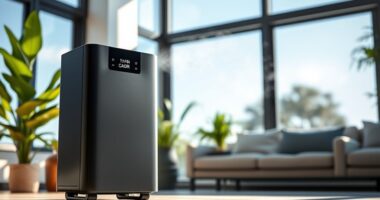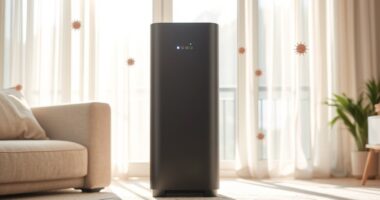

Air purifiers are effective at improving indoor air quality by capturing dust, pollen, and some odors, but they do not remove radon gas from your home. Radon is a radioactive gas that seeps from soil, and typical purifiers with HEPA or activated carbon filters can’t eliminate it. To protect yourself, proper radon mitigation systems are necessary. Keep exploring to understand how radon levels are managed and what measures work best for your safety.

Get garden gear delivered free with Prime
- Fast, free delivery on millions of items
- Prime Video, Amazon Music and more included
- Member-only deals all year
Key Takeaways
- Air purifiers do not remove radon gas from indoor air.
- They are effective at reducing dust, pollen, and odors, but not gases like radon.
- Radon mitigation requires venting systems, not air purifiers.
- Using an air purifier alone cannot lower radon levels or health risks.
- Proper radon testing and specialized mitigation are essential for radon risk reduction.
Radon is a colorless, odorless gas that can seep into your home from the ground, posing serious health risks like lung cancer. If you’re concerned about radon exposure, you might wonder if air purifiers can help. The truth is, while air purifiers are excellent at improving indoor air quality by removing dust, pollen, and some airborne pollutants, they don’t effectively eliminate radon gas itself. Radon mitigation is the specialized process needed to reduce radon levels in your home, typically involving venting systems that direct radon away from your living space. These systems are specifically designed to address the source of radon infiltration, unlike air purifier types, which generally target airborne particulates and gases other than radon.
You might be tempted to think that a good air purifier can serve as a quick fix for radon concerns, but this isn’t how it works. Air purifiers use filters such as HEPA or activated carbon, which are effective at trapping particles, odors, and some volatile organic compounds. However, radon is a gas, and these filters aren’t capable of capturing gases at the molecular level. In particular, standard air purifier types don’t have the capacity to reduce radon concentrations in your home. Instead, they can help improve overall air quality by removing airborne allergens and pollutants, but they won’t do much to lower radon levels or protect you from the health risks associated with radon exposure.
To genuinely address radon, you need to think about radon mitigation techniques. These involve installing a venting system, often called a soil suction system, which vents radon from beneath your house to the outside, preventing it from accumulating indoors. Regular testing is also essential to determine if your radon levels are safe. If the levels are high, investing in proper mitigation will be your best defense against the health hazards of radon. While air purifiers are valuable tools for improving indoor air quality, they shouldn’t be mistaken as radon removal devices. Think of them as complementary to, not replacements for, radon mitigation strategies. Additionally, understanding the limitations of air purifier capabilities can help you make informed decisions about protecting your indoor environment.
As an affiliate, we earn on qualifying purchases.
Frequently Asked Questions
Can Air Purifiers Eliminate Radon Gas Completely?
No, air purifiers can’t completely eliminate radon gas. Radon mitigation relies on specialized ventilation systems that reduce radon levels at their source, not just air filtration devices. While air purifiers with HEPA filters can improve indoor air quality by capturing particles, they don’t remove radon gas itself. To effectively lower radon exposure, you need proper radon mitigation strategies, not just air filtration.
What Types of Air Purifiers Are Most Effective Against Radon?
You should look for air purifiers with activated carbon filters to reduce radon levels effectively, as they can absorb some radon decay products. HEPA filters, while excellent at trapping particles, don’t remove radon gas itself. For best results, combine an activated carbon filter with proper ventilation or radon mitigation systems. Remember, no air purifier alone can fully eliminate radon; addressing the source is essential.
How Long Does It Take for an Air Purifier to Reduce Radon Levels?
It typically takes several days to weeks for an air purifier to noticeably reduce radon levels, depending on factors like air exchange rates and filtration efficiency. As the purifier works, it filters indoor air, but radon is primarily mitigated through soil suction or ventilation. You should monitor radon levels regularly to track progress and confirm the purifier’s effectiveness, understanding it may not eliminate radon entirely on its own.
Are There Specific Features to Look for in Radon-Removing Air Purifiers?
You’ll want an air purifier with specific features to tackle radon effectively. Look for models equipped with HEPA filters and activated charcoal filters—they work together to trap particles and absorb harmful gases. Don’t settle for just any purifier; choose one designed for radon reduction. The right combination of these filters can make a real difference, giving you peace of mind knowing you’re actively reducing radon indoors.
Do Air Purifiers Help With Radon-Related Health Risks?
Air purifiers don’t effectively reduce radon-related health risks because their limitations prevent them from removing radon gas. Radon mitigation requires specialized systems like sub-slab depressurization, which actively vent radon outside your home. While air purifiers can improve indoor air quality by filtering particles, they won’t address radon gas. Rely on proper radon mitigation methods to protect yourself, as air purifiers alone aren’t enough for radon-related health risks.
Conclusion
So, the truth is, air purifiers won’t completely eliminate radon from your home. While they can improve air quality, they don’t address the root cause of radon exposure. If you’re concerned about radon, testing and proper mitigation are essential. Don’t wait until it’s too late—take action now. The question is, are you ready to uncover what’s really lurking in your air and protect what matters most? The answer could change everything.
Fall yard work Picks
leaf blowers
As an affiliate, we earn on qualifying purchases.