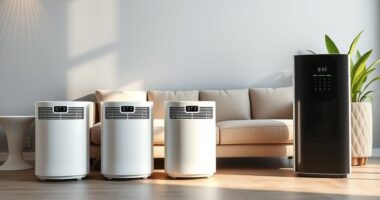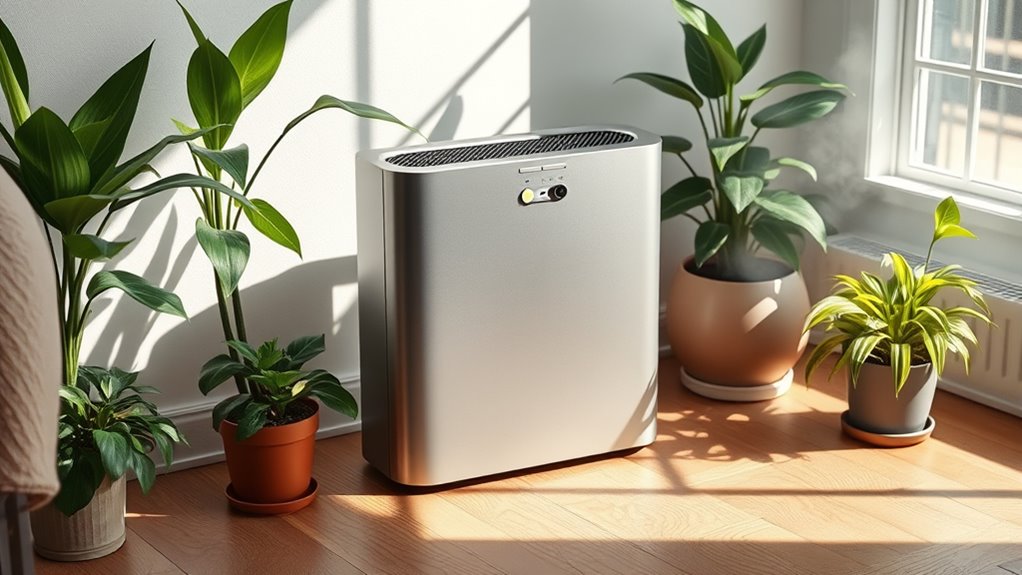

Air purifiers mainly target airborne particles like dust, pollen, and mold, and some include activated carbon filters to reduce VOCs and odors. However, no single device can remove all chemicals or gases from indoor air. Gaseous pollutants and chemical emissions often require specialized filtration, ventilation, or source control. To truly improve indoor air quality, understanding what your air purifier can and cannot do is essential—continue to learn how to make the best choices for your space.

Get garden gear delivered free with Prime
- Fast, free delivery on millions of items
- Prime Video, Amazon Music and more included
- Member-only deals all year
Key Takeaways
- HEPA filters effectively remove airborne particles but do not eliminate gases or chemicals.
- Activated carbon filters can adsorb VOCs and odors, improving chemical removal.
- Not all air purifiers include activated carbon or have high-quality filters for chemical filtration.
- Proper maintenance and filter replacement are crucial for maintaining chemical removal efficiency.
- Addressing chemical pollution requires source control and ventilation alongside air purification.

Have you ever wondered if the air purifiers you trust might be releasing chemicals into your home? It’s a valid concern, especially as many devices claim to improve indoor air quality but may not fully address all pollutants. When evaluating an air purifier, it’s essential to understand what it can and cannot do. Many rely on HEPA filters, which are excellent at capturing airborne particles like dust, pollen, pet dander, and mold spores. These filters trap tiny particles as small as 0.3 microns, making them highly effective at removing allergens and some pollutants from the air you breathe.
Many air purifiers effectively remove particles but may not eliminate all chemical pollutants.
However, HEPA filters don’t absorb gases or chemicals, including volatile organic compounds (VOCs). VOCs are emitted by common household items like paints, cleaning products, furniture, and carpets. While HEPA filters excel at particle removal, they don’t eliminate these gaseous pollutants. This is where VOC absorption comes into play. Some air purifiers include activated carbon filters or other adsorptive media designed specifically to trap VOCs and odors. These filters work by attracting and holding gas molecules, reducing the concentration of chemicals in the air.
Despite these features, not all air purifiers are equally effective at removing all types of chemicals. Some models may boast HEPA filters but lack proper VOC absorption capabilities, leaving certain chemical emissions lingering in your space. Others might have activated carbon filters, but if these aren’t of high quality or aren’t replaced regularly, their effectiveness diminishes over time. It’s also important to remember that the lifespan and maintenance of filters directly impact their ability to remove chemicals effectively.
Furthermore, some air purifiers may inadvertently release chemicals if they contain certain plastics, adhesives, or other materials that off-gas volatile compounds. Always check the materials used in the construction of your air purifier and opt for brands that prioritize low-emission components. Keep in mind that no air purifier can remove every chemical or pollutant completely. Instead, they serve as part of a broader strategy that includes source control—like reducing VOC-emitting products—and good ventilation.
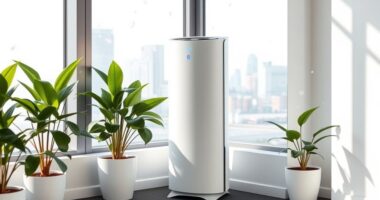
air purifier with activated carbon filter
As an affiliate, we earn on qualifying purchases.
As an affiliate, we earn on qualifying purchases.
Frequently Asked Questions
Can Air Purifiers Eliminate All Types of Chemical Fumes?
Air purifiers can’t eliminate all types of chemical fumes because of their limitations. While many models with activated carbon filters improve chemical removal effectiveness, they may not fully remove every chemical or fumes, especially in high concentrations. You should understand these limitations and choose an air purifier designed for chemical filtration. Regular maintenance and proper placement also help maximize their ability to reduce chemical fumes, but complete removal isn’t always guaranteed.
Do Air Purifiers Remove Gases Like Carbon Monoxide?
You might think an air purifier can eliminate deadly gases like carbon monoxide, but that’s not true. Air purifier limitations mean they can’t remove gases such as carbon monoxide effectively—these gases require specialized filtration like carbon monoxide detectors and ventilation systems. While air purifiers excel at trapping particles and some chemicals, their chemical filtration effectiveness is limited against dangerous gases, so don’t rely on them alone for safety from toxic fumes.
How Effective Are Air Purifiers Against Volatile Organic Compounds?
Air purifiers can be quite effective against volatile organic compounds (VOCs) if they use advanced air purification technology with chemical filtration methods like activated carbon filters. These filters adsorb VOCs, reducing odors and harmful chemicals in your space. However, not all purifiers are equally effective, so check if the unit specifically mentions VOC removal capabilities. Proper maintenance and filter replacement are essential for ideal performance against these chemicals.
Can Air Purifiers Neutralize Odors Caused by Chemicals?
Sure, your air purifier can handle some odors caused by chemicals, but don’t get your hopes up for miracle results. Its limitations mean it mainly traps airborne particles and some VOCs, not entirely removing chemical residue or completely neutralizing stubborn smells. If you’re expecting it to erase every trace of chemical odor, you might be disappointed—think of it as a helpful assistant, not a magic wand for chemical cleanup.
Are There Specific Filters for Removing Pesticides and Cleaning Chemicals?
Yes, there are specific filters for removing pesticides and cleaning chemicals. HEPA filters are excellent for capturing airborne particles, including some chemical residues, but for chemicals and odors, activated carbon filters are essential. They adsorb volatile organic compounds (VOCs) and pesticides effectively. To guarantee your air purifier tackles these chemicals, choose one equipped with both HEPA and activated carbon filters, providing extensive protection against airborne pollutants.
Conclusion
While air purifiers can substantially reduce many airborne chemicals, they don’t eliminate all pollutants, especially those embedded in surfaces or released slowly over time. Some might worry they’re a complete fix, but remember, combining purifiers with good ventilation and regular cleaning offers the best protection. Don’t rely solely on one solution—use an all-encompassing approach to truly improve your indoor air quality and breathe easier every day.
Halloween Picks
halloween
As an affiliate, we earn on qualifying purchases.