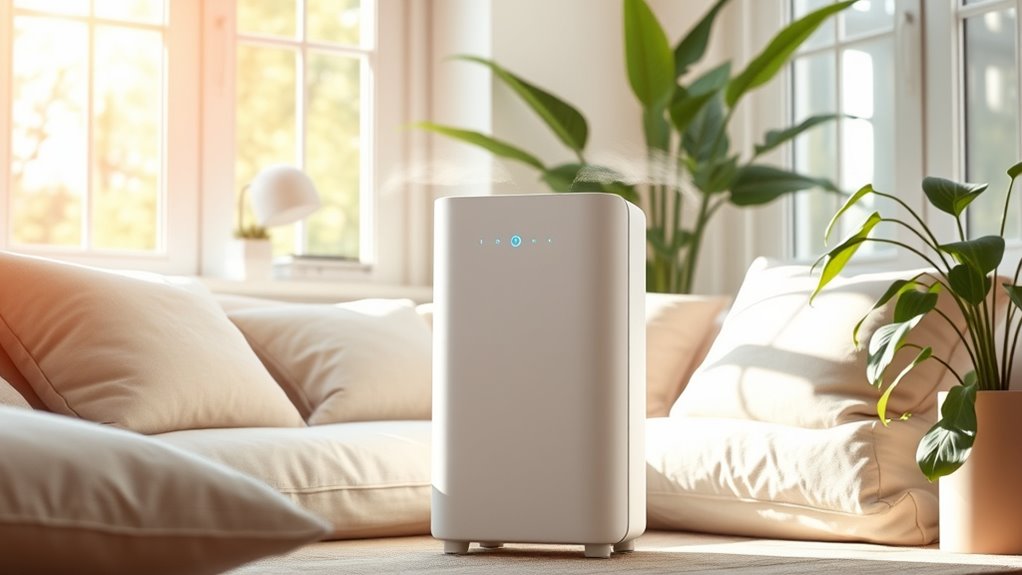

Air purifiers can help manage asthma by reducing indoor allergens like dust, pollen, pet dander, and mold spores, improving air quality in your environment. However, they are not a cure for asthma and won’t eliminate all indoor pollutants, such as VOCs from cleaning products. Proper placement, continuous use, and combining with other strategies like good ventilation and cleaning are essential. If you want to understand how to best use air purifiers alongside your asthma plan, there’s more to contemplate.

Get garden gear delivered free with Prime
- Fast, free delivery on millions of items
- Prime Video, Amazon Music and more included
- Member-only deals all year
Key Takeaways
- Air purifiers can reduce indoor allergens like dust, pollen, pet dander, and mold spores, helping manage asthma symptoms.
- They are supplementary tools and cannot cure asthma or eliminate all indoor pollutants.
- Proper placement, continuous use, and high-quality HEPA filters enhance their effectiveness.
- Combining air purifiers with other strategies like ventilation, cleaning, and humidity control improves indoor air quality.
- Managing expectations is essential; air purifiers support, but do not replace, comprehensive asthma management plans.

If you have asthma, maintaining clean indoor air is essential for managing your symptoms. One common way to improve your air quality is by using an air purifier. These devices can help reduce indoor allergens like dust, pollen, pet dander, and mold spores, which are typical triggers for asthma attacks. However, it’s important to understand what air purifiers can and cannot do to manage your condition effectively. While they can considerably improve indoor air quality, they aren’t a cure for asthma. Instead, they serve as part of a broader management plan that includes medication and avoiding known triggers.
Indoor allergens are among the main culprits that worsen asthma symptoms, and air purifiers equipped with HEPA filters are especially effective at capturing tiny particles that contribute to poor air quality. These filters trap particles as small as 0.3 microns, which include most common indoor allergens. But note that simply running an air purifier isn’t enough to meet air quality standards set by organizations like the EPA or WHO. Achieving and maintaining these standards requires a combination of strategies, including proper ventilation, humidity control, and regular cleaning. An air purifier can be a valuable tool in this effort, but it shouldn’t be relied upon exclusively.
HEPA filters trap tiny indoor allergens, but proper ventilation, humidity control, and cleaning are also essential.
Many people assume that buying the most powerful or expensive air purifier guarantees better results. While high-quality units are often more effective at filtering out allergens, they still have limitations. For instance, they won’t eliminate all indoor pollutants, such as volatile organic compounds (VOCs) from cleaning products or building materials. Also, air purifiers work best when placed in the right locations—ideally in rooms where you spend most of your time—and when used continuously as part of a comprehensive approach to indoor air management.
It’s also worth noting that air purifiers should complement, not replace, other asthma management strategies. Keeping your home clean, controlling humidity levels, and reducing sources of indoor allergens are equally important. For example, regular dusting, vacuuming with a HEPA-filter vacuum, and reducing clutter can make a big difference. If your home has mold problems, addressing moisture issues is vital, as mold spores can be persistent asthma triggers.
Ultimately, an air purifier can improve your indoor air quality and reduce exposure to certain allergens, but it’s not a standalone solution. To manage your asthma effectively, set realistic expectations: use the device as part of your overall plan, follow your healthcare provider’s advice, and implement multiple strategies to keep indoor allergens at bay. This way, you’ll create a healthier environment that supports your asthma management efforts.
As an affiliate, we earn on qualifying purchases.
Frequently Asked Questions
Do Air Purifiers Eliminate All Asthma Triggers Completely?
Air purifiers don’t eliminate all asthma triggers completely, but they can considerably improve your air quality. They remove many pollutants like dust, pet dander, and pollen that can worsen asthma symptoms. However, they can’t remove every irritant, especially chemicals or outdoor pollutants. To manage asthma effectively, combine using an air purifier with other measures like cleaning regularly and avoiding known triggers. Remember, they’re a helpful tool, not a cure-all.
Can Air Purifiers Replace Medication for Asthma Management?
Air purifiers can’t replace medication for asthma management because they have limitations in removing all triggers or controlling symptoms. While they can improve indoor air quality by reducing dust, pollen, and other allergens, medication remains essential for managing asthma effectively. Relying solely on an air purifier isn’t enough; always follow your doctor’s advice and use prescribed treatments alongside air purifiers for better control.
Are There Specific Air Purifier Features Best for Asthma Sufferers?
You should look for air purifiers with HEPA filters, as they effectively capture airborne allergens and particles that can trigger asthma symptoms. Prioritize units that improve overall air quality by removing dust, pollen, pet dander, and smoke. Keep your space well-ventilated and clean regularly. While these features help alleviate asthma symptoms, they shouldn’t replace your medication but can support a healthier indoor environment.
How Long Does It Take to See Improvements With Air Purifiers?
You might notice improvements in your air quality and symptom relief within a few days to a couple of weeks of using an air purifier. It depends on factors like the room size, filter type, and how consistently you run it. Keep in mind, while it can help reduce triggers, an air purifier isn’t a cure. Regular use and maintaining good indoor air quality are key to seeing steady progress.
Can Air Purifiers Help Children With Asthma Better Than Adults?
Imagine a gentle breeze sweeping through a child’s room, reducing allergens and creating a safer space. Air purifiers can help children with asthma more effectively than adults because their smaller airways are more sensitive. They promote child safety by filtering out dust, pet dander, and pollen, which can trigger asthma attacks. While helpful, air purifiers aren’t a cure, but they do support allergy reduction and a healthier environment for your little one.
Conclusion
So, next time you buy an air purifier, don’t expect it to be your miracle cure for asthma. It’s like putting a tiny bandage on a leaky boat—sure, it might help a little, but it won’t save you from sinking. Remember, while clean air can ease symptoms, true management requires an all-encompassing plan. So, go ahead, enjoy your purified air, but don’t fool yourself into thinking it’s a magic bullet.
Columbus Day / Indigenous Peoples' Day Picks
long weekend sales
As an affiliate, we earn on qualifying purchases.