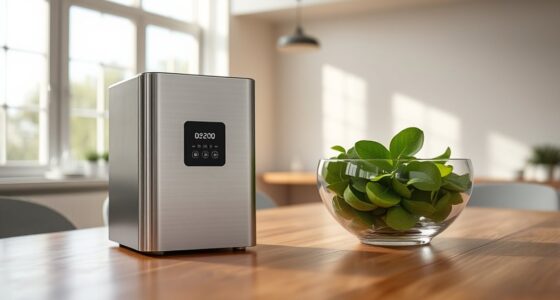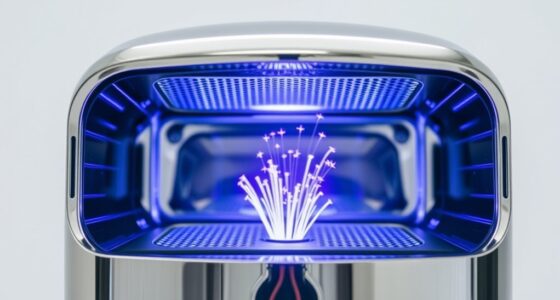
Air purifiers alone won’t cure Sick Building Syndrome because they only remove certain particles and don’t address underlying issues like mold, poor ventilation, or chemical emissions. To improve indoor air quality effectively, you need a thorough approach that includes proper HVAC maintenance, natural solutions like indoor plants, and better ventilation. Keep exploring to discover how combining these strategies can create healthier indoor environments and truly alleviate the symptoms of Sick Building Syndrome.
Key Takeaways
- Air purifiers can reduce certain airborne pollutants but do not eliminate all sources of indoor pollution causing Sick Building Syndrome.
- They are insufficient alone; addressing mold, VOCs, and chemical emissions requires HVAC maintenance and natural solutions like indoor plants.
- Proper ventilation and regular HVAC system inspections are essential for effectively managing indoor air quality issues.
- HEPA filters in air purifiers improve air cleanliness but cannot fully resolve underlying ventilation or moisture problems.
- An integrated approach combining air purifiers, HVAC upkeep, ventilation, and natural solutions offers the best chance to improve indoor air health.
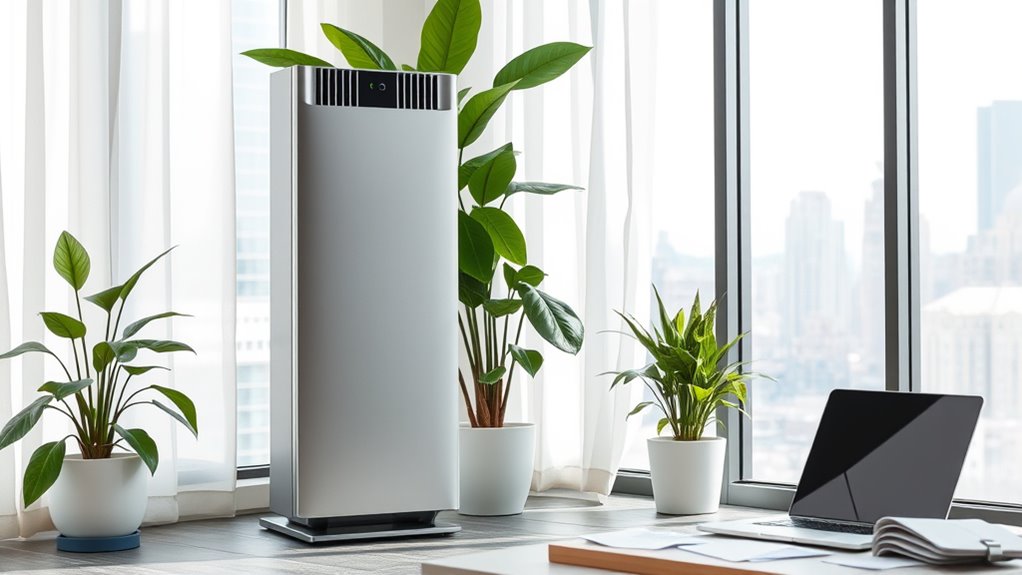
Have you ever wondered if the air inside your building is making you sick? Many times, poor indoor air quality can lead to symptoms like headaches, fatigue, or respiratory issues. While air purifiers are often touted as a solution, they’re not always enough to fully address Sick Building Syndrome (SBS). To truly improve indoor air, you need a thorough approach that includes proper HVAC maintenance and thoughtful use of indoor plants.
First, consider the role of HVAC maintenance. Your heating, ventilation, and air conditioning system is the backbone of your indoor air quality. When neglected, it can harbor mold, dust, and bacteria that circulate through your space, aggravating SBS symptoms. Regular HVAC maintenance, including filter changes and system inspections, helps guarantee that pollutants are filtered out effectively. Upgrading to high-quality filters, such as HEPA filters, can considerably reduce airborne contaminants. An efficient HVAC system works in tandem with air purifiers, enhancing their effectiveness and ensuring that clean, fresh air circulates throughout your building.
However, relying solely on air purifiers isn’t enough. They’re designed to remove specific particles from the air but don’t address all sources of indoor pollution. That’s where indoor plants come into play. Incorporating indoor plants into your space can naturally improve air quality by absorbing volatile organic compounds (VOCs), carbon dioxide, and other pollutants. Plants like snake plants, peace lilies, and pothos are not only attractive but also serve as natural air filters. They add a layer of biophilic comfort, which can help reduce stress and improve overall well-being. Keep in mind, though, that indoor plants are most effective when combined with proper ventilation and HVAC maintenance, rather than as a standalone solution.
Air purifiers can help reduce particles and allergens in your environment, but they don’t address all the causes of SBS. The root of the problem often lies in poor ventilation, mold, or chemical emissions from furniture and cleaning products. Therefore, a well-maintained HVAC system and natural solutions like indoor plants work together to create a healthier indoor environment. Regularly inspecting and maintaining your HVAC system prevents the buildup of pollutants, while indoor plants add a natural, ongoing air cleaning process. Additionally, understanding the sources of indoor pollution can help target specific issues more effectively.

Purivortex Air Purifiers for Bedroom, Quiet Air Purifier with HEPA Filter for Pollen, Smoke, Dust, Pet Dander, Odor, Hair, Ozone Free, Covers Up to 880 Sq Ft, PX500 Black
Cleaner Air In Minutes: Purivortex is proven to filter common pollutants from your home’s air. This air purifier…
As an affiliate, we earn on qualifying purchases.
As an affiliate, we earn on qualifying purchases.
Frequently Asked Questions
Can Air Purifiers Eliminate All Indoor Air Pollutants?
Air purifiers can’t eliminate all indoor air pollutants because of their limitations. They effectively reduce common particles like dust, pollen, and some bacteria, but may not remove gases, chemicals, or VOCs entirely. To improve indoor air quality, you should combine air purifiers with proper ventilation and source control. Recognizing their limitations helps you set realistic expectations and creates a healthier indoor environment overall.
Are Air Purifiers Effective Against Mold and Bacteria?
Sure, air purifiers can help with mold and bacteria, but don’t expect them to be magic wands. Their limitations mean they mainly trap airborne spores and bacteria, not eliminate stubborn mold growth on surfaces. For true mold removal, you need proper strategies like fixing leaks and thorough cleaning. Think of air purifiers as helpful sidekicks, not the entire hero team, in battling indoor mold and bacteria.
How Often Should Air Filters Be Replaced for Optimal Performance?
You should replace your air filters every 3 to 6 months for ideal performance. Regular filter maintenance ensures your air purifier works efficiently and maintains good indoor air quality. Check the manufacturer’s replacement intervals, as they can vary based on usage and filter type. If you notice reduced airflow or increased odors, it’s time to replace the filters sooner. Staying on top of filter maintenance keeps your air cleaner and healthier.
Do Air Purifiers Reduce Symptoms of Sick Building Syndrome Quickly?
Imagine your indoor air like a cloudy sky; an air purifier acts like a clearing wind. It can provide quick symptom relief by improving air quality, especially when pollutants trigger your symptoms. While some notice immediate benefits, full relief varies. Keep in mind, air purifiers help reduce irritants, but they aren’t cures. Consistent use can make your indoor environment healthier, easing your symptoms over time.
Are There Specific Types of Air Purifiers Recommended for Sick Building Syndrome?
Yes, for sick building syndrome, you should look for air purifiers with HEPA filters and activated carbon. HEPA filters effectively trap airborne particles like dust, mold, and allergens, while activated carbon absorbs odors and chemical pollutants. Choose a unit that combines both features for thorough air cleaning, and ensure it’s appropriately sized for your space. This combo can help improve indoor air quality and reduce symptoms associated with sick building syndrome.

AprilAire 1213 Air Filter High-Performance Upgrade Kit for 2120 and 2200 Air Purifiers – Replaces 201 Air Filter
Brand-New Air Purifier Performance at a Fraction of the Cost – Improve performance by converting your AprilAire 2120…
As an affiliate, we earn on qualifying purchases.
As an affiliate, we earn on qualifying purchases.
Conclusion
While air purifiers can help reduce some indoor pollutants, they don’t completely cure sick building syndrome. Think of them as a gust of fresh air in a dusty room—helpful, but not a magic fix. You might imagine walking into a space where pollutants linger unseen, causing discomfort. To truly improve indoor air quality, you need a combination of proper ventilation, regular cleaning, and addressing underlying issues. Air purifiers are just one piece of the puzzle.

Costa Farms Live Indoor House Plants (6-Pack), Hand Selected Easy to Maintain Indoor Assorted Houseplants, Curated Air Purifying Mix, Low Light, Home Office Decor Plant Gift
THE PERFECT MOTHER'S DAY GIFT: Treat Mom to a curated bundle of six beautiful live houseplants, perfect for…
As an affiliate, we earn on qualifying purchases.
As an affiliate, we earn on qualifying purchases.

Comfort Zone Twin Window Fan with Reversible Airflow Control, 9 inch, Auto-Locking Expanders, 2 Speed Fan, Dual Fan, Exhaust, Airflow 9.84 ft/sec, Ideal for Home, Kitchen, Bedroom & Office, CZ319WT
DUAL SPEED SELECTION: Enjoy the flexibility of choosing between two air output options on this twin speed window…
As an affiliate, we earn on qualifying purchases.
As an affiliate, we earn on qualifying purchases.