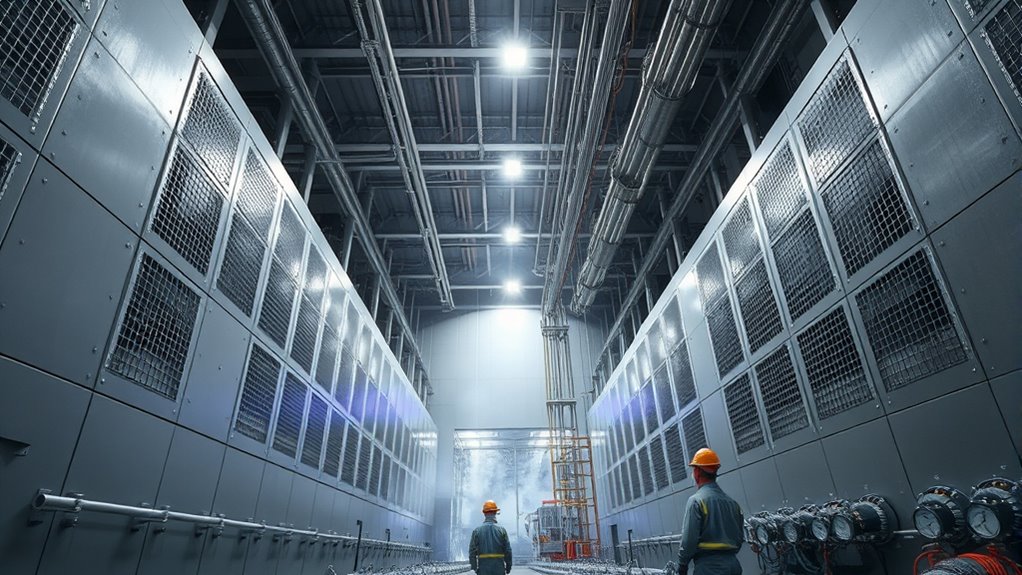
Electrostatic precipitators work by charging particles in exhaust gases and collecting them on oppositely charged plates, effectively reducing pollution. To keep them running efficiently, you need to perform regular maintenance such as cleaning electrodes and plates, checking high-voltage supplies, and ensuring proper grounding for safety. Monitoring electric field uniformity and inspecting components prevent performance decline. Staying on top of these tasks means your precipitator will operate smoothly—keep going to learn more about keeping it in top shape.
Key Takeaways
- Maintain regular cleaning of electrodes and collection plates to prevent buildup and ensure efficient charge collection.
- Verify and calibrate high-voltage power supplies for proper voltage and insulation.
- Inspect and replace corona wires as needed to maintain effective particle charging.
- Ensure proper grounding and electrical system integrity to prevent faults and enhance safety.
- Monitor system components and airflow to sustain optimal precipitator performance and pollution control.
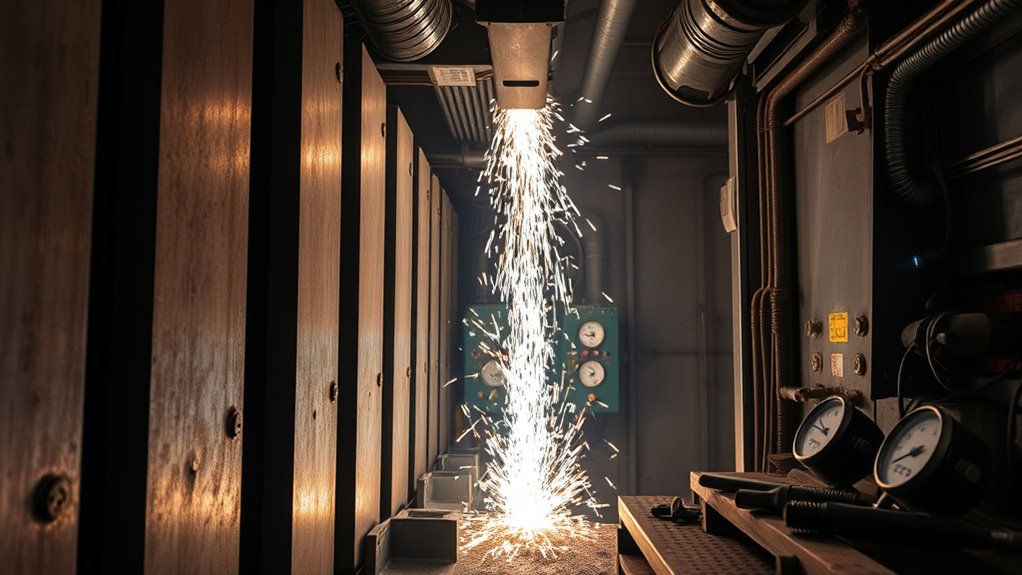
Electrostatic precipitators are devices that remove particulate matter from industrial exhaust gases using electric charges. When the polluted gases enter the precipitator, they pass through a series of highly charged wires and plates. The electric field generated by these wires causes the particles in the gases to become charged through a process called charge collection. Once charged, these particles are attracted to and adhere to the oppositely charged collection plates, effectively removing them from the gas stream. This method is highly efficient for trapping a wide range of particulate sizes, making electrostatic precipitators essential in controlling air pollution.
To guarantee ideal performance, understanding and maintaining charge collection is pivotal. Over time, the efficiency of charge collection can decline due to factors like dirt buildup, corrosion, or component wear. Regular maintenance procedures are necessary to keep the precipitator functioning at peak levels. You should routinely inspect the electrodes and collection plates for any signs of contamination or damage. Cleaning these components is indispensable because dust and soot buildup can insulate the plates, reducing their ability to attract charged particles. Many systems incorporate automatic cleaning mechanisms, such as rapping or shaking the plates, but manual cleaning may be required periodically, especially in high-load environments. Additionally, monitoring the electric field distribution ensures the precipitator maintains uniform charge transfer across all areas.
Another key aspect of maintenance procedures involves checking the electrical system. You need to guarantee that the high-voltage power supplies are delivering the correct voltage and that insulation remains intact. Any fluctuations or failures in the electrical supply can impair charge collection and decrease overall efficiency. Regular testing and calibration of the power supplies will help prevent operational issues. Additionally, monitoring the corona wires, which generate the initial charge on particles, is essential. These wires can become contaminated or broken over time, so replacing them as needed will sustain effective charge transfer.
You should also pay close attention to the precipitator’s grounding system. Proper grounding prevents electrical faults and ensures safety during operation. Conduct periodic inspections of grounding connections and verify that they are secure and free of corrosion. Furthermore, keeping the interior and exterior of the precipitator clean minimizes the risk of electrical shorts and improves airflow, which indirectly supports the charge collection process.
Frequently Asked Questions
How Does Altitude Affect Electrostatic Precipitator Performance?
Altitude effects can reduce electrostatic precipitator performance because lower air density at higher elevations decreases ionization efficiency. You might notice decreased collection efficiency and increased emissions. To counter this, you should make performance adjustments such as increasing voltage or modifying discharge electrodes. Regular maintenance helps enhance these adjustments, ensuring the precipitator works effectively despite altitude effects. Monitoring performance closely allows you to make timely changes and maintain ideal pollution control.
Can Electrostatic Precipitators Remove Odors Effectively?
Yes, electrostatic precipitators can help with odor neutralization, especially when combined with chemical filtration. They remove airborne particles that carry odors, making the air cleaner. While not specifically designed for odor control, their ability to capture fine particles improves overall air quality. To enhance odor removal, integrating chemical filtration with electrostatic precipitators is effective, as it targets specific odor-causing compounds directly.
What Are the Signs of Declining Precipitator Efficiency?
Like a ship losing its compass, your precipitator’s efficiency signals trouble when you notice increased particulate emissions. Signs include precipitator fouling, which causes buildup and reduces performance, and corona discharge issues, leading to weaker ionization and lower collection efficiency. If you observe a rise in pressure drops or irregular ash collection, it’s time to inspect for fouling and corona problems, ensuring your system runs smoothly and efficiently.
How Do Environmental Conditions Impact Maintenance Schedules?
Environmental conditions considerably impact your maintenance schedule. When dust accumulation increases due to high particulate levels, you’ll need more frequent inspections and cleaning. Power fluctuations caused by humidity or temperature changes can affect precipitator performance, requiring adjustments or repairs sooner. Monitoring these environmental factors helps you plan maintenance proactively, preventing efficiency losses and equipment damage. Regularly assess dust levels and electrical stability to keep your precipitator running smoothly and efficiently.
Are There Specific Safety Protocols During Maintenance?
During maintenance, you must follow strict safety protocols, including wearing appropriate safety gear like gloves, masks, and eye protection. Always implement lockout procedures to make certain the equipment is completely shut down and cannot be accidentally energized. These steps protect you from electrical hazards and dust exposure. Prioritize safety by double-checking lockout devices and maintaining clear communication with your team to prevent accidents during maintenance activities.
Conclusion
By mastering electrostatic precipitators, you open the power to wipe out pollution with the force of a thousand storms. Proper operation and maintenance turn these devices into unstoppable guardians of clean air, saving the environment from catastrophic damage. When you keep them in top shape, you wield an almost superhero-like ability to fight pollution—faster than lightning, more powerful than a hurricane. Embrace their potential, and watch pollution tremble before your unstoppable clean air revolution!

In the dynamic world of air purifiers and clean air advocacy, Aire stands out as a beacon of knowledge and passion. As the Editor in Chief of Aero Guardians, Aire has been instrumental in shaping the platform’s voice and direction, ensuring that every piece of content resonates with clarity, authority, and authenticity.