VOC sensors can be misleading if you don’t understand how to interpret their outputs properly. Factors like temperature, humidity, and sensor drift can cause inaccuracies, making readings seem safer or more hazardous than they actually are. Calibration is key to ensuring reliable results, but even then, no sensor is perfect. To avoid false alarms, it’s essential to consider environmental context and trends over time. Keep exploring for insights on how to better gauge air quality beyond these numbers.
Key Takeaways
- Always calibrate sensors regularly to ensure readings reflect actual VOC levels accurately.
- Understand sensor limitations and environmental factors like humidity and temperature that can affect data.
- Interpret readings in context, comparing them to safety thresholds rather than relying on isolated numbers.
- Use trend analysis over time to identify genuine air quality changes rather than reacting to single fluctuating readings.
- Recognize that no sensor is perfect; combine data with other assessments for reliable indoor air quality evaluation.
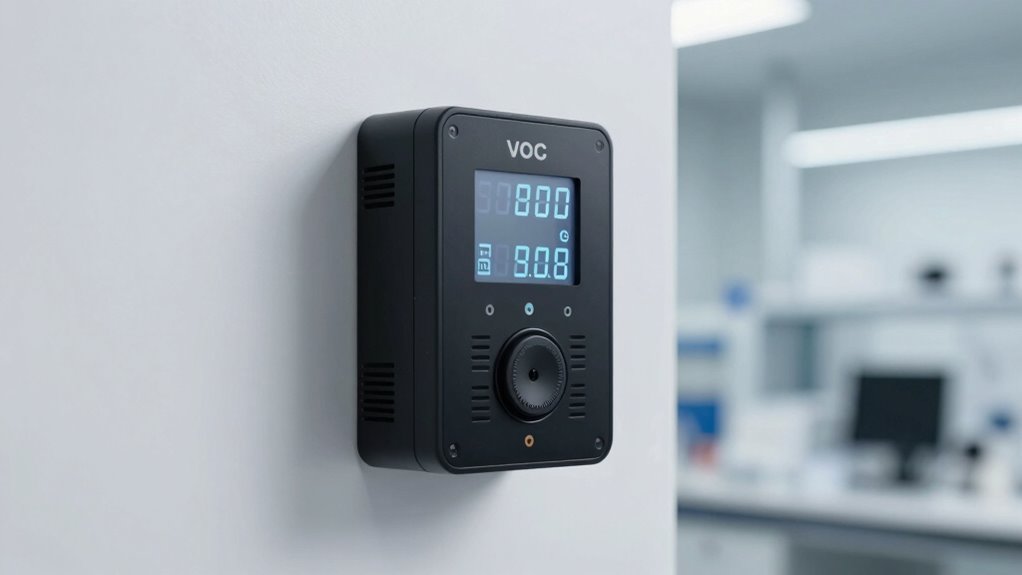
While VOC sensors are often trusted to monitor air quality, they can sometimes give false readings, leading you to believe the environment is safer or more contaminated than it really is. This discrepancy often stems from issues with sensor calibration, which directly impacts data accuracy. If a sensor isn’t properly calibrated, it may misinterpret volatile organic compounds, either underreporting or overreporting their presence. Regular sensor calibration is essential to maintain reliable data, especially since these sensors can drift over time due to environmental factors or age. Without calibration, you might see readings that don’t truly reflect the air quality, causing unnecessary concern or complacency. Additionally, understanding the sensor limitations helps you interpret data more effectively and avoid misplaced worry. Recognizing how to interpret sensor data involves recognizing that no sensor is perfect. Many VOC sensors operate based on chemical reactions or sensors that respond to a broad range of organic compounds. These responses can be influenced by temperature, humidity, or even recent exposure to certain chemicals, which can skew the readings. When data accuracy is compromised, you risk making decisions based on faulty information—like unnecessary ventilation or ignoring hazardous levels. To avoid these pitfalls, it’s imperative to ensure your sensors undergo routine calibration, ideally following the manufacturer’s guidelines. Proper calibration aligns the sensor’s output with real-world concentrations, making the data more trustworthy. You should also be aware that sensor readings are often given in parts per billion (ppb) or parts per million (ppm), but these numbers alone don’t tell the full story. It’s essential to understand the context of these values—what is considered a safe level versus a dangerous one. Keep in mind that sensor readings can fluctuate due to external factors, so looking at trends over time rather than isolated measurements can give you a clearer picture of air quality. When data accuracy is high, you can confidently interpret the numbers without second-guessing whether the sensor is reliable or not.
As an affiliate, we earn on qualifying purchases.
Frequently Asked Questions
How Often Should VOC Sensors Be Recalibrated for Accuracy?
You should recalibrate your VOC sensors every 6 to 12 months to maintain accuracy. Regular sensor calibration helps extend the sensor lifespan and ensures reliable readings. Factors like usage frequency and environmental conditions can influence calibration needs, so check manufacturer recommendations. If you notice inconsistent readings, recalibrate sooner. Staying proactive with calibration keeps your sensors functioning properly and provides trustworthy data for your monitoring needs.
Can Environmental Factors Affect VOC Sensor Readings?
A stitch in time saves nine, and environmental factors definitely impact VOC sensor readings. You should be aware that humidity, temperature, and air flow can cause sensor drift, affecting accuracy. This makes regular calibration essential, as it helps maintain reliable readings. Keep an eye on these conditions and adjust your calibration frequency accordingly, ensuring your sensors stay precise and trustworthy over time.
Are There Specific VOCS That Sensors Cannot Detect Accurately?
Yes, there are specific VOCs that sensors struggle to detect accurately due to sensor limitations and detection challenges. You might find that sensors have difficulty identifying low-concentration VOCs or those with similar chemical structures, leading to false negatives or inaccurate readings. Keep in mind that certain VOCs require specialized sensors for precise detection, so understanding these limitations helps you interpret sensor data more reliably and avoid misjudging air quality.
What Are Signs That a VOC Sensor Is Malfunctioning?
You notice frequent false alarms or sudden drops in readings—that’s a red flag your VOC sensor’s malfunctioning. Sensor drift causes inconsistent data, making it hard to trust the readings. Sharp spikes or unresponsive behavior also indicate problems. If your sensor seems to be acting unpredictably or giving erratic signals, it’s time to check for calibration issues or replacement. Trust your instincts; accurate detection depends on a properly functioning sensor.
How Do Different Brands of VOC Sensors Compare in Reliability?
You’ll find that brand reliability varies, so it’s essential to compare sensor calibration processes across brands. Some brands maintain consistent calibration, providing more accurate readings over time, while others may drift or require frequent recalibration. To guarantee dependable results, choose reputable brands known for rigorous calibration standards and reliable performance. This way, you’ll get more consistent data and avoid false readings caused by sensor malfunctions or poor calibration practices.
Conclusion
Remember, VOC sensors can sometimes give false readings, so don’t rely on them blindly. For example, if your sensor shows high VOC levels after painting, it might just be picking up fumes from the paint, not ongoing air quality issues. Always consider other factors and use your senses too. Trust but verify—your health depends on accurate info. Stay informed and take extra steps to make certain your environment is truly safe.