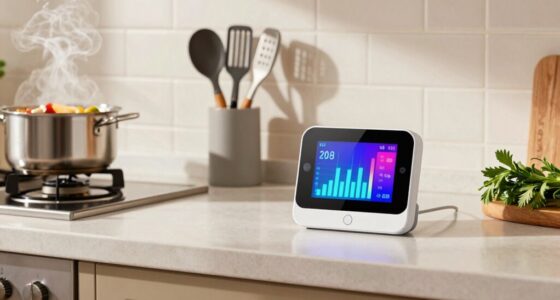
To avoid misleading CO2 readings, make certain your monitor is properly calibrated and placed in a representative spot away from dust or humidity sources. Don’t ignore environmental factors like temperature and humidity that can skew data. Regular maintenance, such as cleaning and recalibrating, is key to accurate results. Investing in high-quality sensors also makes a big difference. If you want to spot other common pitfalls and improve your air quality monitoring, there’s more to uncover.
Listen free for 30 days with Audible
Thousands of audiobooks and originals — cancel anytime.
As an affiliate, we earn on qualifying purchases.
Key Takeaways
- Failing to calibrate sensors regularly causes inaccurate CO2 readings, leading to misleading air quality assessments.
- Ignoring environmental factors like humidity and dust can skew sensor data, giving false impressions of indoor air quality.
- Improper sensor placement, such as near vents or dust sources, results in misleading CO2 measurements.
- Using low-quality or unverified sensors increases the likelihood of inaccurate data and false warnings.
- Neglecting sensor maintenance, like cleaning or recalibration, leads to drift and unreliable CO2 level readings.

Many people rely on CO2 monitors to guarantee indoor air quality, but common mistakes can lead to false readings and a false sense of security. One of the most overlooked issues is neglecting proper sensor calibration. Over time, sensors can drift, causing readings to become inaccurate. If you don’t regularly calibrate your device according to the manufacturer’s instructions, you might think the air is healthier than it actually is or vice versa. Calibration ensures the sensor’s measurements stay aligned with real CO2 levels, helping you make informed decisions about ventilation and air quality management. Without it, data interpretation becomes unreliable, and you risk overlooking dangerous conditions or wasting energy ventilating unnecessarily. Additionally, many users forget that environmental factors influence sensor performance. Temperature, humidity, and dust can all affect readings if your monitor isn’t designed to compensate for these variables. When these factors aren’t considered, you may get skewed data that doesn’t truly reflect the air quality. For example, high humidity can cause sensor errors, leading to falsely elevated CO2 readings. Regular maintenance, such as cleaning the sensor and ensuring proper placement, helps mitigate these effects. Proper sensor calibration combined with understanding how environmental conditions impact your device’s data interpretation is critical to getting trustworthy results. Moreover, understanding the importance of high-quality sensors can significantly improve the accuracy of your readings and long-term reliability of your device.
accurate CO2 monitor with calibration feature
As an affiliate, we earn on qualifying purchases.
As an affiliate, we earn on qualifying purchases.
Frequently Asked Questions
How Often Should I Calibrate My CO2 Monitor?
You should calibrate your CO2 monitor every 6 to 12 months, depending on usage and manufacturer recommendations. Regular calibration guarantees accurate readings, especially as sensors have a limited lifespan and can drift over time. Check your device’s manual for specific calibration frequency advice, and consider calibrating more often if you notice inconsistent or suspicious readings. Proper maintenance keeps your monitor reliable and extends its sensor lifespan.
Can External Factors Affect CO2 Readings?
Yes, external factors can affect your CO2 readings. Poor air circulation can cause uneven CO2 levels, leading to inaccurate measurements. Additionally, sensor placement matters—placing the monitor near windows, doors, or vents can skew results. To get reliable readings, make certain there is good air flow around your device and position it away from sources of external CO2, like cooking areas or heating vents. Proper setup helps you monitor air quality accurately.
Are All CO2 Monitors Equally Accurate?
Not all CO2 monitors are equally accurate. Sensor accuracy varies between models, so some may provide more precise readings than others. You should check how often the monitor requires calibration, as infrequent calibration can lead to misleading data. Regular calibration helps maintain measurement reliability. Always research specific monitor features and reviews to ensure you’re getting a device with good sensor accuracy and appropriate calibration frequency for your needs.
What Is the Ideal CO2 Level for Indoor Air Quality?
The ideal CO2 level for indoor air quality is below 800 ppm. Maintaining good indoor ventilation and air circulation helps keep CO2 levels low. When levels rise above 1000 ppm, you may notice stuffiness or decreased alertness. To guarantee a healthy environment, regularly monitor your CO2 levels and improve airflow by opening windows or using ventilation systems, especially in crowded or poorly ventilated spaces.
How Do I Interpret Sudden Changes in CO2 Levels?
Think of sudden CO2 level shifts as signals flashing in a dark room. When you see rapid changes, check your sensor placement—ensure it’s away from windows, vents, or people. Use data interpretation wisely, considering environmental factors like ventilation or occupancy. These fluctuations often point to activity spikes or air exchange issues. Stay alert to these signs, as they guide you toward better indoor air quality management, preventing misleading readings.
Conclusion
Now that you know the common mistakes, you can better navigate the world of CO2 monitors. Imagine your space as a breathing, living entity—if you trust faulty readings, you might unknowingly trap yourself in stale, stagnant air. But with careful attention, you’ll see through the misleading numbers. Keep your monitor calibrated, place it wisely, and stay vigilant. That way, you’ll guarantee your environment remains fresh and healthy—breathe easy, knowing you’re in control.
Flea & tick season Picks
flea and tick prevention
As an affiliate, we earn on qualifying purchases.