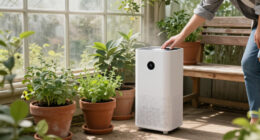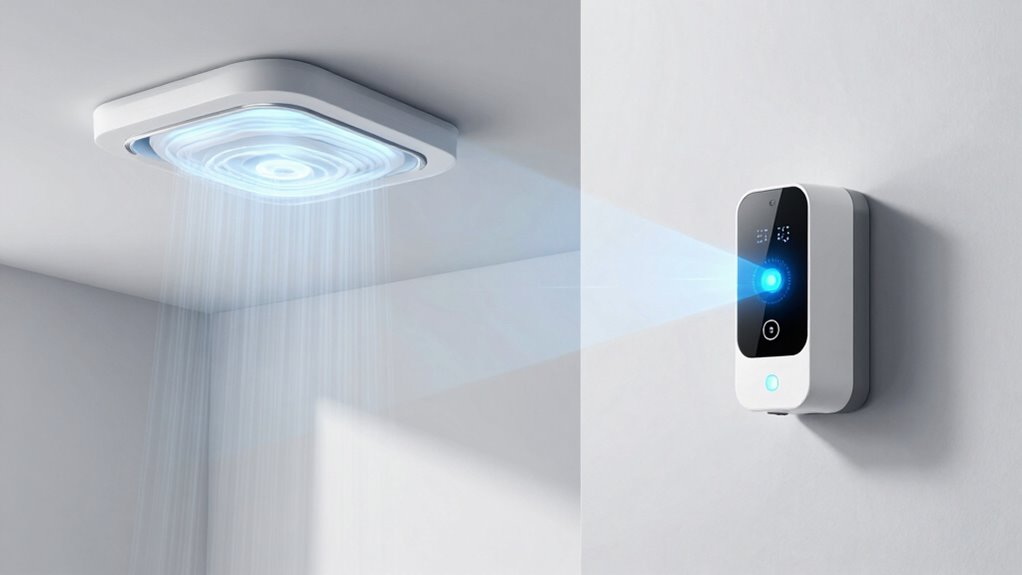

Air mixing distributes fresh air throughout a space to dilute pollutants evenly, making it suitable for general ventilation. In contrast, direct capture focuses on removing contaminants at their source with localized exhausts or hoods, which is more effective for specific pollutant zones. While mixing offers simplicity and cost benefits, capture provides targeted removal with less energy use. To understand how choosing the right approach impacts your indoor air quality, keep exploring these strategies further.

Get garden gear delivered free with Prime
- Fast, free delivery on millions of items
- Prime Video, Amazon Music and more included
- Member-only deals all year
Key Takeaways
- Air mixing disperses fresh air throughout a space for uniform pollutant dilution, while direct capture targets pollutants at their source for immediate removal.
- Proper air mixing enhances overall ventilation efficiency but may struggle with localized pollutants; direct capture offers targeted elimination.
- Air mixing is suitable for large, open areas; direct capture is ideal for environments with specific emission points like industrial zones.
- Achieving effective mixing depends on airflow design and obstacles; direct capture relies on correct placement of exhaust devices.
- Both strategies can improve indoor air quality, but their effectiveness varies based on pollutant location and emission characteristics.
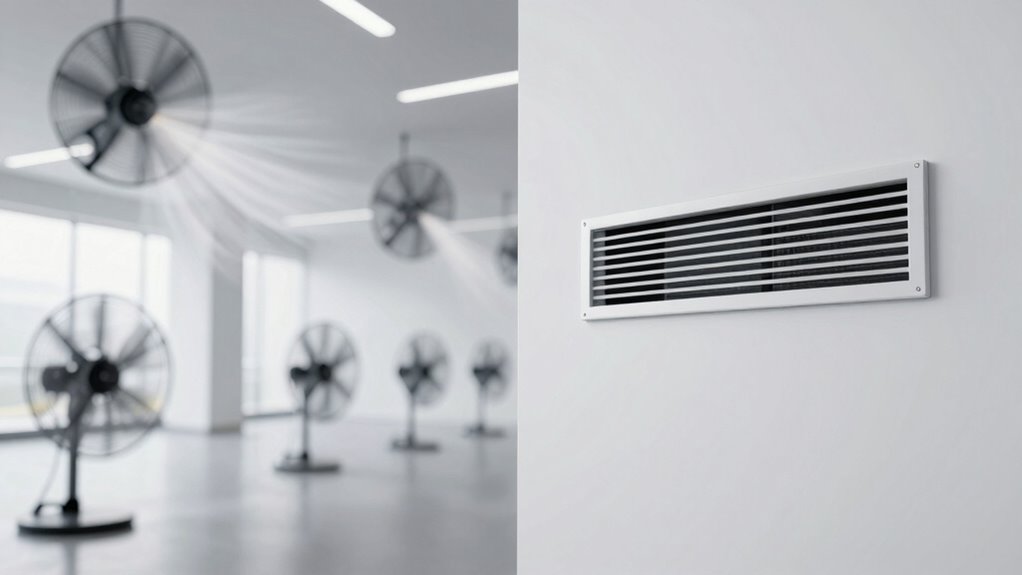
When choosing an air pollution control method, understanding the differences between air mixing and direct capture is vital. These strategies influence ventilation efficiency and airflow patterns, which directly impact indoor air quality. These patterns can be affected by factors such as airflow design, which is essential to optimize system performance. Air mixing involves dispersing fresh air throughout a space, aiming to dilute pollutants and guarantee uniform distribution. This method relies on natural or mechanical airflow to create a well-mixed environment. As a result, air pollutants are spread out evenly, reducing the risk of high concentrations in any one area. However, achieving ideal mixing requires careful consideration of airflow patterns, as poorly designed systems can lead to stagnant zones or uneven ventilation. The effectiveness of air mixing depends on factors like room size, air inlet and outlet placement, and the presence of obstacles that disrupt airflow. Properly designed ventilation systems are crucial to ensure optimal mixing and prevent air stagnation. Additionally, understanding airflow patterns can help optimize system performance and indoor air quality. Recognizing air circulation is also vital, as it impacts how well pollutants are dispersed or captured within a space. Effective airflow management is further supported by air quality monitoring, which provides real-time data to fine-tune ventilation strategies.
In contrast, direct capture focuses on targeting pollutants at their source. This approach uses localized exhaust systems, hoods, or ducts to remove contaminants before they disperse into the entire space. Instead of relying on the overall airflow to dilute pollutants, direct capture minimizes their presence by intercepting them immediately. This method often results in higher ventilation efficiency because it reduces the volume of contaminated air that needs to be diluted or filtered later. It’s particularly useful in environments with specific emission points, such as industrial processes or cooking areas, where pollutants are concentrated and easily targeted. Proper placement of capture devices is essential to guarantee they effectively intercept airflow patterns carrying pollutants away from workers or occupants.
Choosing between air mixing and direct capture depends on the nature of the pollutants, space layout, and operational needs. Air mixing is generally more suitable for general ventilation, where uniform air quality is desired across the entire room. It offers simplicity and can be more economical for large, open spaces. However, it may not be efficient for removing localized pollutants. On the other hand, direct capture excels in situations demanding targeted removal, providing higher overall effectiveness when pollutants are confined to specific points. It often results in better indoor air quality with lower energy consumption because less conditioned air needs to be circulated and filtered.
Ultimately, understanding airflow patterns and ventilation efficiency helps you decide which strategy aligns best with your indoor air quality goals. Properly designed systems, whether relying on thorough mixing or focused capture, can markedly improve the environment by reducing pollutant concentrations and promoting healthier indoor spaces.
As an affiliate, we earn on qualifying purchases.
Frequently Asked Questions
Which System Is More Energy-Efficient for Large Spaces?
You’ll find that a direct capture system is more energy-efficient for large spaces because it targets pollutants directly, reducing unnecessary air circulation. This system improves air quality by removing contaminants at their source, which often requires less energy overall. Proper system design guarantees peak performance, so choosing a direct capture approach helps you save energy while maintaining a healthier indoor environment.
How Does Cost Vary Between Air Mixing and Direct Capture?
Like comparing a luxury sedan to a sporty coupe, the cost varies considerably between air mixing and direct capture systems. Air mixing typically has a lower initial investment but may incur higher long-term energy expenses. Conversely, direct capture demands a higher upfront expense but can save money over time through better efficiency. Your decision hinges on expense factors like installation complexity, maintenance needs, and energy savings, shaping your overall cost comparison.
Can Both Strategies Be Combined Effectively?
Yes, you can combine air mixing and direct capture effectively through hybrid ventilation, creating a strong air quality synergy. This approach leverages the strengths of both strategies: air mixing guarantees even temperature, while direct capture quickly removes pollutants. By integrating these methods, you optimize indoor air quality, improve energy efficiency, and maintain a healthier environment. Proper planning and system design are key to achieving the best results with this hybrid approach.
What Maintenance Is Required for Each System?
You need to stay on top of things to keep each system running smoothly. For air mixing, regularly change filters and check system calibration to guarantee ideal airflow. Direct capture systems require frequent filter maintenance and calibration checks to maintain efficiency. Think of it as keeping your tools sharp; neglecting maintenance can lead to poor performance or system failure. Consistent upkeep ensures both systems operate at their best.
Which Method Is Better for Controlling Airborne Pathogens?
You should choose direct capture for better pathogen control and air quality, as it quickly removes airborne pathogens at their source, reducing spread. Air mixing can dilute contaminants but may spread pathogens throughout the space. For ideal indoor air quality and infection prevention, direct capture is more effective, especially in high-risk environments. It actively targets contaminated air, enhancing safety and maintaining a healthier indoor environment.
Conclusion
Ultimately, choosing between air mixing and direct capture comes down to understanding your space and needs. Air mixing disperses and balances, creating uniformity and comfort. Direct capture targets and removes pollutants at their source, providing precision and cleanliness. Both strategies aim to improve air quality, but each offers a different approach—one spreading the benefits throughout, the other focusing on the source. Decide which approach aligns with your environment, and you’ll create a healthier, more comfortable indoor space.
Halloween Picks
halloween
As an affiliate, we earn on qualifying purchases.