
Standard filters like HEPA are great for trapping smoke particles, but they can’t remove odors or gases from smoke because these pollutants are molecules that require special treatment. Odors come from volatile organic compounds (VOCs) that pass right through particle filters. To actually neutralize smoke smells, you need filters with activated carbon or adsorption media that bond with gas molecules. Understanding this difference helps you choose the right solution—discover more about how these filters work and how to get fresh air.
Key Takeaways
- Smoke odors are caused by gaseous VOCs that pass through particle-focused filters like HEPA.
- Gaseous pollutants require adsorption media, such as activated carbon, to effectively neutralize odors.
- HEPA filters trap particles but cannot capture or eliminate volatile odor molecules.
- Combining particle filters with activated carbon addresses both smoke particles and associated odors.
- Proper filtration targeting gases prevents lingering smells that standard particle filters cannot resolve.
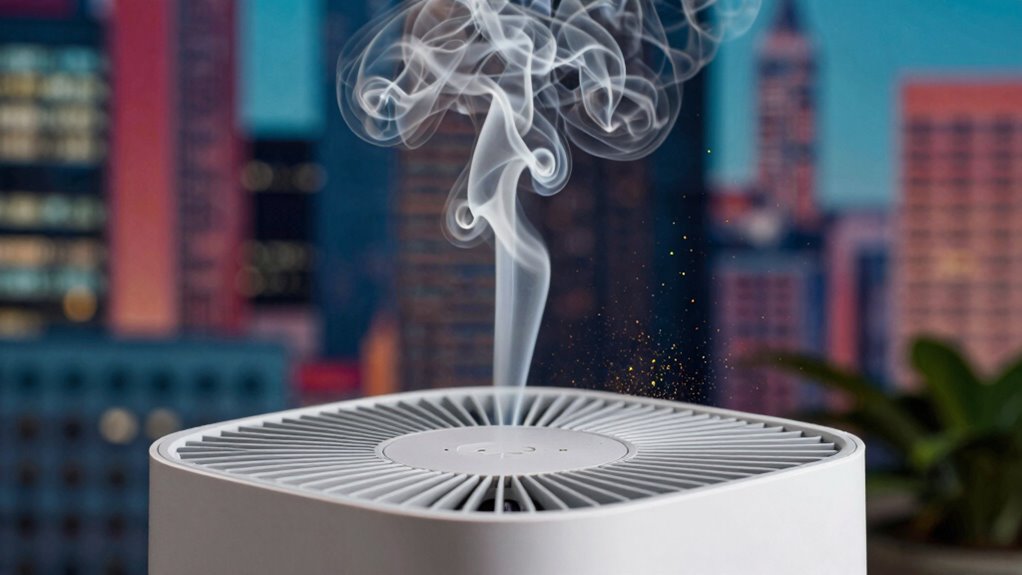
If you’ve ever tried to eliminate smoke odors from your home, you’ve probably noticed that some air filters just don’t do the trick. That’s because smoke smells are stubborn, lingering in the air long after the visible haze disappears. To improve your indoor air quality effectively, you need to understand that odors and airborne particles require different types of filtration technology. While many filters focus on capturing dust, pollen, or pet dander, they may fall short when it comes to removing smoke odors. This is because odors are caused by volatile organic compounds (VOCs) and other gaseous molecules that traditional filters aren’t designed to trap.
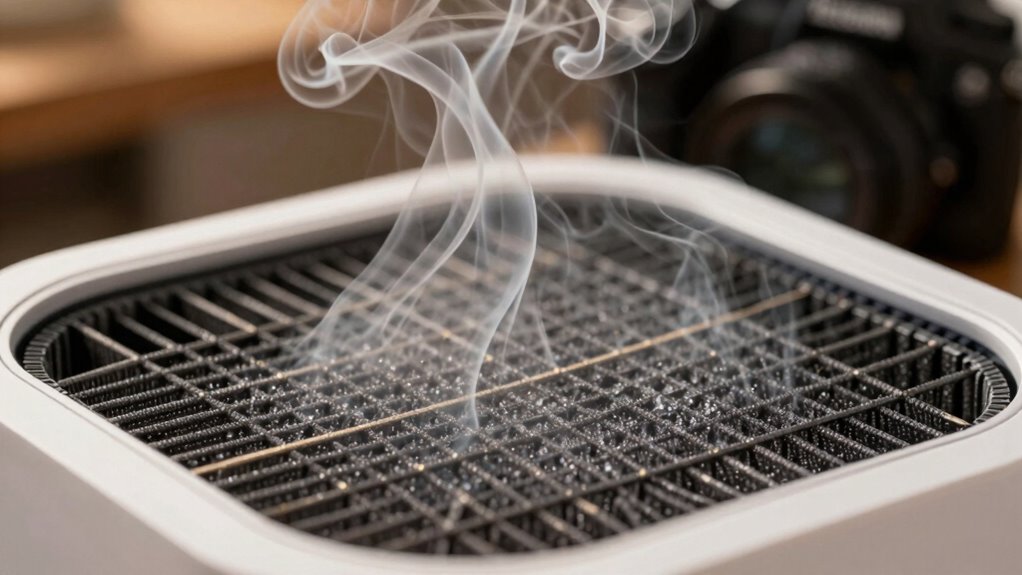
Most standard air filters, like basic HEPA filters, excel at capturing particles but aren’t as effective against gases and odors. HEPA filters trap particles as small as 0.3 microns, which includes most dust and pollen, but gases and smells are much smaller and can pass right through. To truly improve your air quality when dealing with smoke smells, you need a filter equipped with activated carbon or other adsorption media. These specialized filters work by trapping gaseous pollutants through a process called adsorption, where odor-causing molecules bond to the porous surface of activated carbon. This technology is vital for neutralizing smoke odors rather than just masking them.
It’s also important to recognize that filtration technology isn’t one-size-fits-all. Some advanced air purifiers combine HEPA and activated carbon filters to tackle both particles and odors simultaneously. Such systems can markedly improve indoor air quality by removing airborne pollutants and neutralizing smells at the source. When choosing a filter, look for specifications that highlight its ability to handle VOCs and odors, not just particle removal. This guarantees you’re addressing the root of the problem, rather than just the symptoms.
You should also be aware that ventilation plays a role in odor removal. Proper air exchange helps dilute smoke particles and gases, making filtration more effective. But without the right filtration technology—specifically designed to target odors—you’ll find that smoke smells linger, no matter how much you ventilate. Combining good filtration with proper ventilation will give you the best results. Remember, odors aren’t just surface smells; they’re embedded in the air, so selecting the right filter with the appropriate technology makes all the difference in reclaiming fresh, clean indoor air. Choosing filters with adsorption media ensures you’re addressing smoke odors at their source rather than just covering them up.
Frequently Asked Questions
How Long Does It Take to Eliminate Smoke Odors Completely?
It can take anywhere from a few days to several weeks to completely eliminate smoke odors, depending on the smoke odor duration and the severity of the smell. To speed up the odor elimination timeframe, use specialized filters like activated charcoal or HEPA filters, and guarantee proper ventilation. Consistent cleaning and air purification are key; patience is essential as odors gradually fade with persistent effort.
Can Air Purifiers Remove Smoke Smells From Clothing and Fabrics?
Yes, air purifiers can help remove smoke smells from clothing and fabrics. To maximize effectiveness, you should use a purifier with a HEPA filter and activated carbon, which target odors and airborne particles. Improve fabric treatment by hanging clothes in well-ventilated areas with good air circulation. Running the purifier nearby speeds up odor removal, making your clothes smell fresher faster.
Are There Specific Filters Recommended for Persistent Smoke Odors?
When dealing with stubborn smoke odors, you should look for filters that go beyond just trapping particles. Activated charcoal filters are your best bet, as they absorb and neutralize smells effectively. Pair these with HEPA filters to catch airborne particles. Together, these filters form a tag team that tackles both odor and particle issues, helping you breathe easier and keep your space smelling fresh.
How Often Should Filters Be Replaced to Effectively Eliminate Smoke Smells?
You should replace your filters every 3 to 6 months for effective odor absorption and filter maintenance. If smoke smells linger or your indoor air quality drops, consider changing them sooner. Regularly inspecting your filters helps prevent odor buildup and guarantees they work efficiently. Using specialized filters designed for odor removal can also extend their lifespan, so stay attentive to signs that it’s time for a replacement to keep your air fresh.
Can DIY Solutions Effectively Remove Smoke Odors Without Specialized Filters?
DIY solutions can help reduce smoke odors temporarily through odor absorption, but they often aren’t as effective as specialized filters. You can try DIY filters like activated charcoal or baking soda placed near vents or air intakes, which absorb odors. However, for long-term, consistent removal, investing in proper filters designed for odor absorption is recommended. DIY methods may improve smell but won’t fully eliminate persistent smoke odors.
Conclusion
You might think a standard filter can handle all odors, but that’s like trying to catch rain with a sieve. While particles settle easily, smoke smells cling stubbornly, requiring specialized filters. Just as a mask blocks germs but not dust, not all filters do the same job. So, don’t settle for one-size-fits-all solutions. Recognize the difference, choose the right filter, and breathe easier—because some odors demand more than just a simple fix.