Using an air purifier near your fireplace or wood stove can considerably cut down smoke, soot, and airborne pollutants, helping improve your indoor air quality. Look for models with HEPA filters that trap at least 99.97% of tiny particles and make sure they’re easy to maintain. Proper placement and regular filter changes will keep your home healthier and more comfortable. Keep going to find out more tips on choosing and caring for your air purifier for fireplace safety.
Key Takeaways
- Choose HEPA air purifiers with filters capturing at least 99.97% of 0.3-micron particles to effectively remove smoke and soot.
- Position the purifier near the fireplace or wood stove, ensuring unobstructed airflow for optimal pollutant filtration.
- Regularly replace or clean filters every 6 to 12 months to maintain air purifier efficiency and indoor air quality.
- Look for models with indicator lights to signal when filters need changing and features suited for continuous operation.
- Proper maintenance and placement help reduce indoor smoke and improve overall air safety during fireplace or wood stove use.
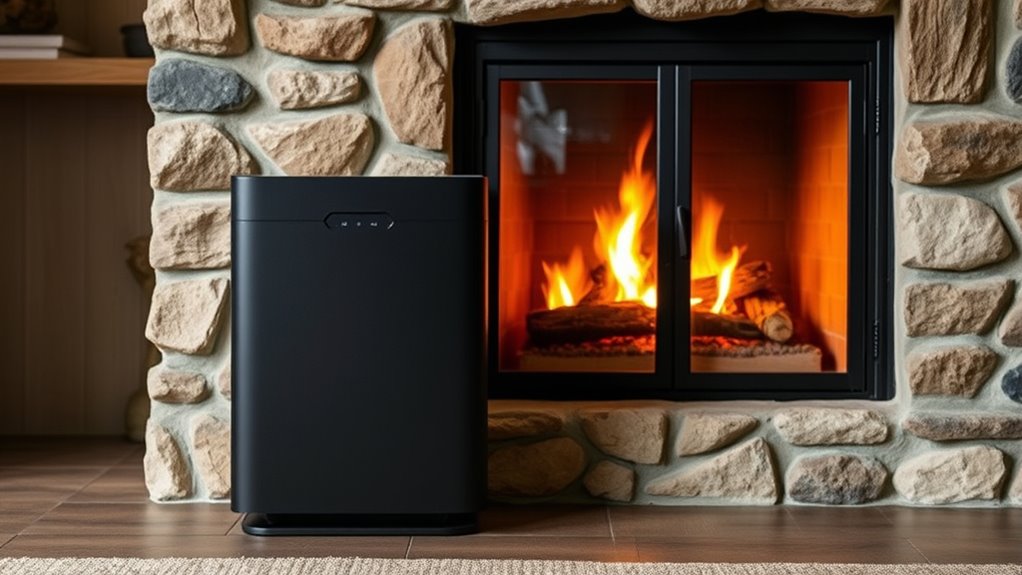
If you enjoy cozy fires but worry about indoor air quality, an air purifier designed for fireplaces can make a vital difference. Burning wood or using a fireplace can add warmth and ambiance, but it also releases smoke, soot, and fine particles that can degrade the air inside your home. An effective air purifier helps reduce these pollutants, guaranteeing your indoor environment remains cleaner and healthier. When choosing one, pay attention to how it impacts indoor air quality and how easy it is to maintain. Regular filter maintenance is essential to keep your purifier working efficiently. Over time, filters trap airborne particles, but if you neglect to replace or clean them as recommended, their effectiveness drops, and indoor air quality can suffer. Staying on top of filter maintenance ensures your purifier continues to remove smoke, dust, and other pollutants effectively.
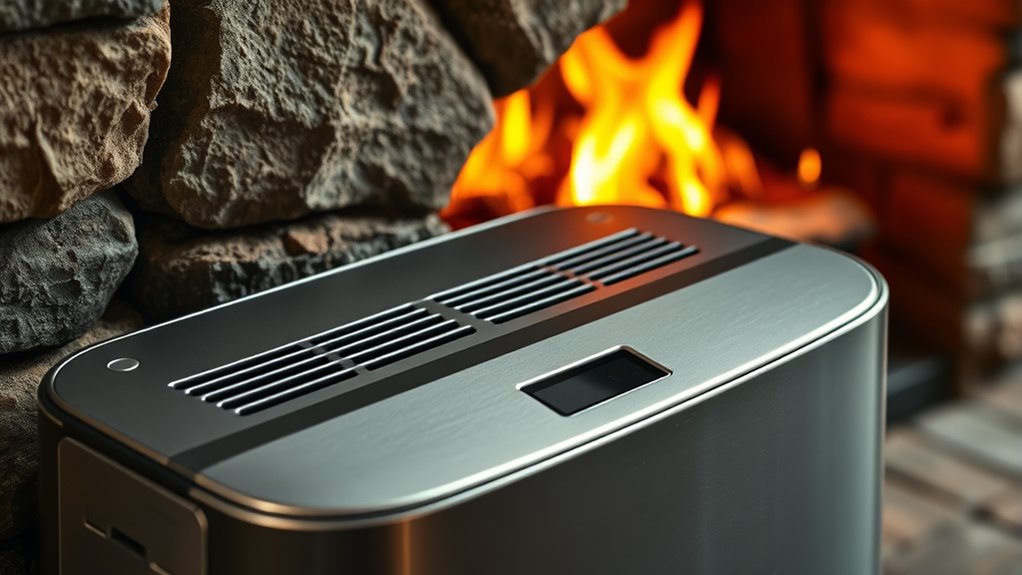
An air purifier for fireplaces reduces smoke and soot, keeping indoor air cleaner and healthier.
You should consider models with HEPA filters, which are designed to capture at least 99.97% of particles as small as 0.3 microns. These are especially useful for trapping the fine particles released by burning wood or other solid fuels. Look for purifiers that have easy-to-access filters, so you can replace them without hassle. Some units offer indicator lights that notify you when it’s time for a filter change, simplifying maintenance. Regularly checking and replacing filters not only preserves indoor air quality but also prolongs the life of your device, saving you money in the long run.
Installing an air purifier near your fireplace or wood stove can greatly improve indoor air quality by continuously filtering the air as pollutants are generated. Make sure to position it where it has unobstructed airflow and isn’t directly exposed to the heat or smoke from the fire. Routine filter maintenance, including vacuuming or gently washing pre-filters if washable, is essential to prevent clogging and maintain peak performance. Keep a schedule for filter replacement—typically every 6 to 12 months, depending on usage and the manufacturer’s recommendations—and stick to it. Doing so ensures your air purifier remains effective at removing airborne particulates and keeps the air in your home fresh and safe.
Ultimately, choosing the right air purifier and maintaining its filters properly makes a real difference in how comfortable and safe your indoor environment feels. It allows you to enjoy the warmth and charm of a fire without compromising your indoor air quality. Regular filter maintenance is a small effort that yields big benefits, keeping the air cleaner and your space healthier. Additionally, integrating advanced automation features can help monitor and optimize your purifier’s performance for even better air quality. Staying proactive about filter upkeep, including timely replacements, ensures your purifier continues to do its job efficiently, providing peace of mind and a healthier home environment for you and your loved ones.
Frequently Asked Questions
Do Air Purifiers Remove Smoke Odors From Fireplaces Effectively?
Yes, air purifiers can effectively eliminate smoke odors from fireplaces. They improve air quality by capturing tiny smoke particles and odor molecules, making your home smell fresher. Look for purifiers with activated carbon filters, as they excel at odor removal. Regular use of a high-quality air purifier ensures that smoke smells don’t linger, creating a healthier and more comfortable environment for you and your family.
Can Air Purifiers Handle the Ash Particles From Wood Stoves?
Yes, air purifiers can handle ash particles from wood stoves through effective air filtration. Look for models with HEPA filters, which excel at capturing tiny ash particles and prevent them from circulating in your home. Keep in mind, while they improve air quality and assist with ash removal, regular cleaning of your stove and proper ventilation are essential for ideal results. Choose an air purifier suited for high particulate loads for best performance.
Are Certain Air Purifier Models Better for Large Fireplace Rooms?
Think of your large fireplace room like a big, open field—you need a powerful tool to cover the entire space. Certain air purifiers with higher capacity models are better suited because they can handle more air volume and filter out ash particles effectively. Look for units rated for large rooms, ensuring they circulate and clean air efficiently, so your space stays fresh and free from lingering smoke or ash.
How Often Should I Replace Filters in Fireplace Air Purifiers?
You should replace filters in your fireplace air purifier every 3 to 6 months, depending on usage and filter lifespan. Regular replacement guarantees peak filtration and air quality. Check the manufacturer’s recommendations for your specific model, as replacement frequency may vary. If you notice decreased airflow or persistent odors, it’s a sign to change the filter sooner. Staying on top of filter maintenance keeps your air purifier working effectively.
Do Air Purifiers Reduce Health Risks From Fireplace Emissions?
Yes, air purifiers can help reduce health risks from fireplace emissions by improving indoor air quality. They filter out harmful particles and pollutants, especially if you combine them with ventilation improvements like opening windows or using exhaust fans. This way, you lessen exposure to smoke, soot, and toxins, creating a healthier environment for you and your family. Regularly maintaining your purifier guarantees it operates effectively and continues to protect your indoor air.
Conclusion
Think of an air purifier for your fireplace as a loyal guardian, standing watch over your home’s breath. It quietly fights off smoke and soot, much like a steadfast knight defending a castle. With it by your side, you create a sanctuary where fresh air reigns, and worries fade. So, equip your home with the right purifier, and let your indoor air be as pure and protected as a fortress under a clear, blue sky.

In the dynamic world of air purifiers and clean air advocacy, Aire stands out as a beacon of knowledge and passion. As the Editor in Chief of Aero Guardians, Aire has been instrumental in shaping the platform’s voice and direction, ensuring that every piece of content resonates with clarity, authority, and authenticity.