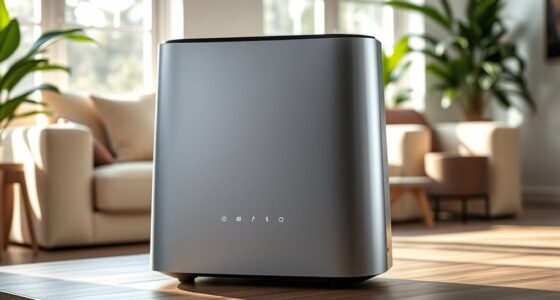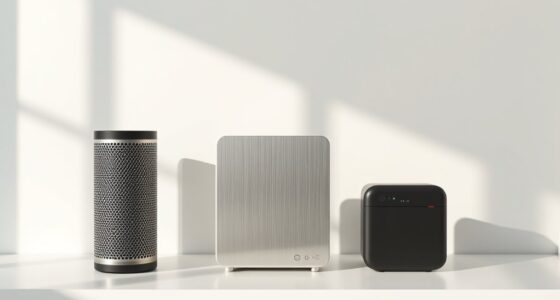
Yes, you should run your air purifier continuously in winter, especially since indoor air quality can decline as pollutants like dust, pet dander, and mold spores build up indoors. Heating dries out the air, increasing airborne irritants, so constant filtration helps keep the air cleaner and healthier. Modern, energy-efficient models make this practical without high cost. To learn more about optimizing your air quality during winter, keep going for helpful tips and insights.
Key Takeaways
- Indoor pollutants like dust and pet dander can accumulate more during winter, making continuous air purifier use beneficial.
- Running an air purifier constantly helps alleviate allergy and asthma symptoms caused by indoor allergens.
- Modern, energy-efficient models allow for 24/7 operation without significantly increasing energy costs.
- Indoor heating can dry out air and increase pollutant concentration, so continuous filtration maintains better air quality.
- Devices with smart sensors can automatically adjust operation based on indoor air quality levels, optimizing efficiency year-round.
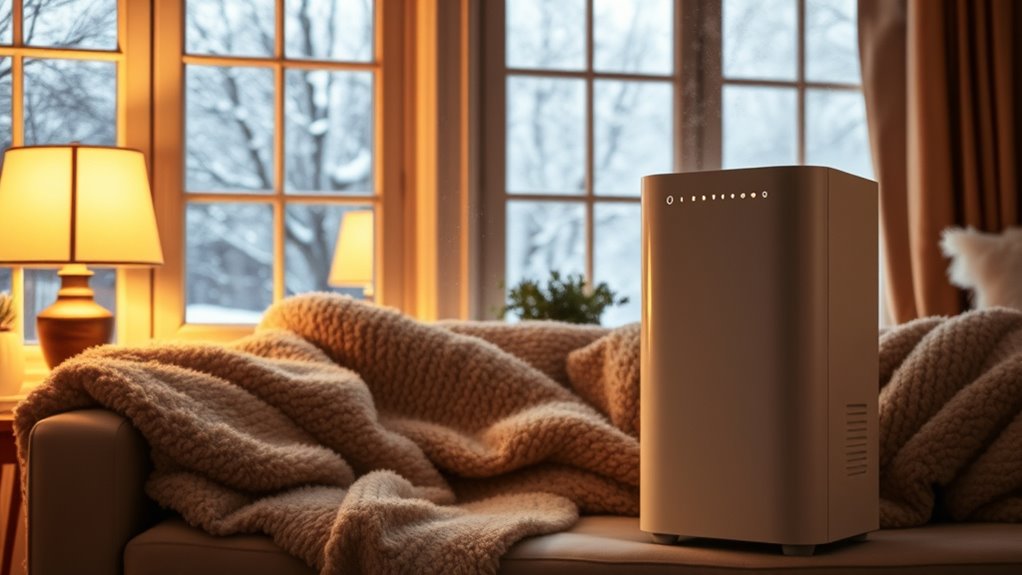
As winter settles in and indoor air quality becomes a growing concern, using air purifiers can make a real difference. During the colder months, people tend to spend more time indoors, where pollutants like dust, pet dander, mold spores, and airborne viruses can accumulate quickly. Poor air quality can lead to allergies, respiratory issues, and a general feeling of discomfort. An air purifier helps remove these contaminants, guaranteeing the air you breathe is cleaner and healthier. But one common question is whether you should run your air purifier constantly during winter. The answer depends on several factors, including your home’s air quality and the energy efficiency of your device.
Many modern air purifiers are designed to operate efficiently, consuming minimal energy while providing continuous filtration. If your home has high levels of indoor pollutants—perhaps because you have pets, smokers, or frequent visitors—keeping your air purifier running consistently can markedly improve air quality. It ensures that airborne particles are continuously filtered out, reducing the buildup of allergens and irritants. This is especially important if someone in your household has allergies or asthma, as cleaner indoor air can alleviate symptoms and improve overall well-being.
Running your air purifier continuously improves indoor air quality by filtering allergens and irritants, especially in homes with pets, smokers, or visitors.
Energy efficiency is another key consideration. Today’s air purifiers are built with eco-friendly features, such as low-energy fans and smart sensors that adjust operation based on air quality levels. These devices can run quietly and efficiently, even when operating 24/7, without drastically increasing your energy bill. When choosing an air purifier, look for models with good Energy Star ratings. They are designed to consume less power, making it more feasible to run them continuously during winter without worrying about skyrocketing electricity costs.
Additionally, running your air purifier during winter can help mitigate the effects of indoor heating, which can dry out the air and cause pollutants to become more concentrated. By maintaining a steady filtration process, you reduce the risk of airborne contaminants lingering in your home. Proper placement, regular maintenance—like changing filters—and considering the use of HEPA filters (which capture 99.97% of particles as small as 0.3 microns) are essential to keep your device operating at peak energy efficiency and effectiveness.
Frequently Asked Questions
Can Air Purifiers Help With Winter Colds and Flu?
Yes, air purifiers can help reduce airborne pathogens that cause winter colds and flu. They filter out viruses and bacteria, lowering your risk of infection. Additionally, maintaining proper indoor humidity levels with humidifiers can prevent your nasal passages from drying out, making it easier to fight off illnesses. Running an air purifier during winter creates a cleaner, healthier environment, helping you stay well despite the season’s challenges.
Are There Specific Types of Purifiers Best for Winter Use?
For winter use, choose air purifiers that are heating compatible and excel at winter allergen removal. Look for models with HEPA filters to trap winter allergens like mold spores and pet dander, and guarantee they work well in colder temperatures. These purifiers help maintain indoor air quality by efficiently removing winter-specific pollutants, so you stay healthier and breathe easier during the chilly months.
Do Air Purifiers Increase Energy Bills During Winter?
Running your air purifier in winter is like adding a small engine to your home’s energy use. It can increase energy consumption, leading to higher cost implications on your utility bill. However, modern models are more efficient, so the extra expense isn’t huge. To save, choose an energy-efficient purifier and run it only when needed. This way, you protect your indoor air quality without breaking the bank.
How Often Should I Replace Filters in Winter?
You should replace your air purifier’s filters every 3 to 6 months during winter, depending on usage and air quality. Follow your device’s maintenance schedule for maximum performance. Regular filter replacement ensures your purifier effectively removes pollutants and allergens, especially when indoor air quality may decline due to increased heating and indoor activities. Keep an eye on filter indicators and change filters promptly to maintain clean, healthy air indoors.
Are Portable Air Purifiers Effective in Large Winter Rooms?
Imagine trying to blow away a snowstorm with a straw—that’s your portable air purifier’s effectiveness in a large winter room. While they’re great for small spaces, their portable effectiveness drops as room size increases. So, if you’re warming up a mansion, don’t rely solely on a tiny purifier; you’ll need a more robust system to keep the air fresh and healthy in big winter rooms.
Conclusion
So, as winter blankets your home in icy silence, don’t forget your air purifier—it’s your unseen shield against sneaky pollutants. Think of it as a lighthouse guiding you safely through foggy, stale air, keeping your space fresh and vibrant. Running it during winter isn’t just a choice; it’s your secret weapon for breathing easy and feeling energized. Stay vigilant, stay protected—let your air purifier be your wintertime guardian angel.