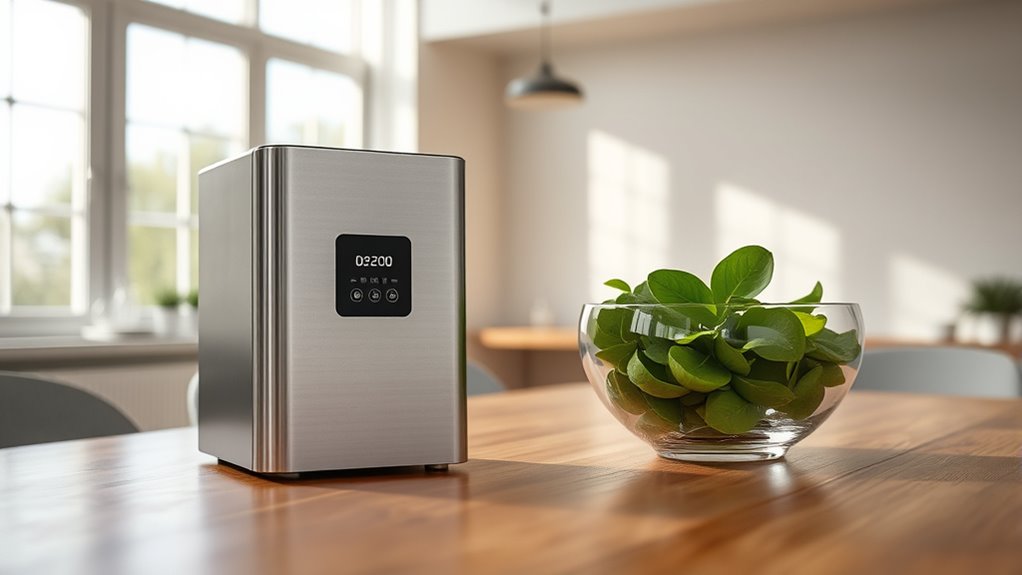

Ozone generators are not true air purifiers because they don’t remove particles like dust, pollen, or allergens. Instead, they use oxidation to neutralize odors and some pollutants, which can pose health risks if not used properly. Typically, they work best in unoccupied spaces and require thorough ventilation afterward. If you’d like to learn more about how ozone generators work and safe usage tips, there’s important information you should consider.
Key Takeaways
- Ozone generators mainly oxidize odors and pollutants but do not remove particles like dust or allergens.
- They can neutralize some bacteria and mold spores through oxidation but aren’t comprehensive air purifiers.
- Ozone generators pose health risks, especially at high levels, and should only be used in unoccupied spaces with proper ventilation.
- Safer alternatives like HEPA and activated carbon filters effectively remove particles and odors without ozone risks.
- Proper testing of indoor air quality helps determine if ozone use is appropriate and ensures safety after treatment.
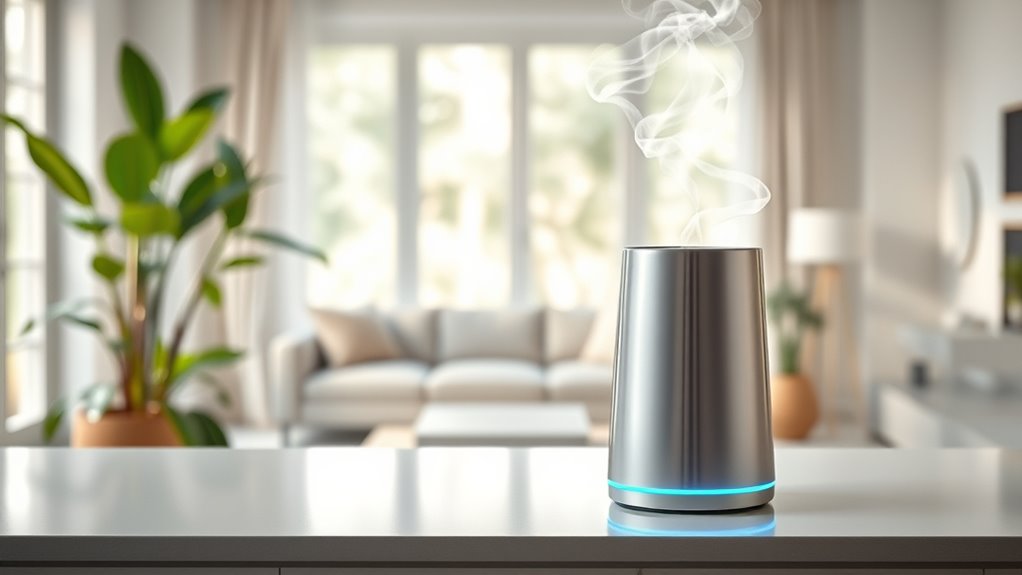
Have you ever wondered if ozone generators are an effective way to purify indoor air? Many people see these devices advertised as powerful air purifiers, but it’s important to understand what they do and whether they’re truly safe. Ozone safety is a significant concern because, while ozone can neutralize certain odors and pollutants, it can also pose health risks if not used properly. When considering an ozone generator, you should prioritize air quality testing to determine the actual state of your indoor environment. Testing helps you understand if your air contains pollutants that warrant intervention and whether an ozone generator might be appropriate or potentially harmful.
Ozone is a reactive molecule, meaning it can break down odors, bacteria, and mold spores. However, it doesn’t remove particles like dust or allergens directly. Instead, it oxidizes the molecules responsible for smells and contaminants, which might seem beneficial. But the catch is that ozone itself isn’t safe to breathe in high concentrations. Exposure can cause respiratory issues, throat irritation, coughing, and even worsen asthma symptoms. That’s why understanding ozone safety guidelines is essential. Experts recommend using ozone generators only in unoccupied spaces and allowing adequate ventilation afterward. Continuous or improper use can lead to dangerous ozone buildup, putting your health at risk.
Air quality testing plays an integral role in evaluating whether an ozone generator is suitable for your home or workspace. Testing can reveal the presence of harmful VOCs, mold, or other pollutants that might justify using an ozone device. If tests show elevated levels of certain contaminants, an ozone generator might help, but only if used carefully and as part of a comprehensive air purification plan. Many professionals advise exploring safer alternatives like HEPA filters and activated carbon filters, which can remove particles and odors without the risks associated with ozone exposure.
In addition, you should be aware that ozone does not eliminate all indoor pollutants. It’s not a catch-all solution for air quality issues. Proper air quality testing can help you identify the sources of indoor pollution, so you can address them directly—whether that’s improving ventilation, cleaning regularly, or eliminating sources of mold and chemicals. If you decide to use an ozone generator, always follow manufacturer instructions and take steps to ensure no one is in the space during operation. Afterward, ventilate thoroughly and consider re-testing the air to confirm ozone levels have returned to safe limits. Ultimately, understanding ozone safety and conducting air quality testing are key to making informed decisions about whether an ozone generator can be a safe and effective part of your indoor air purification strategy. Additionally, considering the weight of wind turbine blades and their impact on energy efficiency can inform sustainable choices for reducing indoor pollution sources through cleaner energy options.
Frequently Asked Questions
Are Ozone Generators Safe for Everyday Home Use?
Ozone generators aren’t safe for everyday home use because they can harm your air quality and pose risks to your health. They produce ozone, which can irritate your lungs and worsen respiratory issues. For consumer safety, it’s better to choose proven air purifiers that don’t emit harmful gases. Prioritize devices that improve air quality without risking your health, and always follow manufacturer guidelines for safe use.
How Do Ozone Generators Compare to HEPA Filters?
Imagine a breeze sweeping through your home, cleansing the air. Ozone generators and HEPA filters differ greatly in ozone effectiveness and filter comparison. HEPA filters trap particles like dust and allergens, providing safe, consistent purification. Ozone generators produce ozone that reacts with pollutants but can be harmful if not used properly. For safe, effective air cleaning, consider the reliability of filters versus the risks of ozone generators.
Can Ozone Generators Eliminate All Types of Indoor Pollutants?
Ozone generators can’t eliminate all types of indoor pollutants effectively. Their ozone efficacy varies depending on pollutant specificity, meaning they target certain odors and biological contaminants better than chemicals or particulate matter. However, they often produce harmful ozone levels that pose health risks. You should prefer proven air purification methods like HEPA or activated carbon filters for thorough indoor air quality improvement, as ozone generators aren’t a one-size-fits-all solution.
What Are the Health Risks Associated With Ozone Exposure?
Ozone exposure risks are like walking through a fog of health hazards. Breathing in ozone can irritate your lungs, worsen asthma, and cause chest pain. Long-term ozone health effects include decreased lung function and increased respiratory infections. If you’re exposed, you might feel wheezy or cough more. Protect yourself by avoiding high ozone areas, especially if you have respiratory issues, because the risks of ozone health damage are real and significant.
Are There Regulations Governing Ozone Generator Safety Standards?
Yes, there are regulations governing ozone generator safety standards. Regulatory agencies like the FDA and EPA set safety guidelines to limit ozone emissions, preventing health risks. You should always verify if an ozone generator adheres to these regulatory standards before using it. Following safety guidelines ensures you’re protecting yourself and others from harmful ozone exposure, making sure the device is used responsibly and effectively.
Conclusion
Remember, not all that glitters is gold. Ozone generators might seem like a quick fix for fresh air, but they can pose health risks instead of providing true purification. Use your judgment and prioritize safer, proven air purifiers. As the saying goes, “A fool and his money are soon parted.” Don’t fall for false promises—choose air cleaning methods that truly protect your health and well-being.