To prevent mold in your bathroom, run your fan for at least 20 to 30 minutes after showering. This ensures moisture is properly vented out, protecting walls, ceilings, and fixtures. Don’t turn off the fan too soon—trapped humidity can lead to mold growth. Opt for quiet, efficient fans that make longer run times more comfortable. Keep these tips in mind to maintain a healthier, mold-free space; more helpful advice awaits you.
Key Takeaways
- Run bathroom fans for 20 to 30 minutes after showering to effectively remove excess moisture.
- Proper run time prevents moisture from lingering, reducing mold and mildew growth.
- Consistent ventilation minimizes damage to walls, ceilings, and fixtures caused by humidity.
- Choosing quiet, efficient fans encourages longer, more effective run times without disturbance.
- Adhering to the ‘Run Time’ rule supports indoor air quality and promotes a healthier home environment.
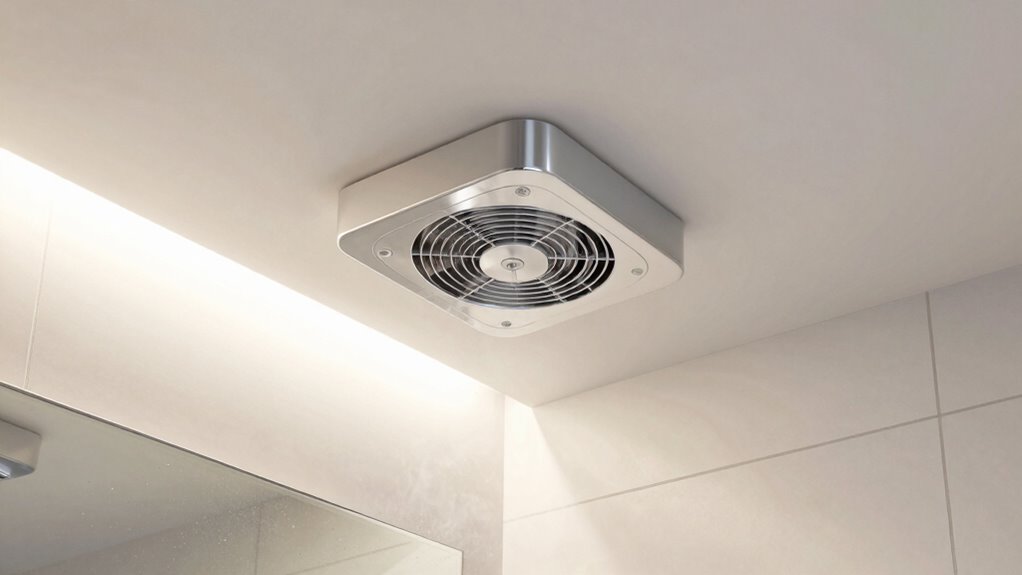
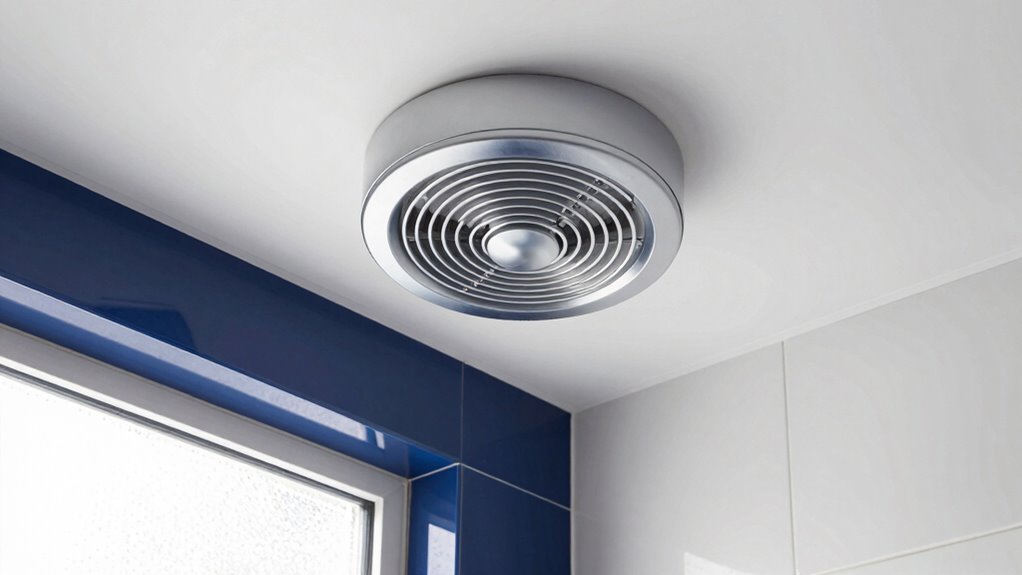
Ever wondered why a good bathroom fan is essential? It’s all about maintaining proper ventilation efficiency to keep your space fresh and mold-free. When you take a hot shower or bath, a lot of moisture gets released into the air. Without proper ventilation, this moisture lingers, creating the perfect environment for mold and mildew to thrive. A quality bathroom fan helps remove excess humidity quickly, reducing the risk of damage to walls, ceilings, and fixtures. But not all fans are created equal—some are louder than others, and noise levels can considerably impact your comfort. Choosing a fan with appropriate noise levels ensures you won’t be disturbed during your routines, especially if your bathroom is near bedrooms or shared spaces. An energy-efficient fan can also help lower your utility costs over time.
The key to preventing mold is not just selecting a powerful fan but using it correctly. That’s where the “run time” rule comes in. It’s simple: you should run your bathroom fan for at least 20 to 30 minutes after you finish showering or bathing. This duration allows the fan to effectively clear out the moisture that’s still lingering in the air. Some people tend to turn the fan off too soon, thinking the moisture has dissipated, but moisture can stay trapped in corners, behind tiles, or in the ceiling, leading to mold growth over time. Consistently following this run time rule ensures your bathroom stays dry and mold-free, saving you from costly repairs and health issues. Proper ventilation improves indoor air quality and helps maintain a healthier environment in your home.
When shopping for a bathroom fan, pay attention to ventilation efficiency. A fan with high ventilation efficiency moves more air with less energy, so it clears moisture faster without requiring you to run it for hours. This not only makes your bathroom safer but also helps you save on electricity bills. Additionally, consider noise levels—look for models rated for quiet operation, often listed as “quiet fans” or with decibel (dB) ratings. A fan that operates at a low noise level makes it easier to run for the recommended duration without causing disturbance or discomfort.
Frequently Asked Questions
How Often Should I Clean My Bathroom Fan?
You should clean your bathroom fan at least every six months as part of your ventilation maintenance and cleaning schedule. Regular cleaning prevents dust buildup, which can reduce efficiency and increase the risk of mold. If you notice excessive dust or mold, clean it sooner. Make sure to turn off the power, remove the cover, and gently clean the blades and vents. Staying consistent keeps your fan working properly and your bathroom healthier.
Can a Bathroom Fan Be Installed Outside the Bathroom?
Yes, you can install a bathroom fan outside the bathroom, but outdoor installation requires careful planning. It can improve ventilation efficiency by reducing indoor noise and preventing moisture buildup. However, make certain the fan is weatherproof and designed for outdoor use to withstand elements like rain and humidity. Proper insulation and sealing are essential to maintain energy efficiency and prevent drafts or water intrusion, ensuring your ventilation system works effectively year-round.
What’s the Ideal CFM for Small Bathrooms?
Think of your small bathroom as a delicate dance floor, where proper ventilation keeps the rhythm smooth. For ideal airflow, aim for a fan with 50-80 CFM, aligning with ventilation standards. Proper fan placement is key—install it near the shower or sink to effectively remove moisture and odors. This guarantees your bathroom stays fresh, mold-free, and comfortable, with the right CFM keeping the dance lively and balanced.
Do Humidity Levels Affect How Long I Should Run the Fan?
Yes, humidity levels affect how long you should run your fan. When humidity is high, you need to run the fan longer to improve humidity control and prevent mold growth. Lower humidity levels mean shorter run times, but guarantee the fan operates efficiently to maintain proper air circulation. Adjusting your fan’s run time based on humidity ensures ideal humidity control and maximizes fan efficiency, keeping your bathroom mold-free.
Are Smart Bathroom Fans Available With Automatic Timers?
Did you know that over 60% of new bathroom fans now feature smart controls? Yes, smart bathroom fans are available with automated timers, making it easier to manage ventilation. With these fans, you don’t have to worry about forgetting to turn them off; they automatically activate based on humidity or a schedule. This helps prevent mold growth and keeps your bathroom fresh without constant oversight.
Conclusion
Remember, regulating your bathroom fan’s run time is a simple yet essential step to prevent mold and maintain fresh air. Don’t delay—deliberately determine the duration, and don’t forget to turn it off at the right time. By balancing proper ventilation and avoiding overuse, you’ll keep your bathroom beautiful, bacteria-free, and mold-free. Stay smart, stay safe, and keep your space spotless by sticking to the ‘run time’ rule—your bathroom’s best buddy against mold!