
Bluetooth-enabled purifiers aim to make control easier, letting you adjust settings remotely and get real-time air quality alerts. But they often come with privacy concerns, connectivity issues, and added complexity that might not be worth it for everyone. You could face data sharing risks or struggle with unreliable connections. If you want to understand whether these features really benefit you or pose hidden challenges, keep exploring what’s behind the hype.
Key Takeaways
- Bluetooth-enabled purifiers offer remote control and automation but may introduce unnecessary complexity for basic air cleaning needs.
- Privacy concerns arise from data collection on usage habits, location, and environmental conditions tied to Bluetooth devices.
- Connectivity issues can cause frustration, undermining the convenience benefits of remote monitoring and control.
- Many users prefer manual operation, finding additional features and app controls more of a distraction than a necessity.
- The value of Bluetooth features depends on individual priorities, with some viewing them as solutions to problems that may not exist.

Bluetooth-enabled purifiers are transforming how you monitor and control air quality in your home. They promise the convenience of adjusting settings remotely, receiving real-time updates, and customizing your environment with just a few taps on your smartphone. But as appealing as this technology sounds, it’s worth considering whether it truly adds value or simply introduces unnecessary complexity. One concern that often comes up is privacy. These devices collect data about your usage habits, air quality levels, and sometimes even your location. While manufacturers assure users that data is kept secure, the idea of sharing personal information with a device connected to the internet can be unsettling. You might worry about potential breaches or how your data is being used, especially if the purifier’s app shares information with third parties. This raises a question: is the convenience worth the potential privacy trade-offs?
Bluetooth purifiers offer remote control but raise privacy concerns over data sharing and security risks.
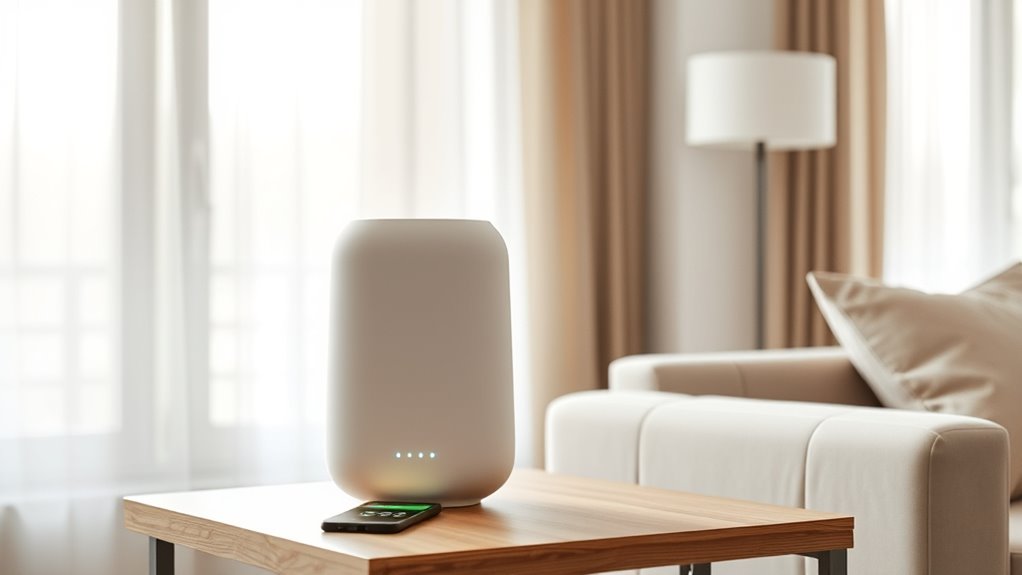
From a user convenience perspective, Bluetooth-enabled purifiers do offer undeniable benefits. You can effortlessly turn on your device before you arrive home, set modes tailored to different times of day, or receive alerts when air quality drops below safe levels—all without leaving your couch. The ability to control your purifier remotely means you’re not confined to a single spot in your home to manage it. Instead, you can adjust settings from anywhere, which is especially handy if you have a large house or multiple devices. Plus, many apps provide detailed data and insights about your indoor air, helping you make informed decisions about ventilation, cleaning, or even opening windows. This level of control and information streamlines your routine and ensures your environment stays ideal without constant manual adjustments. Additionally, integrating these devices with smart home systems can further enhance automation and convenience.
However, it’s important to weigh these benefits against potential drawbacks. Bluetooth connectivity can sometimes be unreliable, leading to frustration if your device frequently disconnects or fails to sync properly. Additionally, the constant need for updates and app permissions can feel invasive, especially if you’re wary of giving apps access to your device’s location or personal data. Some users find that the added features complicate what should be a simple task—air purification—rather than enhance their experience. Furthermore, not everyone needs or wants remote control capabilities; for many, traditional manual operation suffices and minimizes privacy risks.
In the end, whether Bluetooth-enabled purifiers are a worthwhile upgrade depends on your priorities. If convenience, real-time monitoring, and customized settings are essential to you, then they can be a valuable addition. But if you’re cautious about privacy concerns or prefer simplicity, sticking with a standard purifier might be the smarter choice. Technology’s promise of improved user experience should always be balanced against the potential for data sharing and system reliability issues.
Frequently Asked Questions
How Secure Are Bluetooth-Enabled Air Purifiers From Hacking?
You’re likely wondering how secure Bluetooth-enabled air purifiers are from hacking. While they offer convenience, privacy concerns exist if the device isn’t properly protected. Hackers could potentially access your device if it’s not updated or has weak security features. Device compatibility issues might also create vulnerabilities. To stay safe, guarantee your purifier uses strong passwords, regular updates, and compatible security protocols, minimizing risks and protecting your privacy.
Do Bluetooth Purifiers Actually Improve Air Quality Significantly?
Ever wonder if Bluetooth purifiers truly enhance air quality? They can improve air quality metrics if they work seamlessly with your existing devices. However, their effectiveness depends on proper device compatibility and accurate sensors. While some models may offer noticeable improvements, others might not make a significant difference. It’s essential to evaluate the purifier’s features and guarantee it integrates well into your smart home setup for real air quality benefits.
Are Bluetooth Features Necessary for Effective Air Purification?
You might wonder if Bluetooth features are necessary for effective air purification. While they don’t directly improve air quality, they enhance smart home integration and user convenience. With Bluetooth, you can control your purifier remotely, monitor air quality, and customize settings easily. So, although not essential for purification, these features make managing your air cleaner more convenient and connected, aligning with modern smart home lifestyles.
How Does Bluetooth Connectivity Affect Purifier Maintenance and Longevity?
Imagine a world where your purifier seamlessly fits into your smart home setup, enhancing user convenience. Bluetooth connectivity subtly influences maintenance and longevity by enabling real-time alerts and diagnostics, helping you catch issues early. This smart integration reduces downtime and prolongs device life. While it doesn’t directly impact durability, it streamlines upkeep, ensuring your purifier remains effective longer—making your air cleaner and your life simpler.
What Are the Cost Differences Between Bluetooth and Non-Bluetooth Purifiers?
When comparing Bluetooth and non-Bluetooth purifiers, you’ll find a notable difference in cost. Bluetooth models often come with a higher price tag due to advanced features, making the feature affordability a key factor. The cost comparison shows that non-Bluetooth purifiers are generally more budget-friendly upfront, but Bluetooth-enabled options might offer long-term savings through smarter maintenance. Decide based on whether the added features justify the price difference for your needs.
Conclusion
So, should you step into the smart sphere of Bluetooth-enabled purifiers? While they promise convenience and connectivity, they might just be a solution seeking a problem. Don’t be dazzled by devices delivering digital dazzle—dive into details, decipher needs, and decide if smart is truly superior. Remember, sometimes simplicity is supreme, and the best purifier is the one that quietly works without wireless whimsy. Choose wisely, and breathe confidently without the clutter.