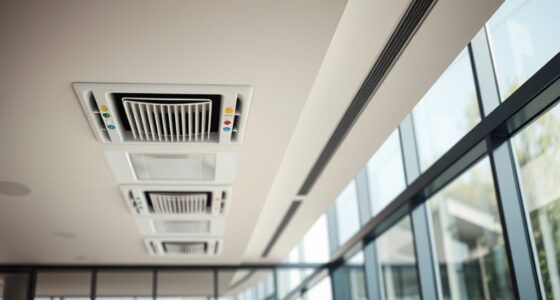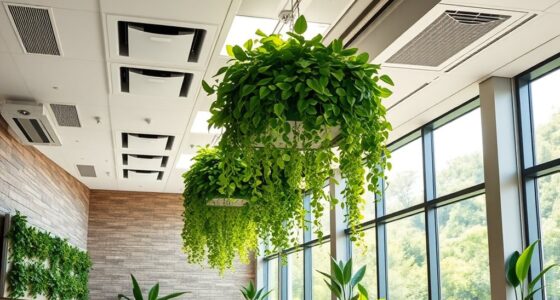
Building envelope sealing helps you limit outdoor pollutants like dust, pollen, and vehicle emissions from entering your home, improving air quality and comfort. However, sealing alone can trap stale air and indoor pollutants, so it’s crucial to combine it with proper ventilation systems like HRVs or ERVs. This balance keeps fresh air flowing in and pollutants out, creating a healthier space. Keep exploring to learn how to optimize both sealing and ventilation for the best indoor air quality.
Key Takeaways
- Proper sealing reduces outdoor pollutant entry but must be paired with ventilation to prevent indoor air stagnation.
- Sealing gaps minimizes dust, pollen, and contaminants, improving overall indoor air quality and occupant health.
- Without adequate ventilation, sealed buildings risk pollutant buildup, leading to stale air and potential health issues.
- Mechanical ventilation systems like HRVs or ERVs are essential to maintain fresh air and dilute indoor pollutants.
- Regular maintenance of sealing and ventilation systems ensures ongoing indoor air quality and energy efficiency.

Sealing the building envelope is a essential step in controlling indoor air quality, as it directly influences the amount of outdoor pollutants that enter your space. When you effectively seal gaps, cracks, and openings in walls, windows, doors, and the roof, you create a barrier that limits the infiltration of dust, pollen, vehicle emissions, and other airborne contaminants. This not only helps protect your health but also enhances the overall comfort of your environment. However, it’s important to understand that sealing alone isn’t enough; it must be balanced with proper ventilation to guarantee indoor pollutant control remains effective. Without adequate airflow, sealed spaces can trap pollutants indoors, leading to stale air and potential health issues.
Sealing your building improves indoor air quality but requires proper ventilation balance for health and comfort.
Good ventilation efficiency is essential in this context. When your building envelope is tightly sealed, you need a well-designed ventilation system to introduce fresh air and exhaust stale air. This process helps dilute indoor pollutants such as volatile organic compounds (VOCs), radon, and moisture that can foster mold growth. If ventilation is insufficient, pollutants can accumulate even in tightly sealed environments, negating the benefits of sealing. Consequently, integrating mechanical ventilation systems like heat recovery ventilators (HRVs) or energy recovery ventilators (ERVs) becomes indispensable, especially in modern, airtight buildings. These systems help maintain indoor air quality without sacrificing energy efficiency, allowing you to control pollutant levels while conserving heating or cooling energy.
In addition to mechanical solutions, you should consider the location and operation of exhaust fans, air purifiers, and other air-cleaning devices. Proper placement and maintenance can greatly improve indoor air quality by removing pollutants before they settle or spread. Regularly inspecting and sealing gaps around electrical outlets, plumbing penetrations, and vents also prevents unfiltered outdoor air from bypassing your primary sealing efforts. Remember, the goal isn’t to create an airtight fortress but to design a balanced system where indoor pollutant control and ventilation work hand in hand.
Furthermore, understanding the importance of building envelope sealing can help you better appreciate its role in overall indoor air quality and energy efficiency. Ultimately, sealing the building envelope is a foundational step in optimizing indoor air quality, but it must be paired with effective ventilation strategies. When done correctly, you’ll enjoy cleaner air, improved energy efficiency, and a healthier living or working environment. Keep in mind that ongoing maintenance and adjustments are necessary to guarantee the balance between sealing and ventilation remains effective over time. By prioritizing both, you set the stage for a safer, more comfortable indoor space that supports your well-being.
Frequently Asked Questions
How Long Does It Take for Sealing to Improve Indoor Air Quality?
You’ll notice air quality improvement within a few days after sealing your building envelope. Typically, the sealing timeline shows significant benefits within 1 to 2 weeks, as contaminants and drafts decrease. The key is consistent ventilation and filter maintenance. Keep in mind, the full impact might take up to a month, but you’ll start feeling the difference soon after sealing, enjoying cleaner, healthier indoor air.
Does Sealing the Building Envelope Require Professional Installation?
Did you know that 85% of buildings could benefit from better sealing? You don’t necessarily need professional installation for sealing your building envelope; DIY methods can be effective if you follow proper techniques. While sealing benefits include improved energy efficiency and air quality, make sure you identify leaks carefully. For larger or complex areas, consulting a professional might be wise. Otherwise, a DIY approach can save you money and enhance your indoor environment.
What Are the Potential Health Risks of Improper Sealing?
If you improperly seal your building envelope, you risk trapping indoor pollutants like dust, allergens, and volatile organic compounds, which can cause respiratory issues. Additionally, poor sealing can lead to moisture buildup, promoting mold growth that worsens indoor air quality and health. You should guarantee proper sealing to prevent these risks, ideally with professional assistance, to maintain a healthy, safe environment inside your home or building.
Can Sealing Affect Indoor Humidity Levels?
Yes, sealing your building envelope can affect indoor humidity levels. When you properly use moisture barriers and seal leaks, you improve humidity control, preventing excess moisture from entering or escaping. This helps maintain a comfortable environment and reduces issues like mold growth. However, over-sealing without proper ventilation can trap humidity inside, so it’s essential to balance sealing with adequate airflow to keep indoor air quality healthy.
How Often Should Building Envelope Seals Be Inspected or Replaced?
You should inspect your building envelope seals at least once a year to guarantee peak performance. Sealant longevity varies, but generally, seals need replacement every 5 to 10 years, depending on material and environmental conditions. Follow an inspection schedule that includes visual checks for cracks, gaps, or deterioration. Promptly replacing compromised seals helps maintain energy efficiency, indoor air quality, and prevents moisture intrusion. Regular upkeep keeps your building safe and well-sealed.
Conclusion
Sealing your building envelope isn’t just about energy efficiency—it’s essential for improving indoor air quality. Did you know that poorly sealed buildings can trap pollutants, decreasing air quality by up to 50%? By sealing gaps and leaks, you not only save energy but also create a healthier environment for everyone inside. So, take action today—your lungs and your wallet will thank you for it. A sealed building truly makes a noticeable difference.