
Electret filters trap tiny particles like dust, pollen, and bacteria by using static electric charges that attract and hold pollutants. Their special materials, like polypropylene, retain these charges over time, boosting filtration efficiency without restricting airflow. This combination of electrostatic attraction and mechanical barrier means you get cleaner air with less energy. If you want to understand how static charges make these filters so effective, there’s more to uncover.
Key Takeaways
- Static charges in electret filters attract and trap tiny particles like dust and bacteria more effectively.
- Electret materials retain static charges over time, maintaining high filtration efficiency.
- Combining electrostatic attraction with mechanical filtering improves overall particle removal.
- Static charges allow filters to capture ultrafine particles with less airflow resistance.
- Durable static charges reduce the need for frequent filter replacements and enhance long-term performance.
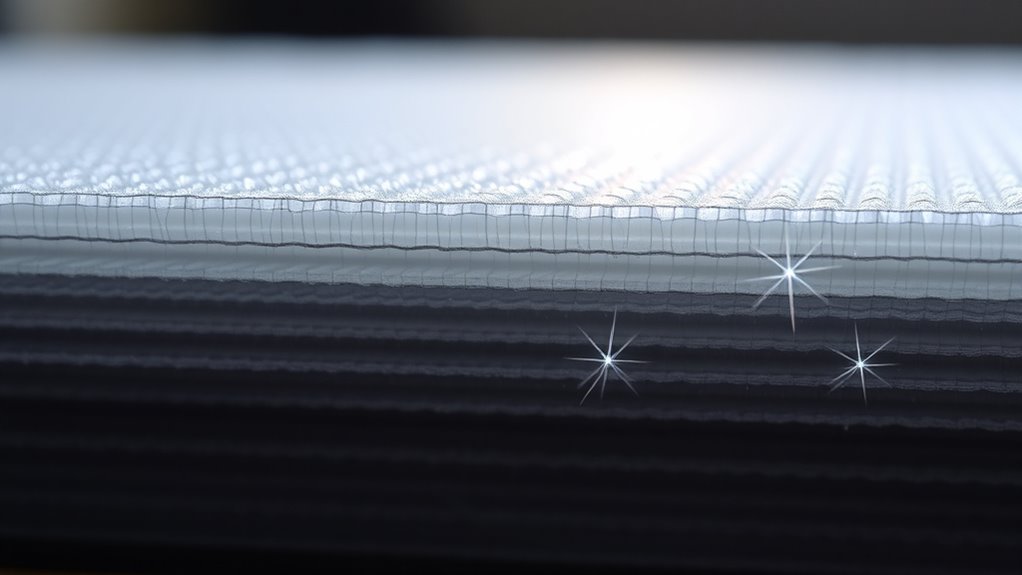
Electret filters are a popular choice for air purification because they efficiently trap tiny particles using electrostatic charges. These filters rely on specialized materials called electret materials, which are designed to hold a static electric charge over time. When air passes through the filter, particles like dust, pollen, and even bacteria are attracted to and captured by the electrostatic forces created by these materials. This mechanism allows for high filtration efficiency without considerably restricting airflow, making electret filters ideal for various applications, from household air purifiers to industrial ventilation systems.
Electret filters efficiently trap tiny particles with electrostatic charges, ensuring high airflow and filtration performance.
The key to their effectiveness lies in the unique properties of electret materials. Unlike traditional filters that rely solely on mechanical barriers, electret filters incorporate materials that can retain a static charge for extended periods. This static charge retention enhances the filter’s ability to attract and hold particles that are too small to be captured by physical sieving alone. As a result, even microscopic pollutants are effectively removed from the air, improving indoor air quality appreciably. The durability of electret materials ensures that the static charge remains stable, maintaining filtration performance over time and reducing the need for frequent replacements.
You might wonder how these materials manage to keep their static charge. Electret materials are often made from polymers such as polypropylene, which are processed to develop and trap a permanent or semi-permanent static charge. During manufacturing, these polymers are treated or charged through various methods like corona discharge or triboelectric processes. The result is a material that can store static electricity, much like a charged balloon can attract small bits of paper. Because of their ability to retain static charges, electret filters can achieve high filtration efficiencies while maintaining relatively low pressure drops, ensuring your HVAC system or air purifier functions smoothly and efficiently.
Moreover, the design of electret filters allows them to combine mechanical and electrostatic filtration methods, making them highly versatile. They’re capable of capturing a wide range of particle sizes, from large debris to ultrafine particles, with less effort and energy. This synergy between electret materials and static charge retention means that your air purification device doesn’t need to work as hard to keep your environment clean. You benefit from cleaner, healthier air, with less maintenance and fewer filter replacements because the static charge helps the filter last longer and perform better over time. In essence, electret materials and their ability to maintain static charges are what make these filters so effective and popular in the domain of air purification.
Frequently Asked Questions
How Long Do Electret Filters Maintain Their Static Charge?
You’ll find that electret filters typically maintain their static charge for about 6 months to a year, depending on usage and environmental factors. Over time, charge decay occurs due to humidity and handling, which reduces filtration efficiency. To maximize material longevity, store filters properly and avoid excessive moisture. Regular replacement ensures your filter maintains peak performance, as the static charge weakens naturally with prolonged use.
Can Electret Filters Be Reused After Cleaning?
Like a sponge soaking up water, electret filters can be reused after cleaning, but their filter regeneration depends on proper cleaning methods. You should avoid harsh chemicals or high-pressure washing, which can damage the static charge. Gently vacuum or wash with mild soap and water, then let it dry completely. Keep in mind, repeated cleaning may reduce filtration efficiency over time, so monitor performance regularly.
What Are the Limitations of Electret Filter Efficiency?
You should know that electret filter efficiency has limitations due to charge decay over time and material degradation. As the static charge diminishes, the filter’s ability to trap particles weakens, especially with prolonged use or exposure to moisture. These factors reduce overall performance, meaning you might experience reduced filtration effectiveness. To maintain peak protection, regular replacement or cleaning is necessary, as these issues are hard to reverse.
How Do Environmental Conditions Affect Static Charge Retention?
Environmental conditions, like humidity impact and temperature effects, directly influence static charge retention in electret filters. High humidity causes moisture buildup on filter fibers, dissipating static charge and reducing filtration efficiency. Conversely, low humidity helps maintain the charge longer. Elevated temperatures can also weaken static charges by increasing molecular movement. To guarantee peak performance, it’s vital to control these conditions, especially in environments with fluctuating humidity and temperature levels.
Are Electret Filters Effective Against Viruses and Bacteria?
Yes, electret filters are effective against viruses and bacteria because their static charge attracts and traps tiny particles. However, their lifespan depends on how well you maintain them, as static charge decay can reduce their efficiency over time. To maximize protection, avoid moisture and high humidity, which accelerate static charge loss. Regularly replacing or inspecting your filter guarantees it continues to effectively filter out harmful pathogens.
Conclusion
Electret filters may seem simple, but their static charge makes them powerful. Without this tiny charge, they’d just be ordinary filters, letting particles slip through. Instead, their hidden magic traps pollutants with ease, protecting you every day. It’s surprising how something so small can do so much—like a quiet hero fighting invisible enemies. So next time you breathe easy, thank the tiny static charge working behind the scenes to keep you safe.

In the dynamic world of air purifiers and clean air advocacy, Aire stands out as a beacon of knowledge and passion. As the Editor in Chief of Aero Guardians, Aire has been instrumental in shaping the platform’s voice and direction, ensuring that every piece of content resonates with clarity, authority, and authenticity.