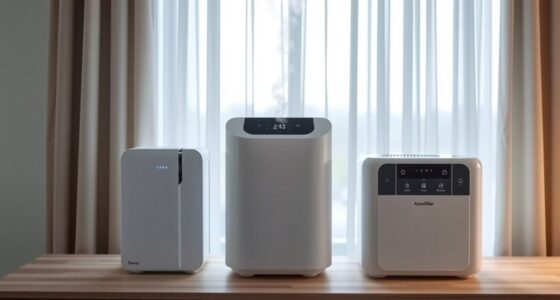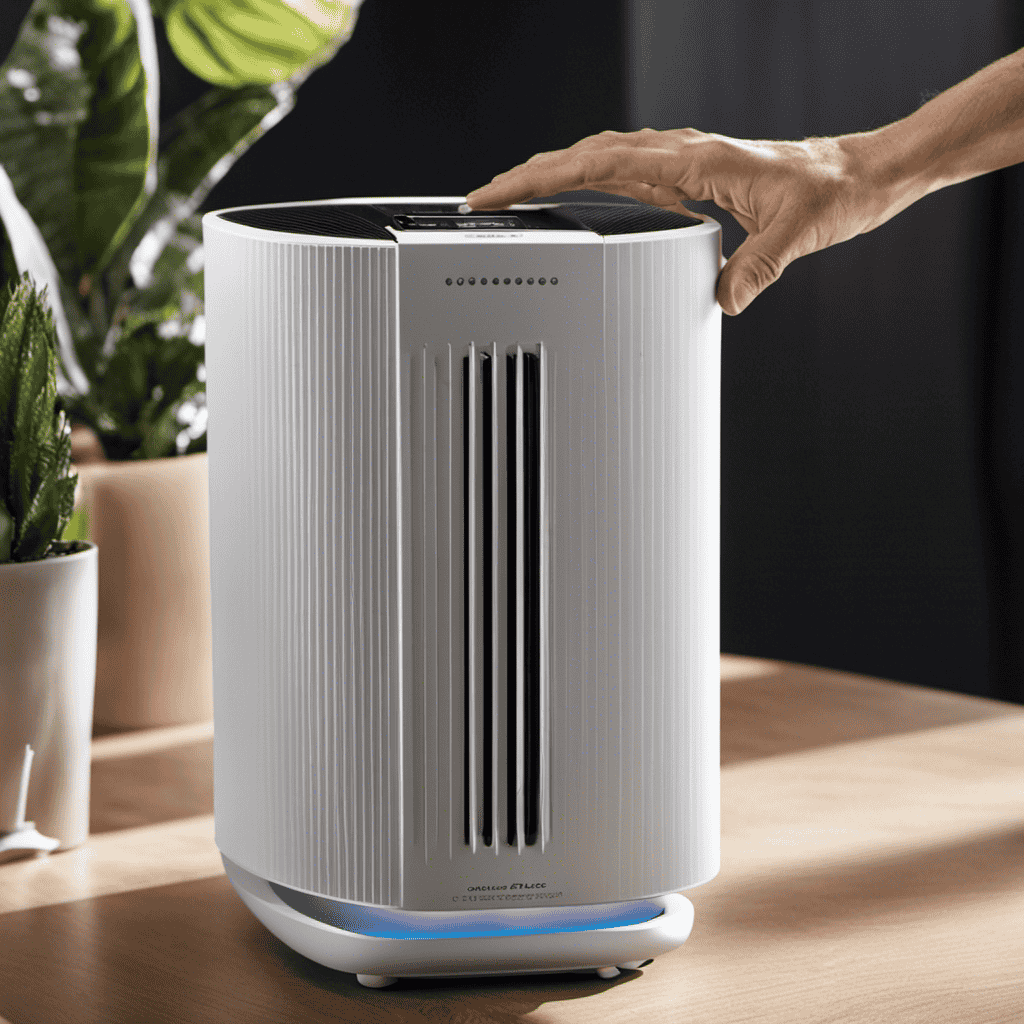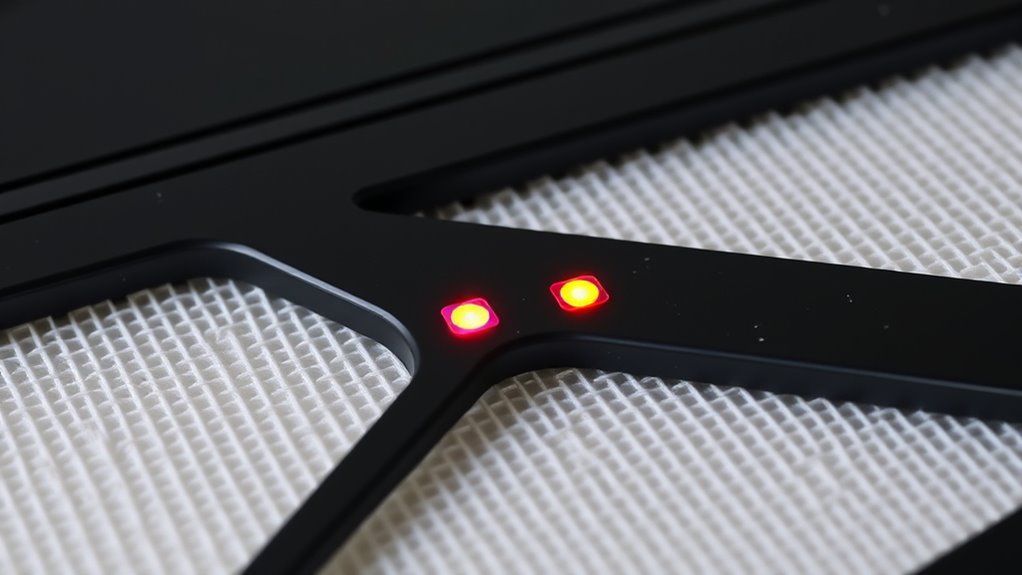

Filter life indicators help you know the right time to replace your HVAC filters, keeping your system running smoothly and your indoor air healthy. They provide real-time information on filter condition, reducing guesswork and preventing premature or delayed changes. Understanding how these indicators work and considering environmental factors will boost their accuracy. Stay aware of different technologies and tips to maximize their effectiveness—there’s more to discover if you keep exploring.
Key Takeaways
- Understand the type and technology of your filter life indicator for accurate readings.
- Regularly monitor environmental conditions like dust and humidity that can affect filter lifespan.
- Use indicator alerts in conjunction with manual inspections for more reliable timing.
- Recognize environmental factors such as pets or smoking that may shorten filter life.
- Stay updated on AI-driven solutions that provide more precise and personalized filter maintenance guidance.

Filter life indicators are essential tools that help you know when it’s time to replace your filters, ensuring ideal performance and air quality. These indicators monitor the filter’s condition and provide clear signals when maintenance is needed, preventing you from changing filters too early or too late. Understanding how these indicators work can save you money, improve air quality, and extend the lifespan of your HVAC system.
Filter life indicators help you replace filters at the right time for optimal system performance.
One of the key benefits of filter life indicators is their ability to provide reliable information about the filter’s lifespan. Unlike traditional methods, which often rely on guesswork or fixed schedules, modern indicators adjust based on real-time usage and environmental factors. This means you get a more accurate assessment of when your filter is nearing the end of its effective life. Over time, filters collect dust, pollen, and other airborne particles, which clog the media and reduce airflow. If you wait too long to replace a dirty filter, it can strain your system, increase energy consumption, and diminish indoor air quality. Conversely, replacing filters too early wastes money and resources.
The accuracy of these indicators depends on their design and technology. Some use simple mechanical systems, like color-changing strips or visual gauges, which are easy to interpret. Others incorporate electronic sensors that measure airflow resistance, pressure differentials, or particle accumulation. Electronic indicators tend to offer higher indicator accuracy because they continuously monitor the filter’s condition and adjust their signals accordingly. This precision helps you avoid unnecessary replacements while ensuring your system operates efficiently.
To maximize the effectiveness of filter life indicators, you should understand their limitations. For example, some indicators might be less accurate if the environment experiences sudden changes, such as increased dust or humidity. Regularly checking the indicator, along with understanding your system’s typical usage patterns, ensures you don’t rely solely on the device. Also, keep in mind that environmental factors like pet dander, smoking, or construction nearby can shorten a filter’s lifespan, making the indicator’s readings even more valuable. Additionally, advancements in AI-driven solutions are beginning to enhance the precision and functionality of these indicators, offering even better guidance for timely replacements.
Frequently Asked Questions
How Accurate Are Filter Life Indicators in Predicting Replacement Needs?
Filter life indicators are generally quite reliable, but their accuracy depends on sensor accuracy and indicator reliability. You might find that some indicators predict replacement needs more precisely, while others can be slightly off due to environmental factors or sensor wear. To guarantee ideal performance, it’s a good idea to check your filters regularly and consider manual inspections, especially if the indicator’s readings seem inconsistent or outdated.
Can Filter Life Indicators Be Reset After Replacing Filters?
Yes, you can reset filter life indicators after replacing filters. To do so, perform a filter reset, which often involves pressing a specific button or combination of buttons on your device. This process recalibrates the indicator, aligning it with the new filter’s lifespan. Always refer to your appliance’s manual for proper instructions on filter reset and indicator calibration to guarantee accurate tracking and peak performance.
Do All Filters Have the Same Lifespan Indicators?
Not all filters have the same lifespan indicators; each filter’s durability varies, and the indicator calibration depends on the specific model. Imagine installing a new filter, trusting its indicator to signal when it’s time for replacement—some may last longer than others. You should check the manufacturer’s guidelines for each filter type, ensuring accurate calibration. This way, you maintain peak performance and prevent premature filter replacement.
Are Filter Life Indicators Affected by Water Quality Variations?
Yes, water quality variations can affect filter life indicators‘ accuracy. If your water has more impurities or minerals, the filter might clog or wear out faster, causing the indicator to signal for replacement sooner. Conversely, cleaner water may extend filter life. It is crucial to monitor indicator accuracy regularly and adjust your maintenance schedule accordingly, especially if you notice changes in water quality, to guarantee your filter functions effectively.
How Often Should Filter Life Indicators Be Checked Manually?
You should check your filter life indicators manually every 4 to 6 weeks to keep things running smoothly. Regular checks ensure ideal filter calibration and help you catch indicator durability issues early. By doing so, you prevent unexpected replacements and maintain water quality. A gentle routine like this makes filter management feel effortless, so you enjoy fresh water without worries. Consistent monitoring keeps your system reliable and your water safe.
Conclusion
Remember, filter life indicators are your vehicle’s trusted compass, guiding you through the maze of maintenance before things go awry. Think of them as your personal alarm bells, ringing loud enough to save you from costly repairs and poor air quality. By paying attention and replacing filters on time, you’re steering your home’s health with confidence. Keep a close eye, stay proactive, and let these indicators be your guiding stars on the road to cleaner, fresher air.