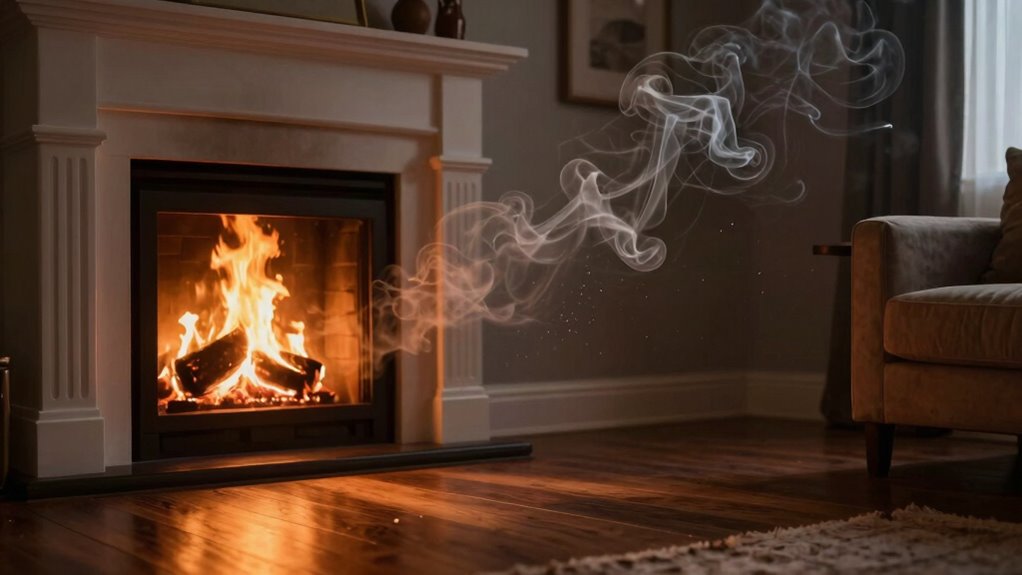

When you use a fireplace, tiny particles like soot, ash, and pollutants are released into your indoor air, affecting how they disperse and settle. Warm air rising from the fire causes particles to lift and flow unevenly through the space. Good airflow helps spread and remove these particles, while poor ventilation traps them, increasing your exposure. Understanding these behaviors can help you manage air quality better, so keep exploring for more insights.

Get garden gear delivered free — and shop member deals
- Fast, free delivery on millions of items
- Access to Prime Big Deal Days deals on October 6–7
- Prime Video, Amazon Music and more included
Key Takeaways
- Fireplace ignition releases a high concentration of fine particles that remain suspended indoors for hours.
- Warm air rising from the fire causes particles to ascend and disperse unevenly.
- Poor ventilation traps particles, increasing localized concentrations and prolonging indoor air contamination.
- Movement and airflow can stir settled ash and soot, re-suspending particles into the air.
- Proper ventilation and air circulation help reduce particle suspension and improve indoor air quality.
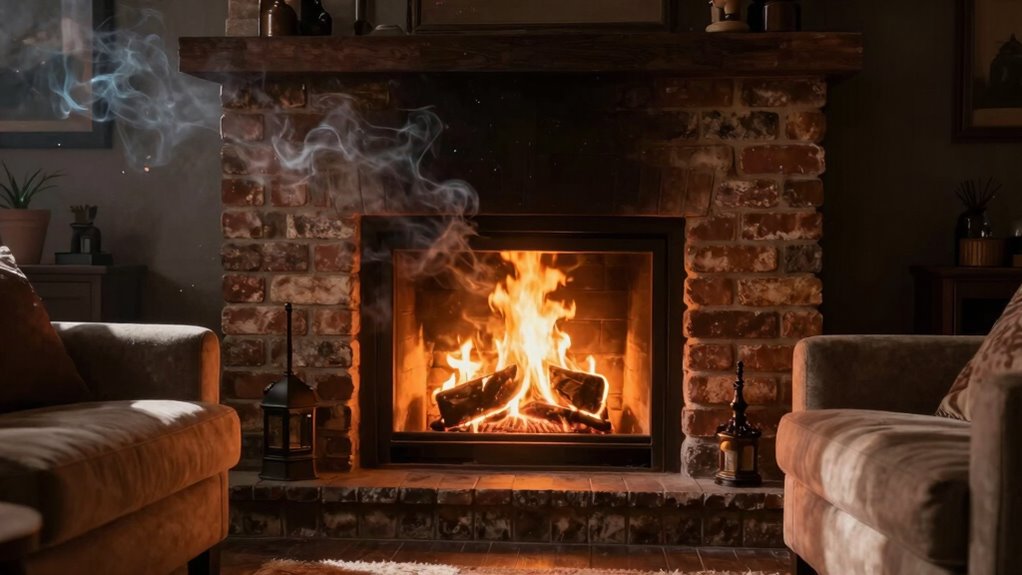
Using a fireplace can add warmth and ambiance to your home, but it also introduces indoor particles that may affect air quality. When you light a fire, combustion releases tiny particles—like soot, ash, and other pollutants—into the indoor air. These particles can linger, influence air quality impact, and alter how particles disperse throughout your space. Understanding how your fireplace changes indoor particle behavior helps you manage air quality and create a healthier environment.
Fireplace use introduces indoor particles that affect air quality and dispersion, requiring proper management for a healthier home environment.
When you start a fire, the initial burst of combustion produces a high concentration of particles. These particles don’t stay in one place; instead, they follow specific dispersion patterns influenced by factors like indoor airflow, temperature, and ventilation. For example, if your room has good airflow, particles tend to disperse more evenly, reducing localized concentrations. Conversely, poor ventilation can trap particles in certain areas, leading to higher exposure levels. You might notice that after a fire, particles tend to rise with warm air and then settle, creating distinct dispersion patterns that can impact air quality unevenly across your home.
As the fire continues, the behavior of particles changes. Smaller particles, such as fine soot, are lightweight and can stay suspended in the air for hours, especially without proper ventilation. These particles can be inhaled deep into your lungs, affecting your health over time. Larger ash particles tend to settle faster, but they can still be stirred up when you open windows or walk through the room. The dispersion of these particles is dynamic, constantly shifting with airflow and movement, which influences the overall air quality impact. Proper ventilation and air circulation can help mitigate the prolonged presence of suspended particles and improve indoor air quality. Additionally, understanding the particle size distribution can help you better assess potential health risks associated with fireplace emissions. Regular maintenance of your fireplace and chimney can also reduce particle emissions, further improving indoor air safety. Implementing air purification methods, such as HEPA filters, can also significantly reduce indoor air pollution levels. Keeping an eye on indoor air quality levels can help you identify when ventilation or cleaning is needed to maintain a healthy environment.
HEPA air purifier for indoor air quality
As an affiliate, we earn on qualifying purchases.
As an affiliate, we earn on qualifying purchases.
Frequently Asked Questions
How Do Different Types of Fireplaces Affect Indoor Particle Levels?
Different fireplaces impact indoor particle levels based on wood combustion and ventilation strategies. Wood-burning fireplaces release more particles, especially if combustion isn’t complete or vents aren’t properly maintained. Gas fireplaces produce fewer particles, making them a cleaner option. To minimize indoor pollution, guarantee good ventilation strategies, like using exhaust fans and keeping vents clear. Regular maintenance and choosing efficient fireplaces also help reduce particle buildup, creating a healthier indoor environment.
What Are the Long-Term Health Effects of Indoor Particle Exposure?
Like a silent shadow, long-term indoor particle exposure can subtly harm your respiratory health and degrade indoor air quality over time. Consistent inhalation of fine particles from fireplaces may lead to chronic conditions such as asthma, bronchitis, or even cardiovascular issues. You might not feel immediate effects, but these particles gradually wear down your immune defenses, making you more vulnerable to respiratory illnesses and compromising overall health.
Can Air Purifiers Effectively Reduce Fireplace-Related Indoor Particles?
Air purifiers can effectively reduce fireplace-related indoor particles if they have high air purifier efficiency and advanced particle filtration technology. Look for models with HEPA filters, which trap small particles from smoke and soot. You should run the purifier continuously in rooms where you use the fireplace, ensuring proper air circulation. This way, you minimize indoor particle levels, improving your indoor air quality and reducing health risks.
How Does Outdoor Air Quality Influence Indoor Particle Levels During Fireplace Use?
Outdoor air quality directly impacts indoor particle levels when you use a fireplace. If outdoor pollution is high, more particles can enter your home, especially if your ventilation strategies aren’t effective. To minimize this, you should improve ventilation by sealing leaks and using air purifiers, and consider running exhaust fans or opening windows strategically. This helps reduce indoor particles, keeping your air cleaner despite outdoor pollution.
Are There Safer Alternatives to Traditional Fireplaces for Heating?
You might be surprised to learn that electric heating options emit no indoor air pollutants, making them safer alternatives. Alternative heating methods like electric fireplaces or space heaters provide warmth without the smoke and particulate matter associated with traditional fireplaces. These options are energy-efficient, easy to operate, and eliminate indoor air quality concerns, offering a healthier environment while keeping your home cozy. Switching to electric options genuinely protects your indoor air and overall health.
Conclusion
You might be surprised to learn that fireplaces can increase indoor particle levels by up to 50%. This means your cozy fires could be impacting your air quality more than you realize. But don’t worry—proper ventilation and using cleaner-burning fuels can help reduce these particles. Staying informed lets you enjoy the warmth of your fireplace while keeping your indoor air healthier. After all, a warm home shouldn’t come at the expense of your health.
Fall yard work Picks
leaf blowers
As an affiliate, we earn on qualifying purchases.