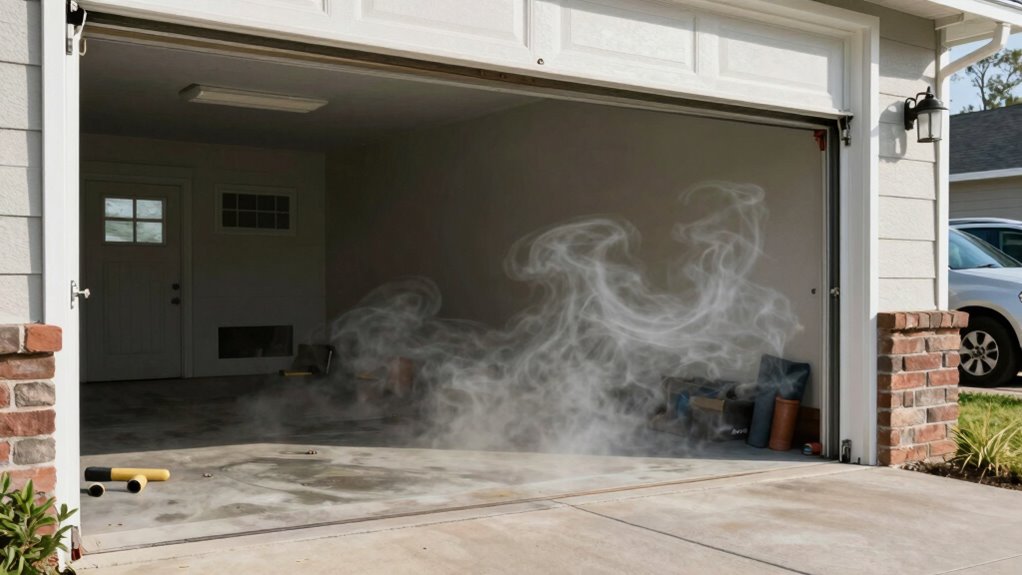
Your garage door gap, especially at the bottom, acts like a vent that allows hazardous fumes and VOCs from chemicals or gasoline to seep into your home. This small gap can let dangerous fumes build up and enter your living space, risking your health over time. Sealing these gaps with weatherstripping or door sweeps can markedly reduce fumes entering your house. Keep going to discover more ways to keep your home safe and airtight.
Key Takeaways
- The door gap at the garage floor can allow VOC-laden fumes to seep into your home.
- Sealing the gap with weatherstripping or door sweeps reduces VOC infiltration.
- Proper ventilation in the garage helps disperse fumes before they enter living spaces.
- Keeping the garage door open during and after chemical use minimizes fume buildup and migration.
- Combining sealing and ventilation strategies provides the most effective protection against VOCs entering your house.
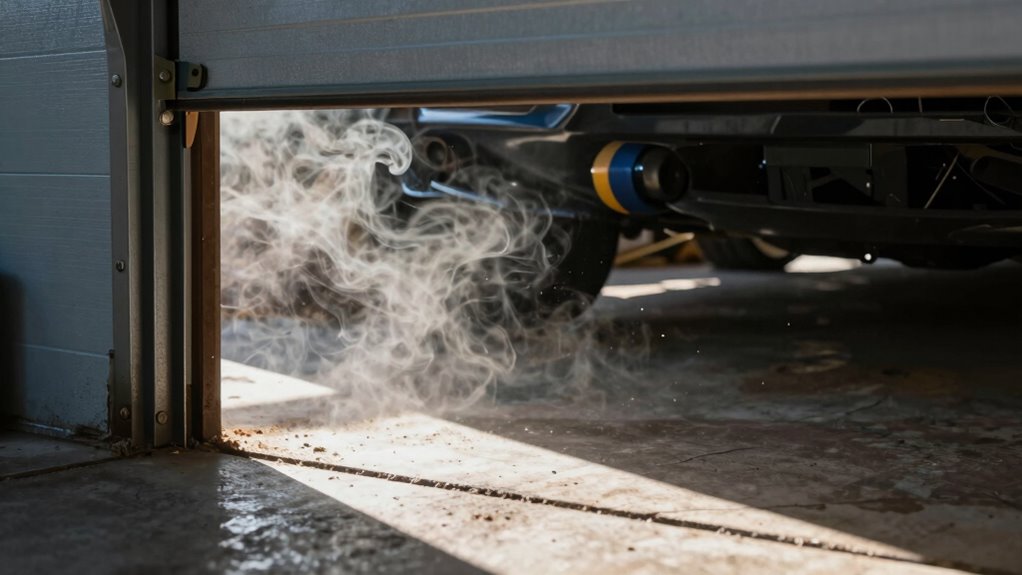
Many people underestimate the dangers lurking in their garages, especially from the fumes produced by gasoline, paints, and other chemicals. These hazardous fumes don’t just stay in the garage—they can seep into your home through small gaps, like the door gap where the garage meets the house. This sneaky entry point can lead to significant chemical exposure, putting your health at risk over time. Understanding how to control this flow starts with effective ventilation strategies.
Proper ventilation is essential to minimizing the buildup of harmful fumes in your garage. You might think opening the garage door when working on chemicals is enough, but it often isn’t. To improve air quality, consider installing exhaust fans or vents that actively draw out contaminated air. These systems help create a continuous flow, preventing fumes from lingering and infiltrating your living space. If installing mechanical ventilation isn’t feasible, at least keep the garage door open during and after projects involving chemicals, making sure fresh air circulates and fumes dissipate faster.
Sealing gaps around the door is another critical step in reducing chemical exposure. The door gap, especially where it meets the floor, acts like a vent, allowing VOCs (volatile organic compounds) to migrate into your home. Installing weatherstripping or door sweeps can substantially cut down on this movement. These simple fixes create a tighter seal, preventing fumes from sneaking inside and reducing the burden on your ventilation system. Remember, even small gaps can serve as pathways for hazardous fumes, so pay attention to these details.
You should also be mindful of where you store chemicals. Keep gasoline, paint thinners, and other VOC-emitting substances in well-ventilated areas away from the door gap and living spaces. When working with these chemicals, wear protective gear and always follow safety instructions. After finishing projects, ventilate the garage thoroughly before closing it up to allow any residual fumes to escape.
Lastly, consider the overall layout and ventilation of your garage. If it’s an older structure, upgrading the insulation and sealing any cracks can help maintain better control over chemical fumes. Combining physical barriers with active ventilation strategies creates a safer environment. Additionally, proper ventilation systems can significantly reduce the accumulation of VOCs and improve indoor air quality. Not only does this approach protect your indoor air quality, but it also reduces your long-term health risks associated with chemical exposure. By taking these steps, you guarantee that the garage remains a safe space and that harmful VOCs don’t silently feed into your house through that small but mighty door gap.
Frequently Asked Questions
Can Garage Fumes Cause Long-Term Health Issues?
Yes, garage fumes can cause long-term health issues if you’re exposed regularly. These fumes, often containing VOCs, can deteriorate your indoor air quality and lead to chronic health problems like respiratory issues, headaches, or even more serious conditions over time. To protect your long-term health, guarantee proper ventilation, seal door gaps, and minimize exposure to fumes, especially if you notice persistent odors or symptoms.
Are There Specific Garage Door Materials That Reduce VOC Leakage?
Imagine sealing your home’s safety with a shield—certain garage door materials act like VOC barriers, reducing leakage considerably. Materials like steel or insulated doors with tight seals are excellent choices. These options minimize gaps and prevent VOCs from seeping in. Opt for garage doors designed with VOC-resistant materials and proper insulation, and you’ll create a safer environment, effectively blocking harmful fumes and protecting your loved ones from long-term health risks.
How Often Should I Test Indoor Air Quality for VOCS?
You should conduct air quality monitoring and perform VOC testing frequency at least once every three to six months, especially if you notice odors or symptoms like headaches or respiratory issues. Regular testing helps you catch VOC buildup early. If you’ve recently done home improvements or ventilation changes, increase testing. Keeping track of your indoor air quality guarantees a healthier environment and helps you take action before VOC levels become harmful.
Do Weather Conditions Affect VOC Infiltration Through the Door Gap?
Think of your door gap as a gateway, influenced by weather like a fickle friend. Temperature fluctuations and humidity levels directly impact VOC infiltration—hotter, humid days often increase VOC seepage, while cooler, dry conditions can reduce it. When the weather shifts, you may notice more or less fumes entering your home. Keep an eye on these conditions to better control indoor air quality and protect your family’s health.
What Are the Best DIY Methods to Seal Garage Door Gaps?
To effectively seal garage door gaps with DIY solutions, start with sealing techniques like weatherstripping or foam tape along the door edges. You can also use door sweep strips at the bottom to block drafts. These sealing techniques are simple and affordable, and they help prevent VOCs from entering your home. Regularly inspect and replace worn materials to maintain a tight seal and improve indoor air quality.
Conclusion
Think of your garage door gap as an open window to unseen dangers, like a secret passageway allowing fumes to sneak inside. Just as a vigilant guardian seals every escape route, you need to close that gap to protect your home’s air quality. Don’t let those invisible invaders turn your safe haven into a trap. Take action now, and keep your home’s sanctuary secure—because awareness is the first step in guarding against hidden threats.