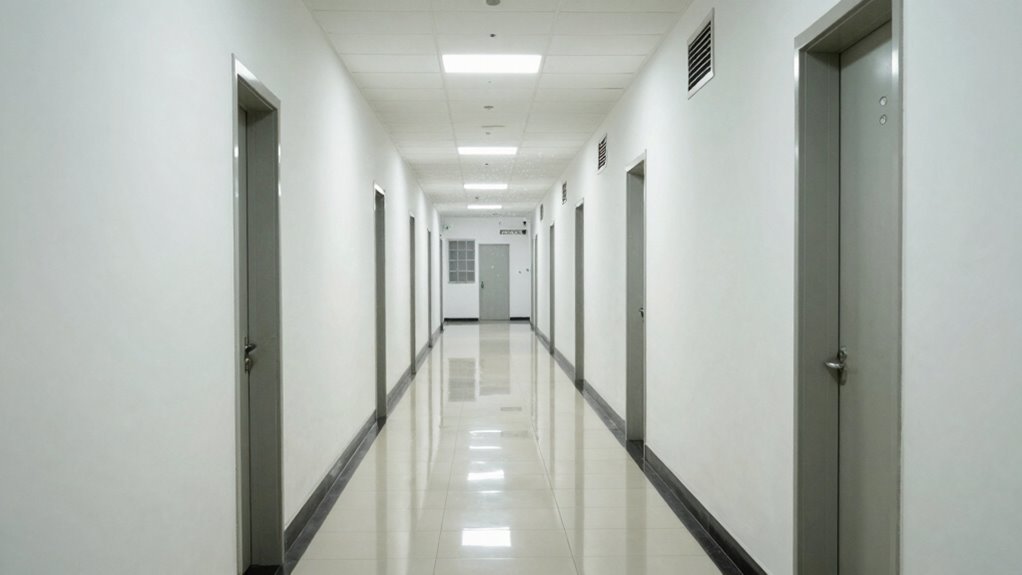

Hallways can spread pollutants faster than you think because they act as active channels for contaminants to move quickly between rooms. When airflow patterns are strong or disrupted by door openings or movement, pollutants can travel swiftly through hallways, reaching distant areas. Poor ventilation or stagnant zones can worsen this. Understanding how air moves in hallways helps you control pollutant spread better. Keep exploring to discover how airflow management can make indoor spaces safer.

Get garden gear delivered free with Prime
- Fast, free delivery on millions of items
- Prime Video, Amazon Music and more included
- Member-only deals all year
Key Takeaways
- Hallways act as active channels, enabling rapid movement of particles, bacteria, and viruses between rooms.
- Airflow patterns in hallways can quickly disperse pollutants, especially during door openings or passing individuals.
- Poor ventilation in hallways leads to pollutant accumulation and faster spread throughout the building.
- Turbulent or inconsistent airflow causes contaminants to linger or drift unpredictably along hallways.
- Effective airflow management and ventilation design are essential to control and slow pollutant dissemination.
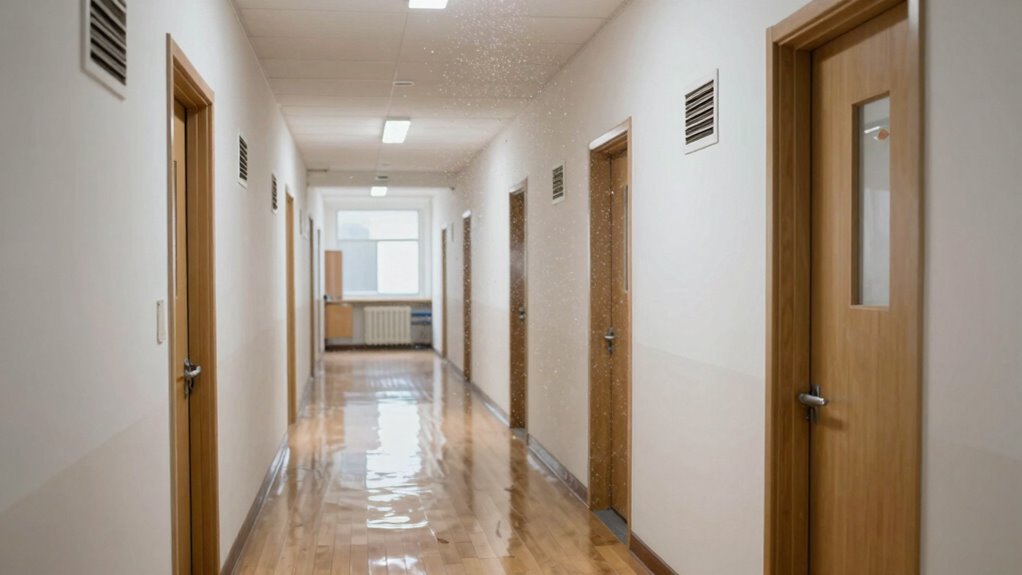
Have you ever wondered how pollutants travel through building hallways? It’s a question that becomes especially relevant when you consider how quickly contaminants can spread in enclosed spaces. Hallways are often overlooked as pathways for pollutants, yet they play an essential role in how these particles move from one area to another. This process is largely driven by airflow patterns and the effectiveness of ventilation systems, which can either contain or facilitate the spread of pollutants. When airflow is poorly directed or uneven, pollutants don’t stay put—they get carried along hallways, reaching spaces you might not suspect.
Airflow patterns are fundamental in determining how pollutants disperse. If the ventilation system creates a strong, directed airflow, it can pull contaminants away from their source and push them toward exhaust vents. But if the airflow is inconsistent or turbulent, pollutants can linger in certain zones or drift along hallways, carried by unpredictable air currents. For example, when a door opens or someone walks past, it can disrupt the airflow, causing a rush of air that spreads pollutants quickly down the corridor. This movement is often invisible but highly effective at moving particles, bacteria, or viruses from one room to another. Properly managing airflow dynamics is key to reducing such unintended dispersal.
Ventilation effectiveness also plays a key role. A poorly ventilated hallway may seem quiet but can harbor high concentrations of pollutants because the air isn’t refreshed regularly. Conversely, an efficient ventilation system actively exchanges indoor air with fresh outdoor air, diluting pollutants and preventing accumulation. But even the best systems can fall short if they aren’t properly maintained or designed. For instance, inadequate exhaust outlets or poorly placed vents can create areas where airflow stagnates, allowing pollutants to settle and then be redistributed with each passing person or event. Proper airflow management is essential to prevent these stagnant zones and ensure pollutants are continuously removed.
In hallways, the combination of airflow patterns and ventilation effectiveness determines whether pollutants stay localized or spread rapidly. When airflow is strong and directed, pollutants are swiftly carried away, reducing the risk of exposure. When airflow is weak or chaotic, contaminants can move freely along hallways, reaching distant rooms faster than you’d expect. This dynamic underscores why understanding and controlling airflow and ventilation are essential for preventing the quick spread of pollutants. It’s a reminder that hallways might seem like mere connectors, but they’re active channels that influence air quality more than you might realize—and can do so much faster than you think. Properly managing airflow patterns is crucial for maintaining healthier indoor environments. Additionally, ventilation system design must prioritize optimal airflow distribution to minimize pollutant movement. Recognizing the importance of air circulation helps in implementing effective strategies to reduce indoor pollution.
As an affiliate, we earn on qualifying purchases.
Frequently Asked Questions
How Do Hallway Materials Affect Pollutant Dispersion?
The materials in hallways influence pollutant dispersion through their permeability and surface reflectivity. Permeable materials, like porous tiles, absorb pollutants, reducing spread, while non-permeable surfaces like polished floors can reflect airborne particles, increasing distribution. High surface reflectivity can bounce pollutants around, making them linger longer. By choosing materials with appropriate permeability and reflectivity, you can control how quickly and widely pollutants distribute through your hallway.
Can Hallway Ventilation Systems Reduce Pollutant Spread?
Have you ever wondered if hallway ventilation systems can truly curb pollutant spread? They can, especially if equipped with effective air filtration and high ventilation efficiency. By increasing airflow and filtering out airborne contaminants, these systems help contain pollutants within a limited space, preventing their rapid spread. Properly maintained ventilation is essential for healthier indoor environments, making hallways safer and reducing the risk of cross-contamination.
What Pollutants Are Most Common in Hallways?
In hallways, the most common pollutants are airborne particles and chemical residues. You might breathe in dust, pollen, and microscopic debris that float through the air, especially in busy areas. Chemical residues from cleaning products, disinfectants, or even building materials can linger on surfaces and become airborne, spreading quickly through ventilation. Staying aware of these pollutants helps you take steps to improve air quality and reduce health risks.
Does Hallway Length Impact Pollutant Transmission Speed?
Yes, hallway length impacts pollutant transmission speed. Longer hallways can slow airflow patterns, making pollutants linger or spread unevenly, but they also provide a larger pathway for pollutants to travel quickly when airflow is strong. Additionally, noise pollution can influence airflow and ventilation efficiency, indirectly affecting how fast pollutants disperse. You should consider both hallway length and airflow dynamics to better control pollutant spread in these spaces.
Are There Specific Cleaning Methods to Minimize Hallway Pollutants?
You should focus on enhanced cleaning protocols to minimize hallway pollutants, especially airborne particles. Regularly disinfect high-touch surfaces and use HEPA-filtered vacuum cleaners to trap airborne particles effectively. Studies show that proper cleaning methods reduce airborne particle levels by up to 60%. Implementing targeted cleaning protocols not only limits pollutant spread but also creates a safer environment, reducing health risks associated with airborne contaminants in hallways.
Conclusion
Think of hallways as the arteries of a building, quickly channeling pollutants from one room to another. You might not realize how fast contaminants can spread, like wildfire through dry grass. Staying aware and taking precautions can help you control this invisible threat. Just as a small spark can ignite a blaze, a tiny lapse in air quality can escalate. Keep your environment safe—because in these narrow passages, pollutants travel faster than you think.
Fall yard work Picks
leaf blowers
As an affiliate, we earn on qualifying purchases.