HEPA air purifiers use three key mechanisms—interception, impaction, and diffusion—to trap airborne particles. Interception captures particles that follow airflow and brush against filter fibers, while impaction catches larger particles that collide directly with the filter media. Diffusion affects tiny particles, which move randomly and bump into fibers more easily. Understanding these processes helps you see why regular filter maintenance is essential for peak performance. Keep going to learn more about how these mechanisms keep your air clean.
Key Takeaways
- HEPA filters trap particles through interception when particles follow airflow lines and contact fibers.
- Impaction captures larger particles that collide directly with the filter media due to their inertia.
- Diffusion involves tiny particles moving randomly via Brownian motion, increasing their chance of being captured.
- These mechanisms work together, enhancing overall filtration efficiency across various particle sizes.
- Proper filter maintenance ensures these mechanisms function effectively for optimal air purification.
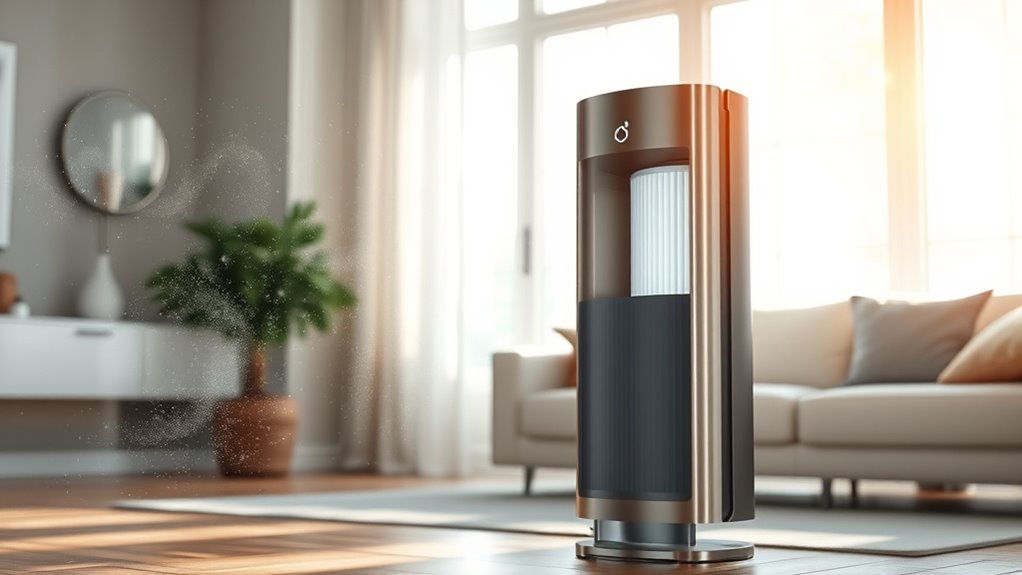
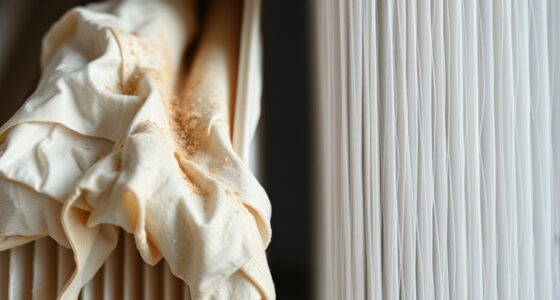
HEPA air purifiers are highly effective devices designed to improve indoor air quality by removing tiny particles that can harm your health. To keep your purifier functioning at its best, understanding air purifier maintenance is essential. Regular maintenance not only extends the lifespan of your device but also ensures that it continues to filter out harmful contaminants efficiently. One of the most critical aspects of maintenance is adhering to the filter replacement guidelines provided by the manufacturer. Typically, HEPA filters should be replaced every 6 to 12 months, depending on usage and air quality conditions. Failing to follow these guidelines can lead to decreased performance, as a saturated filter becomes less effective at capturing particles.
Regularly replacing HEPA filters every 6 to 12 months maintains optimal air purifier performance and indoor air quality.
When it comes to maintaining your HEPA air purifier, paying attention to filter replacement guidelines helps you sustain its high filtration standards. Over time, filters accumulate dust, pollen, pet dander, and other microscopic pollutants, reducing airflow and filtration efficiency. Regularly inspecting your filter and replacing it when necessary ensures your purifier continues to operate at peak performance. Some units feature indicator lights that notify you when a filter change is due, but it’s wise to set reminders based on your usage patterns. Proper filter maintenance also prevents strain on the motor, reducing energy consumption and prolonging the device’s lifespan.
Understanding how interception, impaction, and diffusion work within your HEPA filter can help you appreciate its effectiveness. Interception occurs when particles follow the airflow lines and come into contact with the fibers, sticking to them. Impaction is when larger particles, unable to follow the air around fibers, collide directly with the filter media and are captured. Diffusion affects the tiniest particles, which move randomly due to Brownian motion, increasing their chances of hitting and sticking to the filter fibers. These three mechanisms work together to trap a wide range of airborne pollutants, from dust to bacteria, making HEPA filters highly efficient. Additionally, selecting the right filter type based on your needs can further enhance filtration performance.
Maintaining your air purifier by following the proper filter replacement guidelines ensures these interception, impaction, and diffusion processes continue to work effectively. This ongoing upkeep guarantees that your indoor air remains clean and safe, reducing allergy symptoms and respiratory issues. Remember, a well-maintained HEPA filter not only improves air quality but also saves you money by avoiding unnecessary repairs and premature replacements. By staying attentive to air purifier maintenance and replacing filters as recommended, you ensure your device provides maximum protection against harmful airborne particles.
Frequently Asked Questions
How Often Should HEPA Filters Be Replaced for Optimal Performance?
You should replace your HEPA filter every 6 to 12 months for peak performance, depending on usage and air quality. This helps maintain the filter’s lifespan and guarantees it effectively captures airborne particles. Check your manufacturer’s recommendations and monitor your air purifier’s performance; if it seems less effective or airflow decreases, it’s time for a replacement. Regularly changing filters keeps your air clean and healthy.
Are HEPA Air Purifiers Effective Against Viruses and Bacteria?
Yes, HEPA air purifiers are effective against viruses and bacteria through virus filtration and bacteria removal. They capture tiny particles as small as 0.3 microns, including airborne pathogens. By continuously filtering the air, you reduce the presence of harmful microbes. Keep in mind, regular filter replacements guarantee peak virus filtration and bacteria elimination, maintaining the purifier’s effectiveness and helping you breathe cleaner, safer air.
What Size Particles Can HEPA Filters Capture?
A picture is worth a thousand words, so think of HEPA filters as your best defense. They can capture particles as small as 0.3 microns with 99.97% filtration efficiency. This includes most bacteria, viruses, pollen, and dust. Particle size is essential because smaller particles are harder to trap, but HEPA filters are specifically designed to intercept and stop even these tiny invaders, keeping your air cleaner and safer.
Do HEPA Purifiers Produce Ozone or Other Harmful Emissions?
HEPA purifiers generally don’t produce ozone emissions, making them safe for indoor use. However, some models with additional features or filters might emit low levels of ozone or cause chemical off-gassing from certain materials. To avoid health risks, choose a purifier certified as ozone-safe, and check for low or zero ozone emission labels. This guarantees cleaner air without introducing harmful chemicals or ozone into your environment.
Can HEPA Air Purifiers Remove Odors and Chemical Vapors?
Yes, HEPA air purifiers can help with odor elimination and chemical absorption. While they excel at capturing airborne particles, they don’t directly remove odors or chemicals. For better results, choose a purifier with activated carbon filters, which absorb chemical vapors and odors effectively. This combination guarantees cleaner air by tackling both particles and unpleasant smells or harmful substances, making your environment healthier and more comfortable.
Conclusion
Now that you understand how HEPA air purifiers trap particles through interception, impaction, and diffusion, you can see their effectiveness in improving air quality. Did you know that HEPA filters can remove up to 99.97% of particles as small as 0.3 microns? That’s like filtering out almost all pollen, dust, and even some bacteria from your home’s air. With this knowledge, you can confidently choose a purifier that keeps your environment healthier and fresher every day.