Not all HEPA-labeled purifiers are created equal, so it’s important to verify for proper certifications from trusted organizations. Genuine HEPA filters trap at least 99.97% of particles as small as 0.3 microns and meet strict standards verified by third-party testing. Without proper certification, a purifier might not effectively filter bacteria, viruses, or fine dust. To ensure you get a top-performing device, understanding these differences can make a significant difference—if you keep exploring, you’ll learn more.
Key Takeaways
- Not all devices labeled “HEPA” meet recognized standards; genuine HEPA filters are third-party tested for 99.97% particle removal.
- Certification from organizations like DOE or IST confirms a purifier’s ability to trap tiny particles like bacteria and viruses.
- Proper maintenance and filter replacement every 6-12 months are essential for sustained HEPA filter effectiveness.
- Using uncertified or incompatible filters can reduce performance and may void warranties or damage the device.
- Certified HEPA purifiers, when well-maintained, reliably improve indoor air quality and protect health.
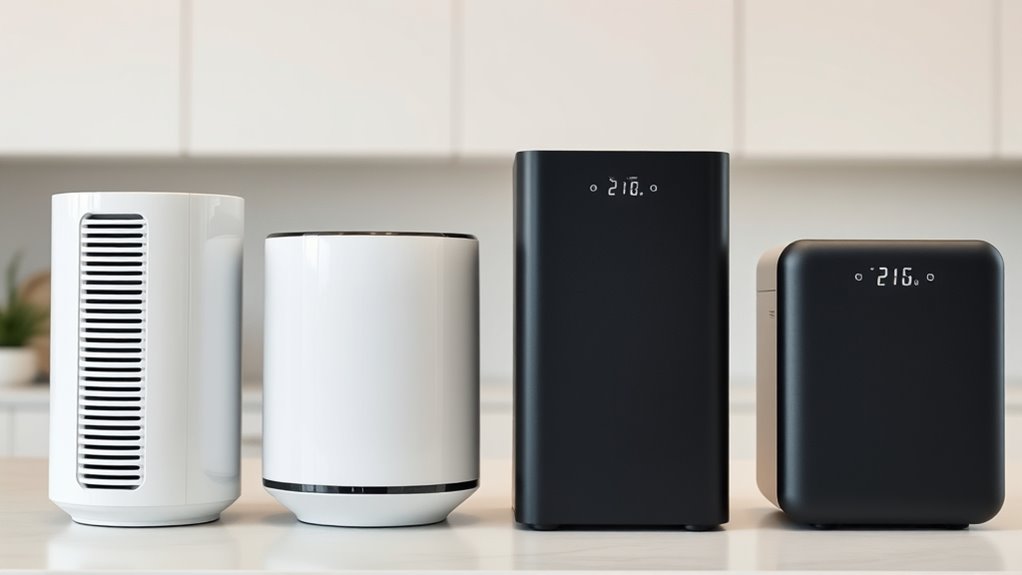
Are you looking for an effective way to improve indoor air quality? If so, you’ve probably considered a HEPA purifier, but not all HEPA-labeled devices are created equal. The term “HEPA” can be used broadly, so it’s imperative to check the air purifier certifications to guarantee you’re getting a truly effective product. Genuine HEPA filters must meet specific standards set by organizations like the U.S. Department of Energy or the Institute of Environmental Sciences and Technologies. If a purifier claims to have a HEPA filter but doesn’t have proper certification, it might not filter out the smallest airborne particles, such as bacteria, viruses, and fine dust. When shopping, look for labels indicating compliance with recognized standards, like the HEPA designation verified by third-party testing. These certifications guarantee that the purifier can trap at least 99.97% of particles that are 0.3 microns in size, which is essential for maintaining healthier indoor air. Additionally, understanding the standards for HEPA filters can help you make more informed choices when selecting an air purifier, ensuring you invest in a truly effective product.
Once you’ve chosen a certified HEPA purifier, understanding filter replacement tips becomes critical to guarantee it continues working efficiently. Over time, even the best filters become clogged with particles, reducing their effectiveness and potentially straining your device. Most manufacturers recommend replacing the HEPA filter every 6 to 12 months, but this can vary based on usage and air quality. Regularly inspecting the filter and noting any decrease in airflow or increased noise levels can help you determine when it’s time for a change. Remember, a dirty filter not only diminishes air purification but can also become a breeding ground for mold and bacteria. Keep a schedule or set reminders to check and replace filters as needed, and always use genuine replacement filters recommended by the manufacturer. Using incompatible filters can compromise the purifier’s performance and void warranties. Proper maintenance, including timely filter replacements, is essential to maximize the effectiveness of your HEPA purifier and ensure it continues to provide clean indoor air. By paying attention to air purifier certifications and adhering to filter replacement tips, you can confidently select and maintain a HEPA purifier that genuinely improves your indoor air quality. Don’t settle for less than certified performance or neglect routine upkeep—your health depends on it. Investing in a well-maintained, certified HEPA purifier ensures you’re effectively reducing airborne pollutants, giving you cleaner, safer indoor air every day.
Frequently Asked Questions
How Do HEPA Purifiers Compare to Other Air Purification Technologies?
HEPA purifiers typically outperform other air purifier types when it comes to filtering tiny particles like allergens and pollutants. They excel in improving air quality indicators, especially in removing dust, pet dander, and mold spores. While activated carbon filters target odors, HEPA filters provide extensive particle removal. You’ll notice a significant difference in air cleanliness, making HEPA purifiers a smart choice for better indoor air quality compared to other technologies.
Are HEPA Filters Effective Against Viruses and Bacteria?
Imagine a tiny army of HEPA filters battling viruses and bacteria, capturing particles as small as 0.3 microns with relentless precision. Yes, HEPA filters are highly effective against these microbes, but their lifespan depends on usage, often requiring filter replacements every 6 to 12 months. To maintain peak performance, you need to stay vigilant with regular filter replacement, ensuring your purifier keeps fighting off harmful pathogens effectively.
What Maintenance Is Required for HEPA Purifiers?
You need to regularly maintain your HEPA purifier by monitoring its filter lifespan and replacing filters as recommended by the manufacturer. Typically, filters should be replaced every 6 to 12 months, depending on usage and air quality. Keep the unit clean by wiping it down and checking for dust buildup. Proper maintenance guarantees peak performance and helps you breathe cleaner air, making your purifier more effective over time.
Can HEPA Purifiers Remove Odors and Chemicals?
Sure, HEPA purifiers are great at odor removal and chemical filtration—if you think filtering dust is enough for stronger smells or volatile chemicals. While they trap particles, many don’t actually neutralize odors or chemicals, so you might need activated carbon filters or other tech for that. Don’t expect your HEPA to be a magic wand; it’s more like a helpful sidekick in your air-cleaning adventures.
Do HEPA Purifiers Produce Ozone or Other Harmful Emissions?
HEPA purifiers typically don’t produce ozone emissions or harmful byproducts, making them safe for indoor use. However, some models with ionizers or electrostatic filters can generate low levels of ozone, which may pose health risks with prolonged exposure. To avoid this, choose HEPA purifiers labeled as ozone-safe, and check for certifications that confirm they don’t emit harmful byproducts. Always read product specifications carefully before purchasing.
Conclusion
When choosing a HEPA purifier, you want quality, reliability, and effectiveness. Don’t settle for less—look for certifications, reviews, and features that suit your needs. Prioritize performance, durability, and safety to guarantee clean air in your space. Remember, not all HEPA purifiers are created equal, so compare options carefully. Make an informed decision, choose wisely, and breathe easier knowing you’ve selected the best purifier for your home.