HEPA-ULPA combinations provide superior air filtration by effectively capturing particles as small as 0.1 microns, ensuring ultra-low penetration of airborne contaminants. These systems blend high-efficiency filters to create a formidable barrier against dust, bacteria, and viruses, maintaining cleaner indoor environments. Regular maintenance and timely replacements are essential to keep their performance at peak levels. If you want to discover how to optimize such systems for your space, there’s more to learn about their benefits and upkeep.
Key Takeaways
- Combining HEPA and ULPA filters provides ultra-low penetration levels, capturing particles as small as 0.1 microns with high efficiency.
- HEPA-ULPA systems create a layered barrier, enhancing removal of airborne contaminants like bacteria and viruses.
- Regular maintenance of these systems is essential to sustain their ultra-low penetration performance.
- ULPA filters offer superior filtration compared to HEPA, suitable for environments demanding the highest air purity.
- Properly designed HEPA-ULPA combinations ensure maximum air cleanliness in sensitive industries such as healthcare and semiconductor manufacturing.
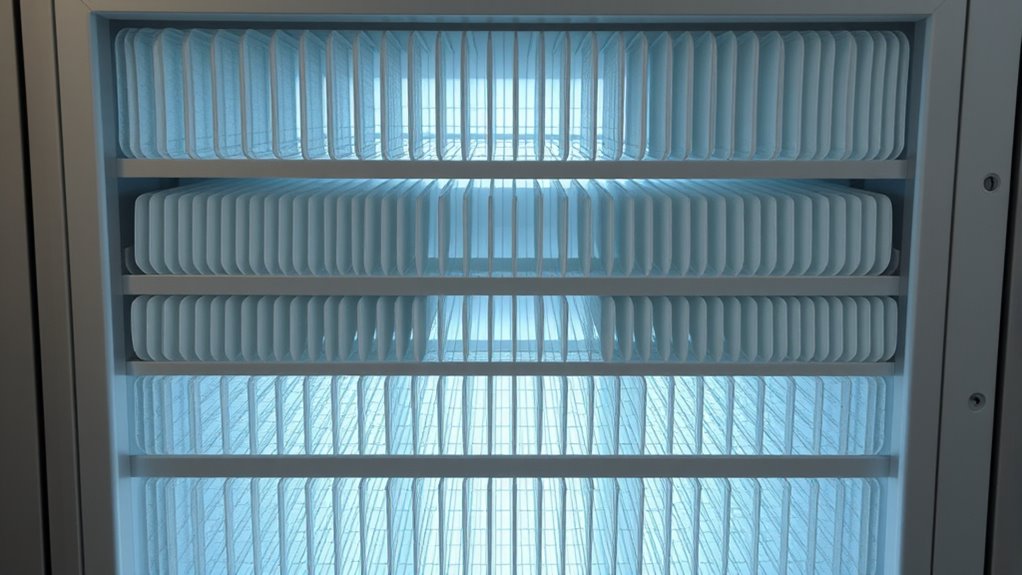
HEPA-ULPA air filtration systems are powerful tools for removing airborne contaminants and ensuring cleaner indoor environments. When you choose a combination of HEPA and ULPA filters, you’re investing in a highly effective solution that considerably improves air quality. One of the key factors that determine how well these systems work is air filtration efficiency. This measures how effectively the filters trap particles of various sizes, from dust and pollen to bacteria and viruses. HEPA filters excel at capturing particles down to 0.3 microns with an efficiency of 99.97%, making them ideal for most residential and commercial applications. ULPA filters go even further, trapping particles as small as 0.1 microns with efficiencies of 99.999%. When combined, these filters create a formidable barrier against airborne contaminants, ensuring the air you breathe is as clean as possible.
Maintaining ideal air filtration efficiency requires regular HEPA ULPA maintenance. Over time, filters can accumulate dust, microbes, and other particles, which can impede airflow and reduce their ability to trap contaminants effectively. If you neglect proper maintenance, you risk diminishing the system’s performance, which could lead to increased exposure to airborne pollutants. To keep your filtration system running at peak efficiency, you should adhere to the manufacturer’s recommended maintenance schedule, including timely filter replacements and thorough cleaning of the units. Regular inspections help you identify any signs of clogging or damage early, so you can address issues before they compromise air quality.
Proper HEPA ULPA maintenance is straightforward but essential. It typically involves replacing filters at designated intervals—often every six to twelve months, depending on usage and environment. In high-traffic or contaminated settings, more frequent replacements might be necessary. Cleaning the exterior of the units and checking for leaks or damage also contribute to maintaining high air filtration efficiency. When you perform routine upkeep, you ensure that the filters still perform their function at the highest level, providing consistent protection. Additionally, understanding the importance of air filtration efficiency can help you make informed decisions about system upgrades and maintenance practices.
In essence, the effectiveness of your HEPA-ULPA system hinges on understanding air filtration efficiency and committing to regular maintenance. By doing so, you maximize the lifespan of your filters, reduce operational costs, and most importantly, safeguard the health of everyone in your indoor space. Proper care ensures that your investment in advanced air filtration continues to deliver ideal performance, giving you peace of mind knowing you’re breathing cleaner, safer air every day.
Frequently Asked Questions
How Do HEPA-ULPA Filters Impact Energy Consumption?
HEPA-ULPA filters can impact energy consumption by requiring more power due to their high filtration performance. As you use these filters, you might notice increased energy use because they create more airflow resistance, which demands stronger fans. To improve energy efficiency, guarantee your system is well-maintained and properly matched to the filter’s specifications, helping you balance superior filtration with reasonable energy consumption.
Are HEPA-ULPA Systems Suitable for Residential Use?
You might find HEPA-ULPA systems suitable for residential use if you prioritize ultra-clean air, especially for allergy sufferers. For example, a homeowner with severe allergies installed such a system, drastically improving air quality. However, residential suitability depends on installation challenges like space and maintenance requirements. These systems can be effective but often demand professional setup and higher energy, making them less common in typical homes.
What Maintenance Is Required for HEPA-ULPA Units?
You need to perform regular filter replacement for your HEPA-ULPA unit, typically every 6 to 12 months, depending on usage. Additionally, conduct routine system inspections to check for dust buildup, damage, or unusual noises. Keep the vents clean and guarantee the unit operates smoothly. Proper maintenance helps maintain superior filtration performance and prolongs the lifespan of your system.
How Do HEPA-ULPA Filters Compare to Other Air Purification Technologies?
You’ll find HEPA-ULPA filters offer superior comparison effectiveness for removing tiny particles and airborne contaminants compared to standard filters. They excel in environments requiring ultra-clean air, like labs or hospitals. While they tend to be more costly upfront, their cost efficiency shines through in long-term use because of their high filtration accuracy and durability. Overall, they provide a significant upgrade over conventional air purification technologies, especially where purity is critical.
Can HEPA-ULPA Filters Remove Viruses Effectively?
Yes, HEPA-ULPA filters can effectively eliminate viruses due to their high filter efficiency. They are designed for viral containment, capturing particles as small as 0.12 microns, including many airborne viruses. By using these filters, you considerably decrease the risk of viral transmission in enclosed spaces. Their advanced filtration ensures you’re providing a safer environment, especially in settings requiring ultra-clean air standards like labs or medical facilities.
Conclusion
In summary, HEPA-ULPA combinations deliver dependable, dust-defying, and detail-detecting air cleaning. By blending brilliance with boundary-breaking technology, you guarantee pristine, pollutant-free environments. Prioritize purity, protect health, and progress confidently with these powerful filters. Perfectly poised, they promise performance, precision, and peace of mind. Choose HEPA-ULPA for a cleaner, healthier space—because your environment deserves nothing less than the best in breathability.