HEPA certification is not the same as HEPA-like. Certified HEPA filters undergo strict testing to remove at least 99.97% of particles as small as 0.3 microns, ensuring reliable performance. HEPA-like filters usually lack this certification and may not meet these high standards. Without official validation, their effectiveness can be uncertain. If you want to know the key differences and how to spot genuine filters, keep exploring the details below.
Key Takeaways
- HEPA certification verifies that filters meet strict standards, removing at least 99.97% of 0.3-micron particles through rigorous testing.
- HEPA-like filters lack official certification and may not consistently meet the same high-performance standards.
- Certified HEPA filters undergo independent testing and validation, ensuring reliable air purification performance.
- “HEPA-like” is a marketing term without standardized testing or certification to guarantee efficiency.
- Choosing certified HEPA filters provides confidence in proven performance, unlike uncertified “HEPA-like” claims.
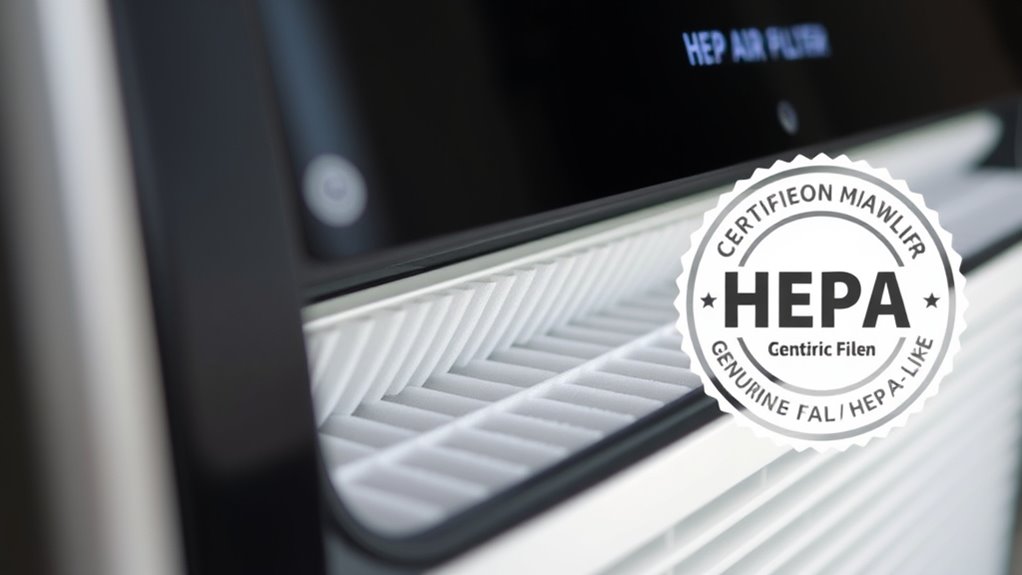
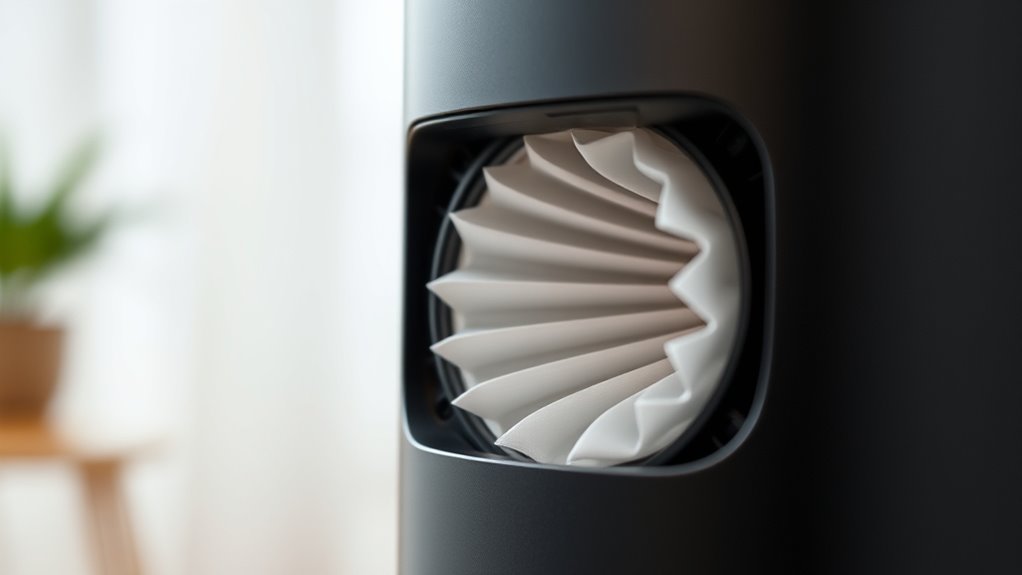
Have you ever wondered what it takes for a filtration system to meet the highest standards of air purity? When it comes to HEPA certification, understanding the role of filter standards and certification processes is essential. True HEPA filters are rigorously tested to ensure they trap at least 99.97% of airborne particles as small as 0.3 microns. These strict criteria aren’t set arbitrarily; they’re the result of extensive testing aligned with established filter standards that guarantee performance. Certification processes verify that a filter consistently meets these standards through a series of standardized tests. This involves evaluating the filter’s efficiency, airflow resistance, and durability under real-world conditions to confirm it can reliably deliver the expected level of purification.
True HEPA filters are tested to remove at least 99.97% of tiny airborne particles as small as 0.3 microns.
When a filtration system undergoes the certification process, it’s evaluated by independent laboratories that follow strict protocols. These labs test the filter’s particle removal efficiency using standardized aerosols and controlled environments. If the filter passes these tests, it receives official certification, often marked by labels that specify it’s a genuine HEPA filter. This certification isn’t just a badge of honor; it’s a guarantee that the filter adheres to the exacting standards necessary for high-quality air purification. It also provides peace of mind, ensuring you’re investing in a product that will perform reliably over time.
On the other hand, the term “HEPA-like” is often used loosely by manufacturers and marketers. While these filters may appear similar or claim comparable performance, they typically don’t undergo the rigorous testing required for true HEPA certification. As a result, they might not meet the established filter standards, which means their actual efficiency could be lower. This distinction is essential because choosing a “HEPA-like” filter might compromise air quality, especially in environments where removing tiny airborne particles is critical, such as hospitals or allergy-sensitive homes.
In essence, the difference between HEPA certification and HEPA-like labels boils down to verification. Certified HEPA filters have been through a transparent process that confirms they meet strict standards, ensuring dependable performance. HEPA-like filters, however, often lack this validation, which can lead to uncertain results. When you’re investing in air purification, understanding these differences helps you make informed decisions. Always look for official certification marks, and be wary of vague claims that suggest “HEPA-like” performance without credible backing. Choosing a certified HEPA filter guarantees you’re getting a product that truly meets the highest standards of air purity, providing the safety and quality you expect. Additionally, understanding the filter testing and certification process can help you select the most effective air purifier for your needs.
Frequently Asked Questions
Can HEPA-Like Filters Meet HEPA Certification Standards?
HEPA-like filters don’t meet HEPA certification standards. While they may improve air filtration, they lack the rigorous testing required for true HEPA certification. Certification standards ensure filters capture at least 99.97% of particles as small as 0.3 microns. If you want reliable air filtration, select certified HEPA filters, so you know they meet the strict standards for removing airborne contaminants effectively.
What Are the Main Differences Between HEPA and HEPA-Like Filters?
HEPA filters meet strict manufacturing standards and have a filtration efficiency of 99.97% for particles 0.3 microns or larger. HEPA-like filters, however, don’t necessarily meet these standards; they often have lower filtration efficiency and might not be tested to the same rigorous criteria. You should check product specifications carefully to verify the filter’s performance aligns with your needs, especially if air quality is critical.
Are Hepa-Like Filters Effective for Allergy Sufferers?
If you suffer from allergies, HEPA-like filters can improve your air quality, but they’re generally less effective than true HEPA filters. For example, a person with allergies noticed fewer symptoms after switching to a HEPA filter, highlighting better filter efficiency. While HEPA-like filters may help, they often don’t trap the tiniest allergens as effectively, so for ideal allergy relief, a certified HEPA filter is your best choice.
How Long Do HEPA and HEPA-Like Filters Typically Last?
HEPA and HEPA-like filters typically last about 6 to 12 months, depending on usage and environment. You should monitor the filter’s condition regularly and replace it when it becomes visibly dirty or shows signs of reduced airflow. The filter lifespan varies with factors like dust levels and air quality, so it’s best to follow the manufacturer’s recommended replacement frequency to maintain best filtering performance and indoor air quality.
Do HEPA-Like Filters Require the Same Maintenance as Certified HEPA Filters?
HEPA-like filters generally require less maintenance than certified HEPA filters because they have different filter durability standards and may not trap as many particles. While both need regular cleaning or replacement, HEPA-like filters often cost less to maintain. However, you should monitor their performance regularly and replace them as needed to guarantee ideal air quality, which helps manage maintenance costs effectively.
Conclusion
So, is HEPA certification the same as HEPA-like? Not even close! One guarantees your air is as pure as mountain air, while the other’s just pretending to be. If you want to breathe the cleanest, safest air possible, don’t settle for anything less than real HEPA certification. Anything else is like putting a band-aid on a bullet wound—it just won’t cut it. Choose certified HEPA and breathe with confidence, knowing you’re truly protected!

In the dynamic world of air purifiers and clean air advocacy, Aire stands out as a beacon of knowledge and passion. As the Editor in Chief of Aero Guardians, Aire has been instrumental in shaping the platform’s voice and direction, ensuring that every piece of content resonates with clarity, authority, and authenticity.