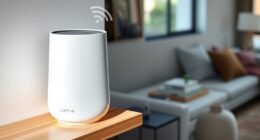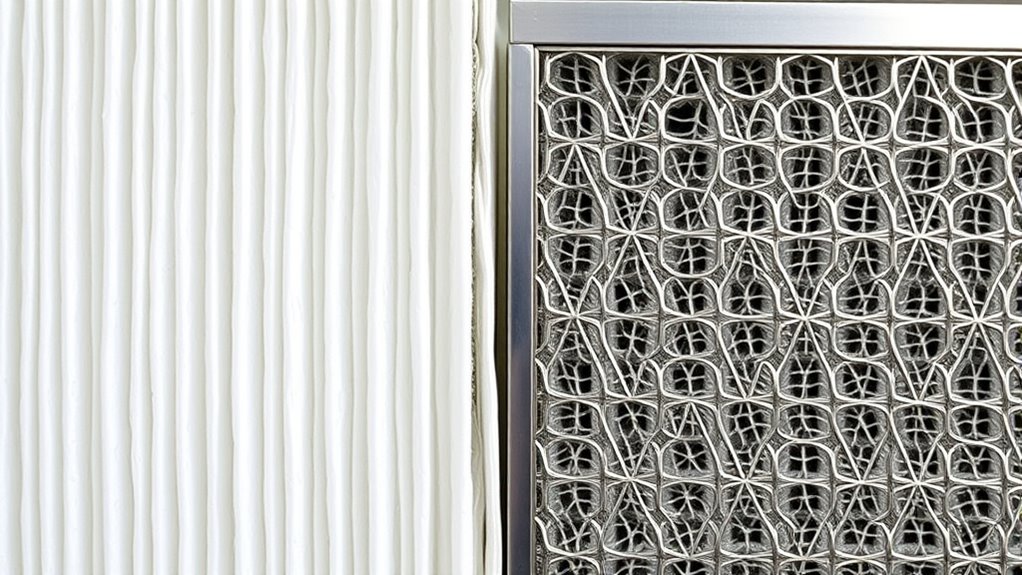
HEPA filters trap tiny particles like dust, pollen, and some bacteria, capturing 99.97% of particles as small as 0.3 microns. PECO filters not only trap particles but actively destroy mold spores, viruses, and VOCs at a molecular level, offering broader purification. While HEPA is great for allergens, PECO adds chemical and pathogen neutralization. To understand how these technologies compare to protect your air quality, explore more about their features and benefits.
Key Takeaways
- HEPA filters physically trap particles as small as 0.3 microns with 99.97% efficiency, mainly targeting airborne particulates.
- PECO filters actively destroy pollutants, including mold spores, bacteria, viruses, and VOCs, through photoelectrochemical oxidation.
- HEPA filters require regular replacement (6-12 months), while PECO filters often have longer lifespans due to their active destruction process.
- HEPA filters are ideal for removing allergens like pollen and dust; PECO filters provide broader purification, including chemical pollutants and pathogens.
- Combining HEPA with UV enhances germ-killing; PECO technology offers comprehensive air cleaning by neutralizing particles and chemical contaminants.
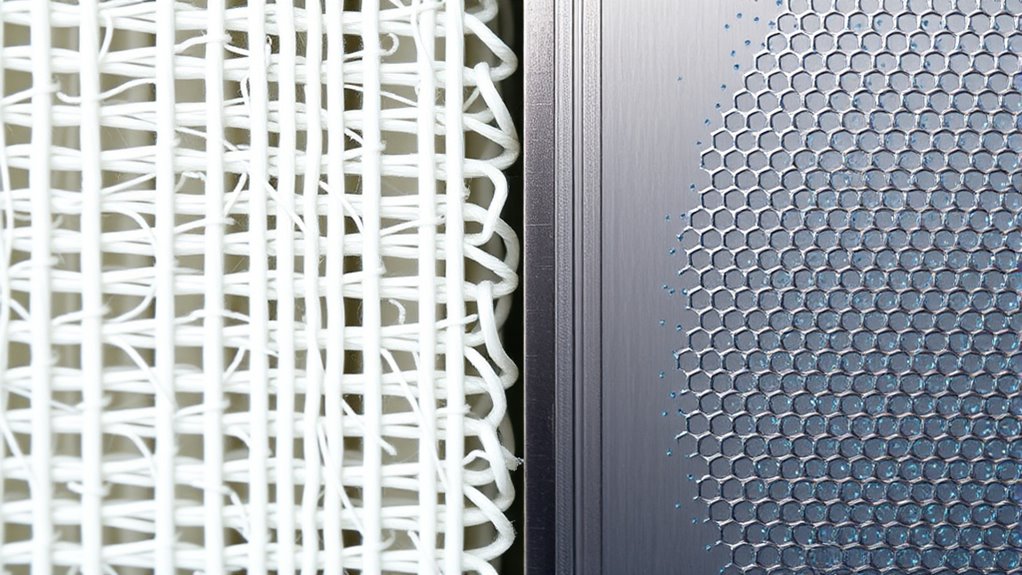
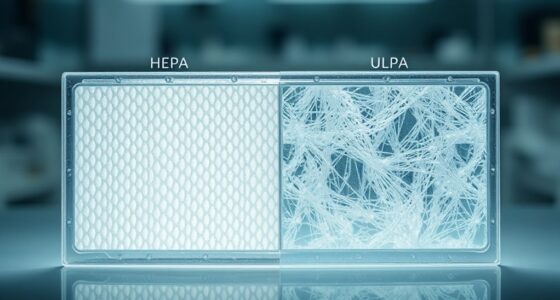
Have you ever wondered which air filtration system is better for your needs—HEPA or PECO? When it comes to air purification, choosing the right filter depends on what you’re trying to achieve. HEPA filters are renowned for their ability to trap tiny particles, including dust, pollen, pet dander, and even some bacteria and viruses. They work by forcing air through a dense, fibrous filter that captures particles as small as 0.3 microns with 99.97% efficiency. This makes HEPA filters ideal if you’re concerned about allergens or airborne contaminants that can trigger allergies or respiratory issues.
HEPA filters efficiently trap small particles like dust, pollen, and bacteria to improve indoor air quality.
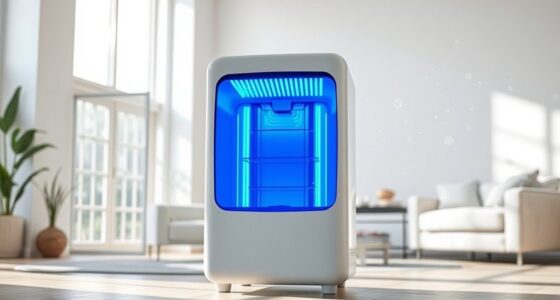
On the other hand, PECO filtration takes a different approach. Instead of relying solely on trapping particles, PECO filters use a photoelectrochemical oxidation process to destroy pollutants at a molecular level. This technology not only captures but also neutralizes mold spores, bacteria, viruses, VOCs, and odors, providing a broader scope of air purification. With PECO, you’re getting a filter that actively destroys harmful microorganisms, making it particularly useful in environments where air quality is compromised or where chemical pollution is a concern.
When comparing these systems, consider how much maintenance each requires. HEPA filters generally need regular replacement—usually every 6 to 12 months—because they physically trap particles, and over time, the filter can become clogged, reducing airflow and efficiency. Proper filter maintenance is vital to guarantee your air purifier continues to perform at its best. If neglected, a clogged HEPA filter can lead to decreased air circulation and potentially spread trapped contaminants back into your space.
PECO filters, however, tend to require less frequent replacement because their active destruction process means they don’t get clogged as easily. Still, they do need periodic maintenance, such as cleaning or replacing the filter media, depending on the device. Since PECO technology actively neutralizes pollutants, it can also help extend the lifespan of your air purifier by reducing the load on other components. Additionally, some HEPA filters incorporate UV light technology to enhance germ-killing capabilities, providing an extra layer of air cleaning.
Ultimately, your choice depends on your specific needs. If you’re mainly concerned with removing particulate matter like pollen and dust, a HEPA filter’s precise particle capture is a strong choice. If you want a more all-encompassing approach that destroys airborne pathogens and chemical pollutants, PECO offers advanced air purification. Whichever option you select, keep in mind that regular filter maintenance is essential to maintain peak performance and guarantee your indoor air remains clean and healthy.
Frequently Asked Questions
How Do HEPA and PECO Filters Differ in Lifespan?
HEPA filters typically last around 6 to 12 months, depending on usage and air quality, offering good filter durability with moderate replacement frequency. PECO filters tend to have a longer lifespan, often up to a year or more, due to their oxidation process. Your choice affects how often you’ll need to replace the filters; HEPA may require more frequent changes, while PECO’s durability means less frequent replacements.
Can PECO Filters Eliminate Viruses Effectively?
Can PECO filters eliminate viruses effectively? Think of them as guardians with a fiery breath—PECO filters use oxidation to destroy viruses’ DNA and RNA, making them highly effective for virus elimination. While their filter durability might vary, they’re designed to neutralize many airborne pathogens. However, for maximum safety, combining PECO with other filtration methods can offer more all-encompassing protection, especially against the tiniest and most stubborn viruses.
Are PECO Filters More Energy-Efficient Than HEPA?
You’ll find that PECO filters are generally more energy-efficient than HEPA filters because they use oxidation to neutralize pollutants, reducing energy consumption. While HEPA filters focus on high filtration efficiency for particles, PECO filters maintain a balance by offering effective pollution removal with less power use. This makes PECO filters a smart choice if you’re aiming to save energy without sacrificing overall filtration performance.
Which Filter Type Is Better for Allergy Sufferers?
If you suffer from allergies, HEPA filters are your best choice because they remove at least 99.97% of airborne particles as small as 0.3 microns, including pollen and pet dander. Studies show HEPA filters markedly improve indoor air quality and allergy relief. While PECO filters target organic pollutants and odors, HEPA filters are more effective at capturing allergens, providing you with cleaner, healthier indoor air for better allergy management.
How Do Maintenance Costs Compare Between HEPA and PECO?
When comparing maintenance costs, HEPA filters typically have higher filter replacement costs because they require frequent replacements and more expensive parts. PECO filters generally have lower ongoing costs since their oxidation process lasts longer and needs less frequent replacement. For a clear cost comparison, consider how often you’ll need to replace filters and the associated expenses, especially if you’re aiming to minimize long-term maintenance costs.
Conclusion
When choosing between HEPA and PECO filters, understanding their strengths helps you make an informed decision. Did you know that HEPA filters can trap 99.97% of particles as small as 0.3 microns, while PECO filters can neutralize even viruses and VOCs? If you want maximum particle removal, HEPA’s your go-to. But for broader oxidation and chemical protection, PECO offers advanced benefits. Consider your needs carefully—both filters substantially improve air quality, but their unique features serve different priorities.

In the dynamic world of air purifiers and clean air advocacy, Aire stands out as a beacon of knowledge and passion. As the Editor in Chief of Aero Guardians, Aire has been instrumental in shaping the platform’s voice and direction, ensuring that every piece of content resonates with clarity, authority, and authenticity.