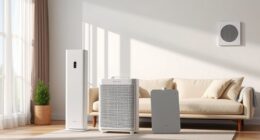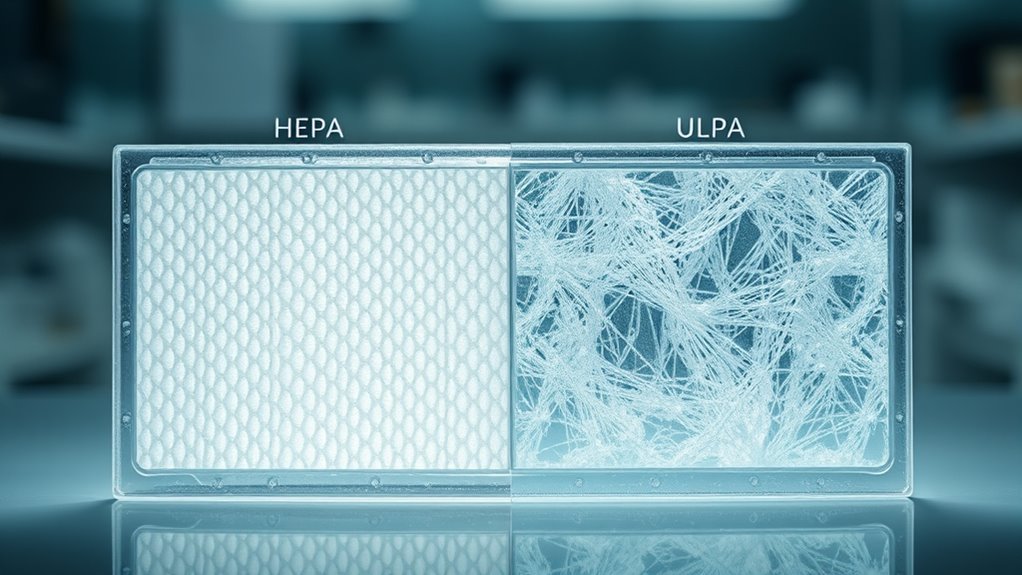

If you’re choosing between HEPA and ULPA filters, ULPA offers the highest level of particle removal, capturing 99.999% of particles as tiny as 0.12 microns, making it ideal for ultra-clean environments. HEPA filters, capturing 99.97% of particles down to 0.3 microns, suit most homes, offices, and medical settings well. To discover which filter is best for your needs and how they compare in detail, keep exploring the key differences.
Key Takeaways
- ULPA filters capture smaller particles (down to 0.12 microns) with ≥99.999% efficiency, outperforming HEPA’s 0.3-micron standard.
- ULPA filters are designed for ultra-clean environments like semiconductor manufacturing, surpassing HEPA’s typical residential and medical applications.
- ULPA filters are more delicate and require careful handling, making maintenance more complex compared to the durable HEPA filters.
- HEPA filters are generally more cost-effective and easier to install and replace, suitable for most standard filtration needs.
- The “winner” depends on application needs: ULPA excels in nano-particle filtration, while HEPA is ideal for broader, everyday environments.
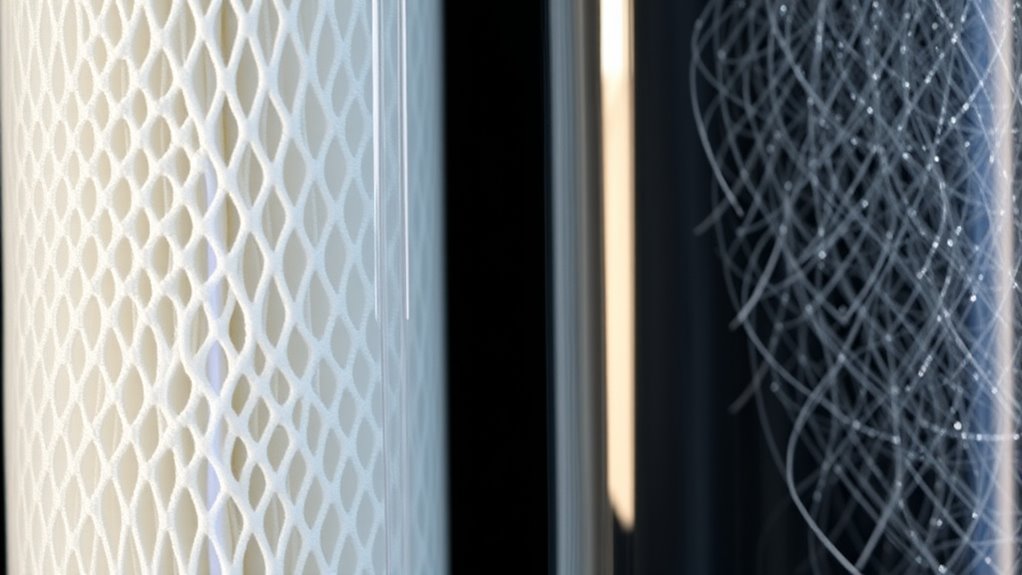
When choosing air filtration systems, understanding the differences between HEPA and ULPA filters is essential. Both types are designed to trap tiny particles, but they vary considerably in filter efficiency and maintenance requirements. HEPA filters are well-known for their ability to capture at least 99.97% of airborne particles as small as 0.3 microns. This high level of filter efficiency makes them ideal for most residential, commercial, and medical applications where removing dust, pollen, and bacteria is necessary. ULPA filters, on the other hand, surpass HEPA filters by capturing at least 99.999% of particles down to 0.12 microns. This enhanced filter efficiency makes ULPA filters suitable for environments demanding ultra-clean air, such as semiconductor manufacturing, pharmaceutical production, and certain research laboratories. Additionally, the filter media in ULPA filters is more delicate, requiring careful handling during installation and replacement.
Your decision between HEPA and ULPA filters should hinge on your specific needs for air purity. If you’re aiming for excellent particle removal in a typical office or home setting, a HEPA filter usually provides sufficient filtration without the added complexity or cost of ULPA. However, if your environment requires the strictest standards of air cleanliness—like in a cleanroom or a high-precision manufacturing process—ULPA filters are the superior choice. Keep in mind that while ULPA filters offer higher filter efficiency, they also tend to be more delicate and require more careful maintenance to sustain ideal performance. Regular inspection, timely replacement, and proper handling are critical to prevent damage and maintain their ultra-high filtration standards.

LEVOIT Air Purifier for Home Allergies and Pets Hair Smokers in Bedroom, H13 True HEPA Filter, 24db Filtration System Cleaner Odor Eliminators, Remove 99.97% Dust Smoke Mold Pollen, Core 300, White
- Certified by AHAM: Ensures reliable air quality performance
- Powerful Cleaning: 56W motor with 143 CFM CADR
- Effective Air Purification: HEPA-grade filter for dust, smoke, odors
As an affiliate, we earn on qualifying purchases.
Frequently Asked Questions
What Are the Typical Industries Using HEPA and ULPA Filters?
You’ll find HEPA and ULPA filters widely used across various industries for air purification and maintaining clean environments. In healthcare, they guarantee sterile operating rooms, while in pharmaceuticals, they safeguard sensitive processes. Semiconductor manufacturing relies on ULPA filters for ultra-clean conditions, and aerospace facilities use them for air quality control. These filters are essential in industrial applications where high levels of particle removal are critical to safety and product integrity.
How Do Filter Replacement Costs Compare Between HEPA and ULPA?
Imagine your air filtration costs skyrocketing like a rocket! With ULPA filters having a shorter filter lifespan, you’ll find their replacement costs higher over time due to more frequent maintenance. HEPA filters last longer and are cheaper to replace, making them more budget-friendly in the long run. So, if you’re counting costs, HEPA filters generally come out ahead, saving you money and hassle.
Are ULPA Filters Environmentally More Sustainable Than HEPA?
You might wonder if ULPA filters are more eco-friendly than HEPA filters. ULPA filters often have a lower filter disposal impact because they last longer and require less frequent replacements, reducing waste. Additionally, their production can incorporate eco-friendly practices, minimizing environmental harm. Overall, ULPA filters tend to be more sustainable, especially when considering eco-friendly production methods and the reduced waste generated from disposal.
Can HEPA or ULPA Filters Be Used in Residential Settings?
Think of your home’s air quality as a garden needing careful tending. While HEPA and ULPA filters can improve air quality, ULPA filters are generally overkill for residential use, and HEPA filters are more practical. You can use HEPA filters in your home, but they require regular filter maintenance to stay effective. ULPA filters are better suited for specialized environments, not everyday living spaces.
How Do Noise Levels Differ Between HEPA and ULPA Filtration Systems?
You might wonder about the noise level comparison between HEPA and ULPA filtration systems. Generally, ULPA filters tend to emit slightly higher filter sound emissions due to their denser filtration media, which requires more airflow. However, noise levels are usually minimal and manageable in most settings. If quiet operation is essential, you should consider the design and brand, as some models feature noise-reducing technology to keep sound emissions low.
Conclusion
So, when it comes to choosing between HEPA and ULPA filters, it’s like picking the superhero of air purification. ULPA filters are the ultimate vacuum cleaners of the nano world, capturing particles so tiny they’re practically invisible to the naked eye. They’ll make airborne threats vanish faster than you can blink, leaving your space as pure as a crystal-clear mountain spring. In this nano-battle, ULPA is the unstoppable champion—cleaning the air like a cosmic force!