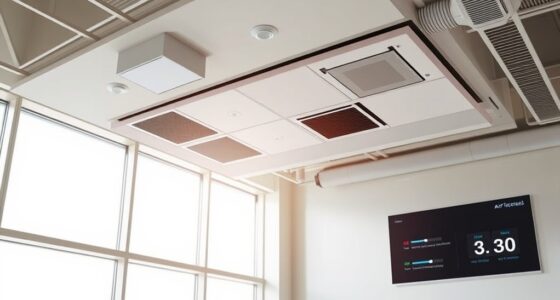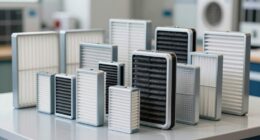
Upgrading your HVAC system with advanced filtration like HEPA or MERV-rated filters and installing energy recovery ventilators helps you remove pollutants, allergens, and airborne germs more effectively. These improvements boost indoor air quality, reduce strain on your system, and promote a healthier environment. By choosing the right upgrades and maintaining them regularly, you’ll enjoy better comfort and efficiency. Keep exploring to discover how strategic retrofits can transform your indoor spaces for the better.
Key Takeaways
- Upgrading to high-efficiency filters like HEPA or MERV improves airborne pollutant removal and indoor air quality.
- Installing energy recovery ventilators (ERVs) or heat recovery ventilators (HRVs) ensures continuous fresh air with minimal energy loss.
- Replacing outdated fans with variable speed units enhances airflow control and system efficiency.
- Implementing smart controls and sensors allows real-time air quality monitoring and optimized ventilation.
- Regular maintenance, including filter replacement and system inspections, sustains high indoor air quality over time.

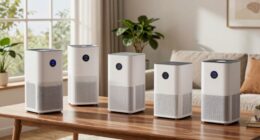
Are you looking to improve your building’s energy efficiency and reduce operational costs? Upgrading your HVAC system through retrofits is a smart move that can markedly enhance indoor air quality while saving money. One of the key areas to focus on during a retrofit is air filtration. By installing advanced filters, such as high-efficiency particulate air (HEPA) filters or MERV-rated filters, you can effectively capture pollutants, allergens, and airborne pathogens. This not only improves the air you breathe daily but also reduces strain on your system, preventing dirt and debris from clogging components and keeping equipment running smoothly. Better air filtration directly contributes to healthier indoor environments, especially in spaces with high occupancy or sensitive populations.
Upgrading air filtration improves indoor air quality and system efficiency during HVAC retrofits.
Alongside air filtration, boosting ventilation efficiency is essential for creating a healthier indoor atmosphere. Many older systems rely on outdated ventilation methods that don’t adequately exchange indoor air with the outside, leading to stale, contaminated air circulating indoors. During a retrofit, upgrading or adding energy recovery ventilators (ERVs) or heat recovery ventilators (HRVs) can greatly improve ventilation efficiency. These devices ensure a continuous supply of fresh air while minimizing energy loss, maintaining ideal indoor temperatures and humidity levels. Improved ventilation also helps dilute indoor pollutants, odors, and excess moisture, reducing mold growth and improving overall air quality.
Implementing these upgrades involves evaluating your current system’s capabilities and identifying areas where efficiency can be enhanced. For example, replacing outdated fans with variable speed units allows for better airflow control, adapting to the building’s occupancy and usage patterns. This not only maximizes energy consumption but also ensures that air filtration and ventilation work together seamlessly. Additionally, integrating smart controls and sensors can help monitor air quality in real time, allowing you to make adjustments on the fly and maintain a consistently healthy environment. Utilizing total‑cost clarity in your retrofit planning can help you make informed decisions that balance upfront costs with long-term savings.
A successful HVAC retrofit prioritizes continuous improvement. Regular maintenance, such as replacing filters and inspecting ventilation components, ensures that your system functions at peak performance. Investing in these upgrades may seem costly upfront, but the long-term benefits—reduced energy bills, improved occupant health, and longer equipment lifespan—make it a worthwhile decision. By focusing on air filtration and ventilation efficiency, you’re creating a space that promotes well-being and productivity, all while keeping operational costs in check. Ultimately, a well-executed retrofit transforms your HVAC system into a powerful tool for healthier, more efficient indoor environments.
Frequently Asked Questions
How Do HVAC Retrofits Impact Energy Consumption?
HVAC retrofits can considerably reduce your energy consumption by upgrading old systems with energy-efficient equipment. These improvements often include better filters and ventilation, which enhance air quality and reduce strain on your system. As a result, you’ll notice energy savings and improved indoor air quality. Keep in mind, modernized HVAC systems optimize performance while using less power, helping you save money and create a healthier indoor environment.
What Are the Costs Associated With HVAC Upgrades?
So, you’re ready to plunge into HVAC upgrades? Well, expect a cost analysis to reveal a hefty investment, making you wish you’d started saving earlier. Budgeting considerations include equipment prices, installation fees, and potential disruptions. While the initial costs might sting, remember, improved air quality and energy savings pay off long-term. Prepare for a financial puzzle, but one that promises comfort, efficiency, and better health down the line.
How Long Does an HVAC Retrofit Typically Take?
An HVAC retrofit typically takes anywhere from a few days to a few weeks, depending on the scope of work. You should plan for retrofit scheduling that accounts for installation timelines, which can vary based on building size and system complexity. During this period, contractors will assess your current system, order parts, and complete the installation efficiently. Staying in close contact helps make certain your retrofit stays on track.
Can Retrofits Be Customized for Different Building Types?
Think of retrofit customization as tailoring a suit—it’s designed to fit your building’s unique shape and needs perfectly. Yes, retrofits can be customized for different building types, offering building-specific solutions that optimize airflow, filtration, and energy efficiency. Whether you have a bustling office or a serene school, you get a retrofit plan crafted just for you, ensuring the system works seamlessly and improves indoor air quality tailored to your space.
What Maintenance Is Required After Retrofit Installation?
After your retrofit installation, you need to regularly replace filters and check for dirt and debris to guarantee ideal airflow. Additionally, system calibration is essential; you should schedule professional calibration to maintain efficiency and indoor air quality. Keep an eye on system performance and address any issues promptly. Regular maintenance like these helps your upgraded HVAC system run smoothly, prolonging its lifespan and ensuring healthier indoor environments.
Conclusion
By upgrading your HVAC system, you’re not just improving air quality — you’re creating a healthier, more comfortable home for those you love. It’s a small change that can prevent illness and bring peace of mind, especially when you realize how easily better air can make a difference. Sometimes, the simple act of upgrading your system feels like a coincidence — as if it was meant to be, ensuring a safer space for everyone under your roof.