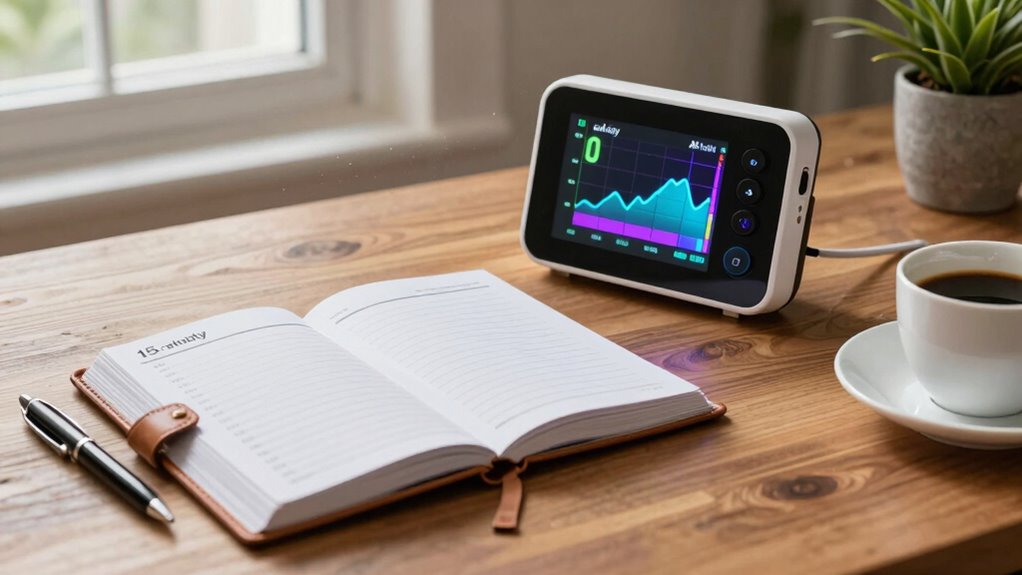
By tracking your indoor air quality for just 15 minutes each day, you’ll quickly spot patterns that reveal your biggest triggers, like specific activities or times when pollutants spike. Recording metrics such as humidity, odors, and symptoms helps you connect sources to poor air quality. This simple, consistent log empowers you to target improvements, like using air purifiers or increasing ventilation. Keep exploring how daily tracking can transform your environment into a healthier space.
Key Takeaways
- A 15-minute daily log tracks AQI, humidity, odors, and symptoms to identify pollution patterns and triggers.
- Recording environmental factors and activities helps pinpoint causes of poor air quality.
- Regular logging reveals correlations between symptoms and specific triggers like cooking or cleaning.
- Tracking before and after interventions shows their effectiveness in improving indoor air conditions.
- Consistent entries empower proactive management by highlighting the most significant sources of indoor air pollutants.

Keeping track of air quality is essential for ensuring a healthy environment, whether at home, work, or outdoors. When you monitor your indoor air, you can identify what triggers poor air quality and take steps to improve it. One simple yet effective tool is a 15-minute air quality log. By dedicating just a quarter of an hour every day, you gain valuable insights into your environment’s pollution levels and sources. This process helps you recognize patterns, such as times of day when pollutants spike, or specific activities that worsen air quality.
Using an air quality log reveals the benefits of different strategies you might not have considered. For example, you might notice that your indoor air quality improves notably when you run an air purifier. Air purifier benefits include reducing airborne particles like dust, pollen, pet dander, and even some bacteria or viruses. Regularly logging these changes confirms their effectiveness, encouraging you to keep using your purifier consistently. Additionally, your log can highlight the positive impact of indoor plants. Many indoor plants naturally filter toxins and improve air freshness, but their effects are often subtle. Tracking air quality before and after adding plants like snake plants or peace lilies helps you see their real benefits.
The key is consistency. When you record air quality every day for just 15 minutes, you’re better equipped to notice what influences air quality the most. For example, you might find that cooking or cleaning increases particulate levels, or that opening windows improves airflow and reduces indoor pollutants. By noting these details, you can make smarter decisions—like ventilating more often, investing in specific air purifiers, or adding certain indoor plants to your space.
Your log doesn’t need to be complicated. Use simple metrics, such as air quality index (AQI), humidity levels, or notes on visible dust and odors. Keep track of times when you notice symptoms like sneezing, congestion, or headaches, as these can correlate with air quality issues. Over time, patterns emerge, guiding you to implement targeted solutions. For example, if your logs show high particulate counts after vacuuming, you might switch to a vacuum with a HEPA filter or increase ventilation afterward. Recognizing the importance of air quality monitoring can help you take proactive steps to maintain a healthier environment.
In the end, a 15-minute daily air quality log empowers you to take control of your environment. It provides clear evidence of what works and what doesn’t, making your efforts more effective. Whether it’s using an air purifier, adding indoor plants, or adjusting your routines, understanding your indoor air helps you create a healthier, more comfortable space for yourself and your loved ones.
Frequently Asked Questions
Can This Log Help Identify All Indoor Air Pollutants?
Yes, this log can help you identify many indoor air pollutant sources through consistent indoor air monitoring. By tracking your air quality every 15 minutes, you’ll notice patterns and triggers linked to specific pollutants, like dust, mold, or fumes. While it may not catch every single source, it provides valuable insights, empowering you to make targeted changes to improve your indoor air quality effectively.
How Often Should I Update My Air Quality Log?
You should update your air quality monitoring log at least once daily to get accurate insights into your indoor environment. Regular log maintenance frequency helps you track fluctuations and identify triggers effectively. If you notice significant changes in your air quality, update the log more frequently, such as multiple times a day. Consistent updates guarantee you catch patterns and improve your indoor air quality management over time.
Is a Smartphone App Better Than a Paper Log?
Think of tracking your air quality like steering a ship through fog—digital tracking with a smartphone app is your high-tech compass, offering a smoother user experience and instant updates. It’s easier to log data quickly and see patterns visually. Paper logs are like old maps—reliable but less efficient. For better accuracy and convenience, a smartphone app provides real-time insights, helping you navigate your triggers more effectively.
Can This Method Detect Allergen Levels?
This method isn’t designed for allergen detection or measuring indoor allergens directly. Instead, it helps you track air quality patterns and identify triggers like dust or pollen indirectly. While it can alert you to poor air conditions, you’ll need specialized testing for precise allergen levels. Use it alongside allergy tests or air purifiers to better manage indoor allergens and reduce allergy symptoms effectively.
What Should I Do if My Triggers Aren’T Clear?
If your triggers aren’t clear, focus on trigger identification by keeping detailed logs of your activities and symptoms. Track when symptoms worsen and look for patterns or symptom correlation with specific environments or times. This helps you narrow down potential causes. Be patient and consistent with your logging, as it may take time to uncover subtle triggers. Consider consulting a healthcare professional for additional insights and personalized advice.
Conclusion
So, congratulations on becoming a master of your own air. Now, armed with your 15-minute log, you’ll finally see what’s been secretly sabotaging your health—spoiler alert: it’s probably your overenthusiastic pet or that suspiciously fragrant candle. Who knew your home was plotting against you all along? But don’t worry, at least now you have a “scientific” excuse to finally open those windows and kick that toxic ambiance to the curb. Cheers to fresh air!