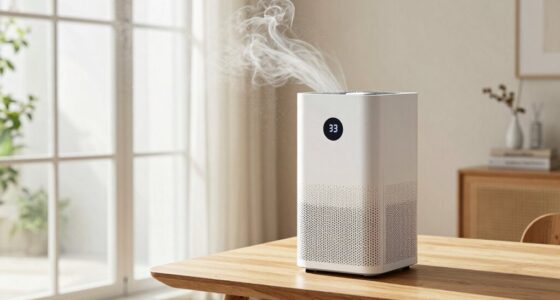
Indoor air quality standards vary around the world, but they generally set guidelines for ventilation rates and pollutant limits to keep environments safe. Regions like the WHO, U.S. EPA, and European agencies establish thresholds for pollutants such as PM2.5, CO2, and VOCs, with requirements adapted to climate and building practices. Following these standards helps reduce health risks and improve comfort. To learn more about how these standards differ globally and how they protect you, keep exploring.
Key Takeaways
- Different countries and regions have specific standards for ventilation rates and pollutant thresholds to ensure indoor air safety.
- The WHO provides global guidelines for pollutants like PM2.5 and CO2, influencing regional standards worldwide.
- The US EPA and European agencies set detailed indoor air quality regulations, focusing on pollutant limits and ventilation requirements.
- Regional variations reflect climate, building practices, and pollution sources, but all aim to protect occupant health.
- Monitoring and maintaining compliance with local standards are essential for healthy indoor environments globally.

Indoor air quality standards set the benchmark for maintaining healthy and safe environments inside buildings. These standards guide how you should control and monitor indoor air to prevent health issues caused by pollutants. One of the core components of these standards involves ventilation requirements, which specify how much fresh air needs to be circulated to dilute indoor contaminants effectively. Proper ventilation isn’t just about bringing in outside air; it’s about guaranteeing the right amount of airflow to maintain safe pollutant levels inside. Depending on the building type, occupancy, and local regulations, the required ventilation rates can vary. For example, offices, schools, and industrial facilities each have specific ventilation requirements designed to optimize air quality and prevent the buildup of harmful substances.
Indoor air quality standards specify ventilation rates to ensure safe, healthy indoor environments by controlling pollutant levels effectively.
Along with ventilation requirements, pollutant thresholds are a vital part of indoor air quality standards. These thresholds define the maximum allowable concentrations of various pollutants like volatile organic compounds (VOCs), particulate matter, carbon dioxide, and other hazardous substances. When pollutant levels exceed these thresholds, it signals a potential health risk, prompting action to improve air circulation or reduce sources of pollution. By setting clear pollutant thresholds, standards help you identify when indoor air quality is compromised and needs intervention. These thresholds are usually based on scientific research linking pollutant levels to health outcomes, ensuring they are both protective and practical.
Across different regions, standards may vary, but the principle remains the same: establish safe, measurable limits for indoor air quality. For instance, the World Health Organization (WHO) provides global guidelines for pollutants like PM2.5 and CO2, while countries like the United States have specific regulations issued by agencies such as the EPA. European standards, meanwhile, often incorporate detailed ventilation requirements to guarantee occupant safety. Despite regional differences, the goal is consistent: safeguard your health by maintaining indoor environments that are free from excessive pollutants.
Implementing these standards involves regular monitoring of indoor air and guaranteeing ventilation systems operate properly. This means you need to be aware of the ventilation requirements for your specific space and ensure they are met. It also involves checking pollutant thresholds periodically to catch any issues early. When thresholds are exceeded, actions like increasing ventilation, improving filtration, or reducing pollutant sources are necessary. By adhering to these standards, you can create healthier indoor spaces, reduce the risk of respiratory problems, and promote overall well-being. Ultimately, understanding and following indoor air quality standards helps you enjoy a safer, cleaner indoor environment every day.
Frequently Asked Questions
How Often Are Indoor Air Quality Standards Updated Globally?
You should know that indoor air quality standards are updated at different intervals worldwide, depending on each country’s regulatory review cycles. Typically, these standards are revised every 3 to 5 years, but some regions may update them more or less frequently. Staying informed on the standard update frequency helps you guarantee your indoor environment remains safe and compliant with the latest health guidelines.
Do Standards Differ for Residential and Commercial Buildings?
You’ll find that indoor air quality standards do vary for residential and commercial buildings. Building codes set specific ventilation requirements to guarantee safety and comfort in each type. Commercial spaces often have stricter standards due to higher occupancy and usage, while residential standards focus on basic air quality for everyday living. These differences help regulate pollutant levels, ensuring healthier environments tailored to each building’s purpose.
Are There Specific Standards for Indoor Air Quality in Schools?
You’ll find that schools have specific indoor air quality standards, including ventilation requirements and air filtration standards, to guarantee a healthy environment for students and staff. These standards often mandate regular air exchange rates and high-efficiency filters to reduce pollutants and pathogens. By adhering to these guidelines, schools create safer indoor spaces, minimizing health risks and improving overall comfort for everyone inside.
How Do Indoor Air Quality Standards Address Emerging Pollutants?
Imagine a filter catching both visible dust and invisible emerging pollutants. Indoor air quality standards now incorporate this imagery by actively developing new standards to address emerging pollutants. You see, standard development keeps pace with scientific advances, ensuring regulations target these new threats before they harm health. By updating thresholds and testing methods, authorities protect you from unseen risks, making your environment safer even as pollutants evolve.
What Is the Role of Government Agencies in Enforcing These Standards?
You rely on government agencies to ensure regulatory compliance with indoor air quality standards. They enforce these standards through mechanisms like inspections, penalties, and certifications, making sure buildings meet safety requirements. Their role is vital in monitoring indoor environments, responding to violations, and updating regulations as needed. By actively overseeing compliance, they protect public health and maintain safe air quality levels in various indoor spaces.
Conclusion
Think of indoor air quality standards as a lighthouse guiding you safely through foggy waters. When these standards are clear and consistent worldwide, they illuminate the path to healthier indoor environments, helping you avoid the hidden dangers lurking in the air you breathe. Just like a lighthouse protects sailors from unseen hazards, strong standards shield you from invisible pollutants, ensuring your home remains a safe harbor where you can breathe easy and stay healthy every day.